Dark mold growth spreading across a damp interior wall after water damage

Mold After Water Damage in Texas: Prevention and When to Call a Professional

Texas heat and humidity give mold a head start after any flood, burst pipe, or appliance leak. Here is why it grows so fast here, where it hides, and how proper drying stops it before it takes hold.

Direct answer: Mold can begin growing within 24 to 48 hours after water damage in a Texas home, because warm air, high humidity, and wet building materials create ideal conditions for it. The best prevention is fast, complete drying: remove standing water, dry hidden moisture inside walls and under floors, and fix the water source. If you see visible mold, smell a persistent musty odor, or have health concerns, get a professional assessment rather than disturbing a large area yourself.

Why Texas Heat and Humidity Accelerate Mold After Water Damage

Mold needs three things to grow: moisture, a food source, and the right temperature. A water-damaged Texas home supplies all three in abundance. Drywall, wood framing, carpet backing, and paper-faced insulation are all food for mold once they stay wet. Texas temperatures keep those materials warm for most of the year, and Texas humidity keeps them from drying on their own. That combination is why a leak that might dry out uneventfully in a cool, dry climate can turn into a mold problem here in a matter of days.

The humidity picture varies across the state, but almost nowhere in Texas is truly dry indoors after a flood. Along the Gulf Coast, from Houston to Corpus Christi, outdoor humidity routinely sits high, and summer air entering a home through open doors, vents, and gaps carries moisture with it. In East Texas, around Tyler and the Piney Woods, humid air and frequent rain keep both outdoor and indoor moisture levels elevated, and shaded, tree-covered lots slow evaporation around foundations. Even in West Texas, where the air feels drier, a flooded room is its own humid microclimate: evaporating water raises indoor humidity fast, and air conditioning that cycles off at night or in an unoccupied home lets that moisture settle back into walls and flooring.

Air conditioning deserves special attention in Texas homes. A running air conditioner does more than cool the air — it removes moisture from it, which is one of the reasons a home that stays cooled and occupied after a leak often fares better than a vacant or storm-damaged home with no power. But air conditioning has limits. It cannot dry water trapped inside a wall cavity, under tile, or beneath a slab floor. It also cannot keep up if doors and windows are left open to humid outdoor air while the house is still wet inside. And when a storm knocks out power, the air conditioner stops dehumidifying at exactly the moment the home is wettest — a pattern seen across Texas after hurricanes and major Gulf storms, when homes that sat closed and powerless for days developed mold behind walls that looked dry from the outside.

Texas construction adds another layer. Most Texas homes are built slab-on-grade, with no basement and no crawlspace to ventilate. Water that gets under flooring or into the bottom of a wall has very little airflow to carry it away. Attics, where many Texas water heaters and air handler units sit, are brutally hot in summer — often far hotter than the living space below — and a slow attic leak can soak insulation and ceiling drywall for weeks before anyone notices a stain. Add Texas clay soils, which expand when wet and shrink when dry, and you get foundation movement that can crack slab plumbing and open small gaps where water enters again and again. None of this means a Texas home is doomed after water damage. It means drying here has to be deliberate, measured, and complete — surface dry is not the same as actually dry.

How Fast Mold Can Start: The 24 to 48 Hour Window

The widely cited window for mold growth after water damage is 24 to 48 hours. That is a useful rule of thumb, but it is not a guarantee in either direction. Mold does not check a clock before it starts, and visible growth can take longer to appear even when microscopic growth has already begun. What the window really tells you is how urgent the first two days are: every hour that wet materials stay wet in warm, humid conditions increases the chance that mold takes hold, and increases how far it spreads once it does.

Several factors speed up or slow down that timeline. Temperature is the biggest one in Texas. Mold grows fastest in warm conditions, and a Texas home in summer — especially an attic, a garage, or a room with the air conditioning off — is warm around the clock. Humidity is the second factor: the wetter the air, the slower wet materials dry, and the longer mold has to establish itself. The type of water matters too. Clean water from a supply line starts out less likely to support growth than water from a sewage backup or a flood that carried soil and debris indoors, which is one reason sewage and floodwater damage should always be handled by professionals. The materials involved also matter: porous materials such as drywall, carpet padding, and insulation absorb water deeply and stay wet longest, while sealed tile and metal dry faster.

Perhaps the most important factor is whether the water is truly gone or merely hidden. A floor can look dry while the padding beneath the carpet is still soaked. A wall can feel dry to the touch while the inside of the cavity is still damp. This hidden moisture is the main reason mold appears days or weeks after a homeowner believed the problem was solved — the visible surfaces dried, but the moisture inside the structure kept feeding growth out of sight. Professional moisture meters and infrared cameras exist precisely to catch this gap between what looks dry and what is dry.

The practical takeaway is simple: do not wait to see mold before acting. If your home has had standing water, a burst pipe, a roof leak, or an appliance flood, the drying clock starts immediately. Removing standing water, getting air moving, and arranging a professional moisture check within the first day or two gives you the best chance of preventing mold entirely. Waiting a week to see what happens is, in Texas conditions, often waiting long enough for mold to become the second problem you have to solve.

Rule of thumb: if more than a day or two has passed since the water event and materials are still damp, or if you can already see discoloration or smell a musty odor, call (866) 316-5715 for a professional assessment. Do not tear open walls or disturb a large moldy area yourself to investigate — disturbing mold can spread it to clean areas of the home.
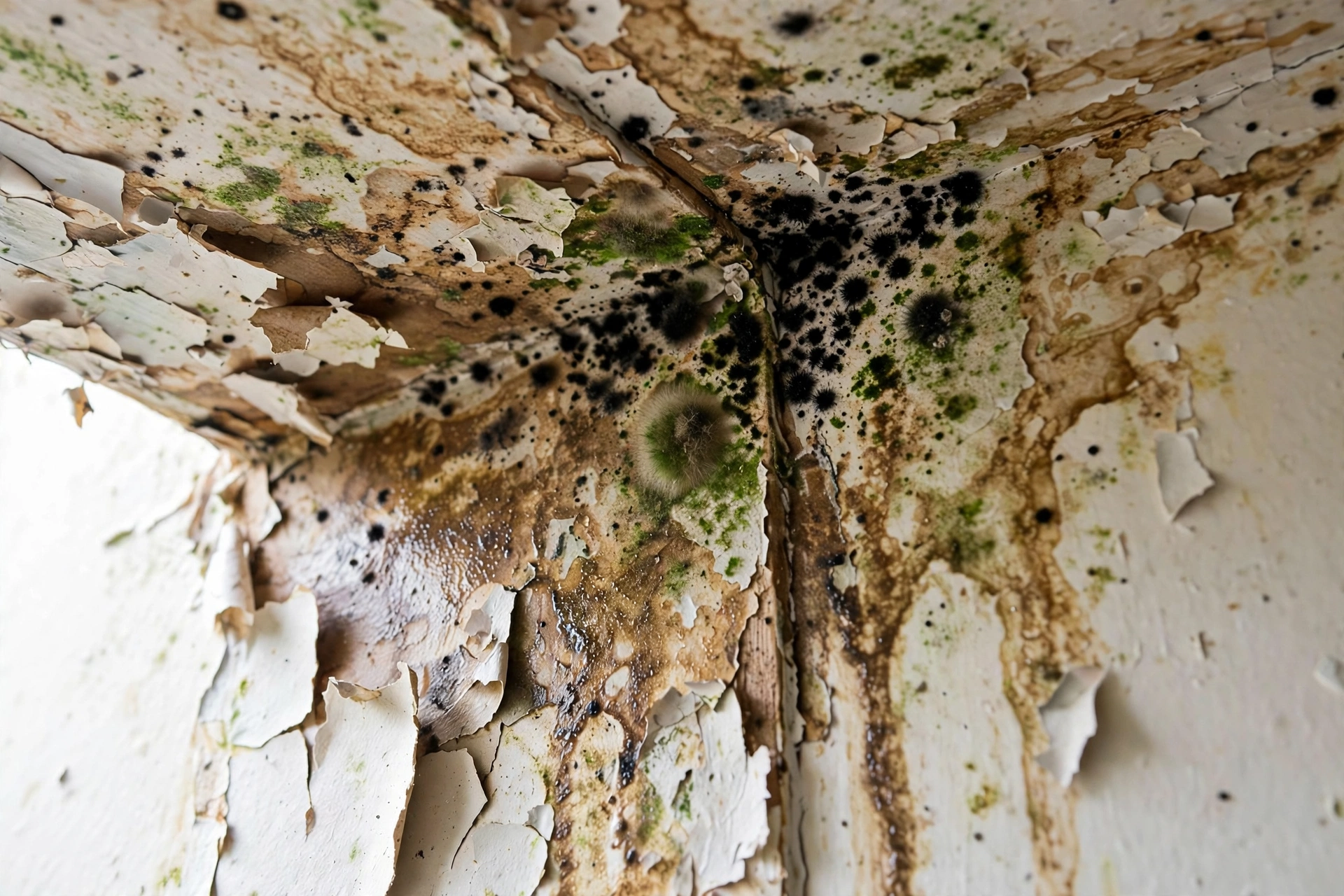
Hidden growth

Where Mold Hides in Texas Homes

Mold rarely grows where you can see it first. After water damage, these are the places it hides in Texas homes — and why each one is so vulnerable:

Behind Drywall

Water wicks upward into drywall from a flooded floor and seeps in from a leaking pipe or roofline. The paper facing on drywall is an ideal food source, and the dark, still air behind the wall is ideal shelter. Growth here can be extensive before a single spot shows on the room side.

Under Flooring

Carpet padding acts like a sponge, laminate and engineered wood trap water beneath their surfaces, and tile grout channels water into the subfloor. In slab-on-grade Texas homes, water under flooring has nowhere to drain and very little airflow, so it lingers.

In Attics

Texas attics hold water heaters, air handlers, and ductwork, and they run extremely hot in summer. A slow attic leak soaks insulation and the top of the ceiling drywall, and the heat speeds growth. Attic mold is often discovered only when a ceiling stain appears rooms away from the source.

Inside Wall Cavities

Pressurized leaks inject water into framing cavities, behind baseboards, and around window and door frames. Cavities stay wet for weeks without professional drying because no household fan can push air into a closed wall. This is the classic source of a musty smell with no visible mold.

HVAC Areas

Air handlers, ductwork, drain pans, and return-air chases collect condensation in humid Texas summers even without a flood. After water damage, a wet duct system or a clogged condensate drain can spread moisture — and musty odors — through the whole house each time the system runs.

Closets, Cabinets, and Bathrooms

Closed, poorly ventilated spaces trap humidity. A vanity cabinet over a slow supply-line leak, a closet sharing a wall with a wet bathroom, or a shower surround with failed grout can all harbor growth that stays hidden behind doors and stored belongings.

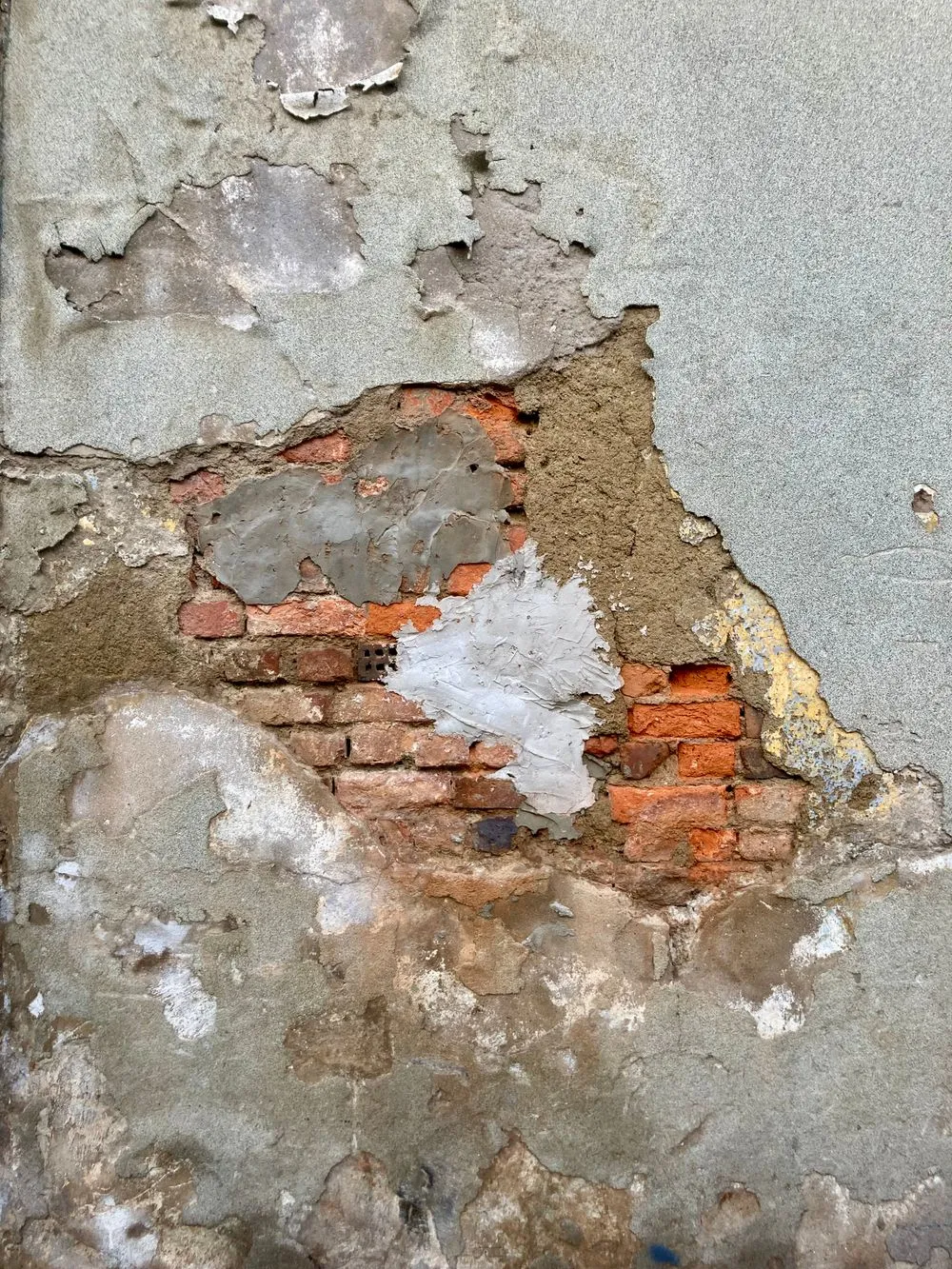
Water-damaged interior wall with peeling paint and staining after a leak

Wall damage is often only the visible edge of the problem. Staining and peeling paint on the room side can signal much wetter material inside the cavity behind it.

That is why professionals check inside walls with moisture meters rather than judging by the surface alone — and why a small visible stain should never be assumed to be a small problem.

Warning signs

Signs of Mold After Water Damage

Mold does not always announce itself with obvious black spots. Watch for this full range of signs in the days and weeks after any water event:

What you can see

  • Discolored spots or patches on walls, ceilings, baseboards, or grout — black, green, brown, gray, or white — especially near a past leak or flood line.
  • Stains that return after cleaning, or paint and wallpaper that bubble, peel, or warp over a previously wet area.
  • Warped or buckled flooring, swollen baseboards, or doors that suddenly stick — signs that moisture is still present inside the structure.
  • Visible growth in hidden spots: inside a vanity cabinet, behind a washing machine, on the back of stored boxes, or on attic insulation.

What you can smell and sense

  • A persistent musty or earthy odor in a room, closet, or hallway — especially one that gets stronger when the air conditioner starts or after rain. A musty smell with no visible mold is a strong reason to request a professional assessment.
  • Rooms that never feel dry, or humidity that stays high in one area even when the rest of the house feels normal.
  • Health concerns that appear or worsen at home and ease elsewhere. This guide does not diagnose any condition — but if anyone in the household has health concerns, a professional mold assessment and advice from a healthcare professional are the right next steps.
  • A history of repeated dampness in the same spot: recurring stains, condensation, or a musty closet that never fully clears are signs the moisture source has not been fixed.

One caution applies to all of these signs: absence of visible mold does not mean absence of mold. Growth behind drywall, under flooring, or inside ductwork can be substantial while the living space looks clean. Conversely, not every dark spot is mold — dirt, soot, and water staining can look similar. A professional assessment, including moisture readings, is how you tell the difference without guessing or disturbing the area.

Prevention

What Proper Drying and Moisture Mapping Do to Prevent Mold

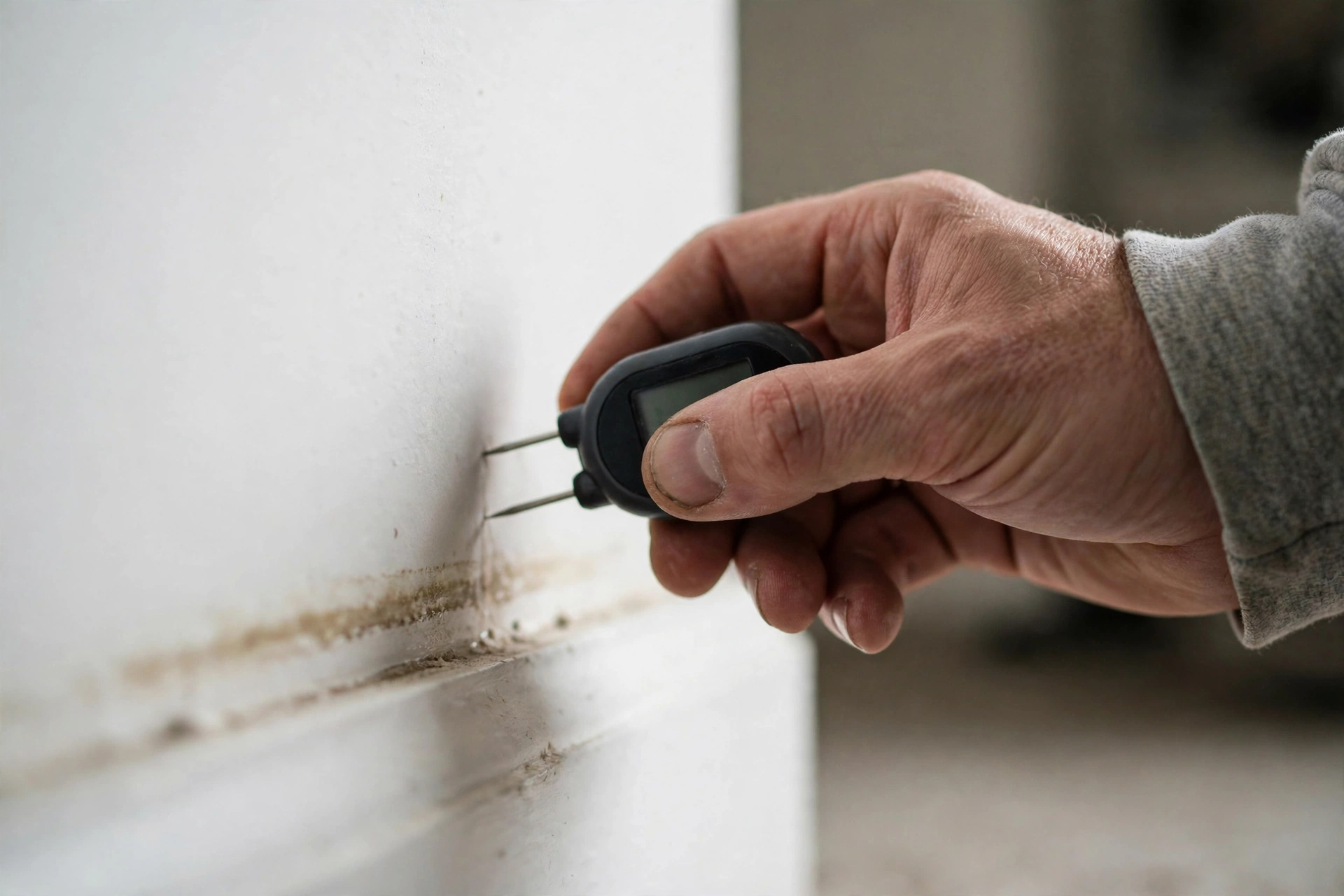
Technician checking hidden moisture in drywall with a pin moisture meter

Professional crews do not guess what is wet — they measure it. Moisture mapping finds the water hiding inside walls and under floors before it becomes a mold problem.

That measurement is what separates a dried structure from one that only feels dry on the surface.

Proper drying is the single most effective mold prevention step after water damage, and it works in a specific sequence. First, standing water is extracted completely — not mopped around, but removed with professional pumps and vacuum systems, including water trapped in carpet padding and low spots. Second, materials that cannot be dried are removed: saturated carpet padding, swollen particle board, and waterlogged insulation hold moisture and provide food for mold, and keeping them in place guarantees a longer, riskier drying job. Third, the structure itself is dried with industrial air movers and commercial dehumidifiers, balanced so that moisture evaporating from surfaces is captured from the air rather than settling into other materials.

Moisture mapping is what makes that drying targeted instead of hopeful. Using penetrating and non-penetrating moisture meters plus infrared cameras, technicians map exactly where water traveled — behind baseboards, inside wall cavities, under flooring, into subfloor and framing. In a Texas slab home, that map might show water that ran beneath tile far beyond the flooded room. In an attic leak, it might show soaked insulation two rooms away from the ceiling stain. The map decides which walls are opened for drying, where equipment is placed, and when drying is actually finished.

Finishing matters as much as starting. Drying ends when moisture meters show every material has reached its dry standard — not when surfaces feel dry to the touch, and not after a fixed number of days. In Texas humidity, cutting drying short is one of the most common routes to a mold problem: the surface dries, the equipment is pulled, and moisture trapped deeper in the structure keeps feeding growth out of sight. A crew that documents final moisture readings gives you a verifiable record that the home was dried, which matters for your own peace of mind and for any future insurance or sale questions.

Finally, proper drying includes treating the affected areas to discourage regrowth. After materials reach their dry standard, professionals typically apply antimicrobial treatments to cleaned surfaces as part of the drying package. This is a preventive step, not a substitute for drying: no treatment can protect a wall that is still wet inside. The order always matters — extract, remove what cannot be saved, dry to verified standards, then treat.

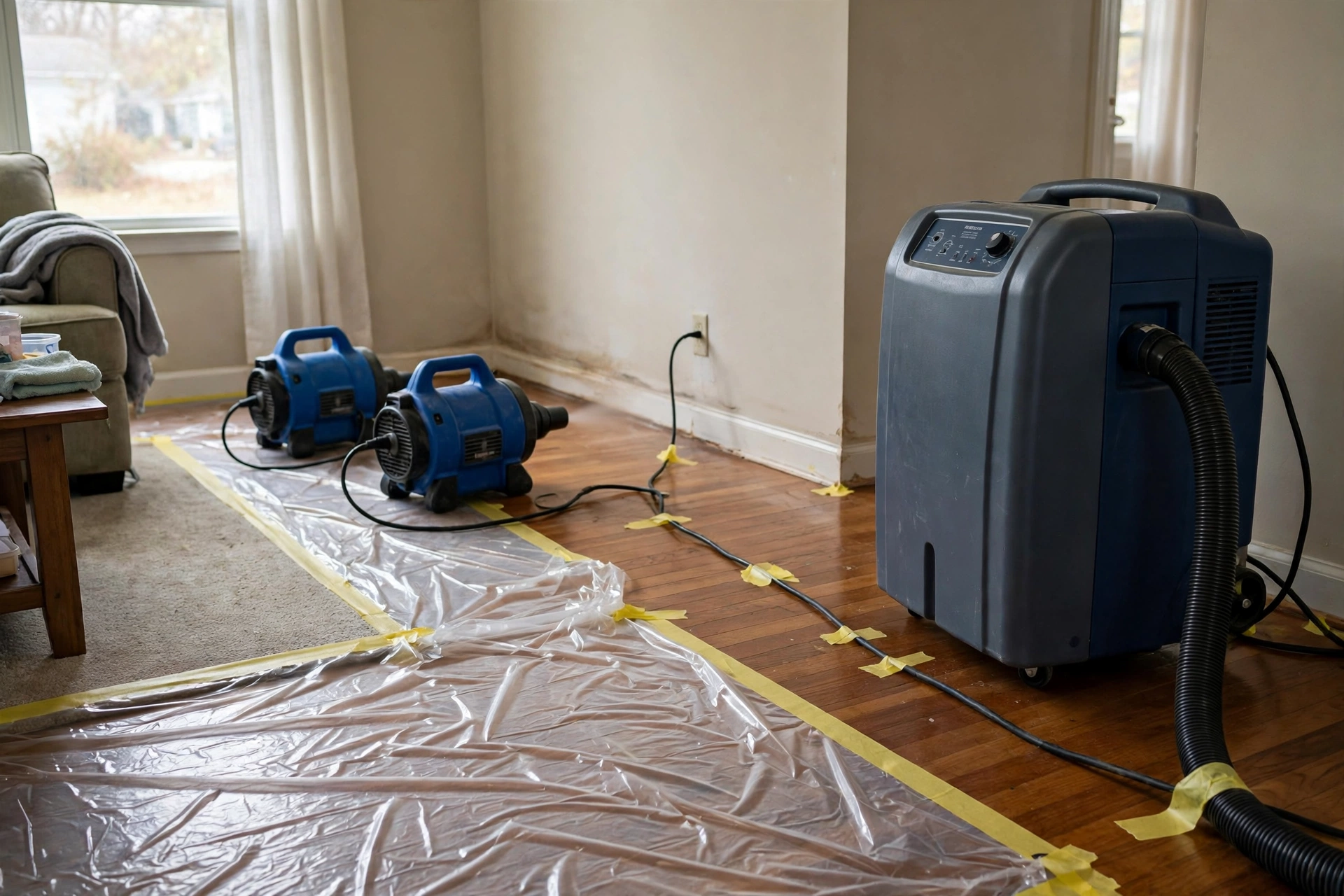
Industrial air movers and a dehumidifier drying a water-damaged room

Structural drying pairs high-velocity airflow with commercial dehumidification. In Texas humidity, that balance is critical.

Air movers alone can push moisture into dry materials; dehumidifiers alone cannot reach water inside walls. Used together, and monitored with meters, they dry the structure — not just the surface.

Safety

What Homeowners Can Safely Do vs What Requires Professionals

After water damage, some steps are safe and helpful for any homeowner. Others should be left to professionals — and knowing the line protects both your home and your household.

Safe steps for homeowners

  • Stop the water source if you safely can — shut the main valve for a burst pipe, turn off the appliance, or move belongings out of the water's path.
  • Protect yourself from electricity. If water has reached outlets, fixtures, or the breaker panel, stay out of the water and do not touch electrical equipment.
  • Move valuables to dry ground and lift furniture legs onto foil or wood blocks to prevent stain wicking.
  • Ventilate and circulate air once the water source is stopped and it is safe to do so — open interior doors, run fans, and keep the air conditioner running to remove humidity, unless the system itself was flooded.
  • Document everything with photos and video before you move or clean anything, including water lines on walls and affected belongings.
  • Clean small, hard, non-porous surfaces — a small patch on tile or a sealed countertop — following the guidance in the next section.

Leave these to professionals

  • Large mold growth or growth covering a wide area. Do not disturb it, scrub it, or tear out surrounding material yourself — disturbance can spread mold to clean areas of the home.
  • Mold inside walls, under flooring, in attics, or in HVAC systems. Hidden growth needs containment, proper equipment, and moisture mapping to resolve, not surface cleaning.
  • Any sewage backup or floodwater contamination. Water that carried sewage, soil, or debris is not a homeowner cleanup job — it requires professional extraction, sanitizing, and material removal.
  • Water near electrical systems or a bulging, waterlogged ceiling, which can collapse without warning.
  • Structural drying itself. Household fans and home dehumidifiers cannot dry wall cavities, subfloor, or framing to verified standards, and guessing at dryness is how mold problems start.
  • Any situation where household members have health concerns. Get a professional assessment first, and seek advice from a healthcare professional about any health questions.
Safety note: do not use bleach on large moldy areas, and do not disturb large mold growth to try to clean it. Bleach does not solve growth inside porous materials such as drywall, and scrubbing a large area can spread mold through the air to the rest of the home. For anything beyond a small surface patch, call (866) 316-5715 for a professional assessment first.

Cleaning Small Surface Areas Safely vs Professional Remediation Scope

There is a meaningful difference between wiping a small surface patch and remediating mold, and confusing the two is how small problems become house-wide ones. A small surface patch means a limited area on a hard, non-porous surface — for example, a small spot on bathroom tile or a sealed surface that got damp from a minor, now-fixed leak, where the material behind and beneath it is dry. In that narrow case, a homeowner can clean the surface with a household detergent and water, wearing gloves and eye protection, ventilating the room, and drying the surface fully afterward. If the spot returns, grows, or the material underneath is soft, stained, or damp, it is no longer a surface job — stop and get a professional assessment.

Professional remediation covers everything beyond that narrow case, and its scope is much wider than cleaning. A remediation crew first contains the affected area — sealing it off so mold is not spread to clean rooms during the work. Then they remove porous materials that cannot be cleaned, such as moldy drywall sections, carpet padding, and insulation, rather than trying to wash growth out of material it has grown through. They clean and treat the remaining structural surfaces, run air filtration during the work, and — critically — dry the structure to verified moisture standards and fix or identify the moisture source. Without that last part, remediation is temporary: new growth will return to the same spot as soon as conditions allow.

Two rules of thumb help homeowners decide. First, the material rule: if mold is on something porous — drywall, wood that has soaked through, carpet, insulation, ceiling tile — surface cleaning will not resolve it, because growth extends into the material. Second, the hidden-water rule: if there was ever standing water, a burst pipe, or a roof leak feeding the area, assume hidden moisture exists until meters prove otherwise. In both cases, a professional assessment is the right move, and it is also the step that protects an insurance claim, since documented professional work carries far more weight than undocumented homeowner cleanup.

After drying

Preventing Mold After Drying: Humidity Control, Ventilation, and Fixing the Source

Drying the home once is only half the job. Mold prevention after water damage is ongoing, and in Texas it comes down to three habits: control indoor humidity, ventilate wet-prone spaces, and fix the source so the same area never floods twice.

Control indoor humidity

Keep indoor humidity in a moderate range year-round. In Texas, that usually means running the air conditioner rather than opening windows on humid days, since outdoor air in Gulf and East Texas humidity adds moisture faster than it removes it. Use bathroom exhaust fans during and after showers, run the kitchen range hood when cooking, and consider a dehumidifier for chronically damp rooms such as ground-floor bedrooms or enclosed patios converted to living space. If a room consistently feels damp, or condensation regularly forms on windows and vents, treat that as a warning sign and find the moisture source rather than accepting it as normal Texas weather.

Ventilate the spaces that trap moisture

Attics need working ventilation — ridge vents, soffit vents, or powered vents that actually move hot, humid air out — or trapped attic moisture will condense on framing and ductwork. Bathrooms need exhaust fans vented outdoors, not into the attic, a mistake that quietly soaks attic insulation in many Texas homes. Closets on exterior walls, laundry rooms, and rooms with little airflow benefit from keeping doors ajar and furniture pulled slightly away from walls so air can circulate. After any future leak, even a small one, ventilation plus fast drying is what keeps a wet spot from becoming a mold spot.

Fix the source — permanently

Every mold prevention plan fails if the water keeps coming back. After drying, the source must be repaired: the burst pipe section replaced, the roof flashing sealed, the appliance hose swapped, the air conditioner condensate drain cleared, the grading around the foundation corrected so water flows away from the slab. Texas homeowners should also watch the seasonal sources: gutters and downspouts clogged with leaves before a Gulf storm, hose bibbs left connected through a freeze, and attic condensation in summer. A home that has flooded once is more likely to flood again in the same place — gutters, grading, plumbing, and roof penetrations deserve a check after every major storm and every freeze. Prevention is not a single project; it is the habit of keeping the house dry, and in Texas humidity, a dry house is a mold-resistant house.

Mold and Insurance Documentation

Mold coverage in homeowners insurance is often limited and policy-specific, which makes documentation after water damage especially important. Most Texas homeowners policies cover sudden, accidental water damage — a burst pipe or a storm-driven roof failure — while excluding gradual leaks, long-term seepage, and maintenance failures. Mold that results from a covered, sudden event is often treated differently from mold that grew from a slow leak nobody addressed, and that distinction is decided largely on the paper trail you can show.

Start documenting from the moment you discover the water. Photograph and video the flooding as found, the water lines on walls, the source if visible, and every affected room and belonging. Keep the professional crew's documentation: the moisture map, the drying logs, the final moisture readings, and any assessment of mold found during the work. Keep receipts for emergency expenses and for any temporary living costs if the home is uninhabitable. Do not discard damaged materials until your adjuster has seen them, or until you have thoroughly photographed them — discarded evidence is difficult to claim. Report the claim promptly, since delays can complicate coverage, and review your policy's mold provisions and any endorsements before assuming what is covered. If mold is discovered weeks after the water event, that same documentation — proving the sudden event, the professional drying, and the timeline — is what connects the mold to the covered loss rather than to neglect.

Where we serve

Mold After Water Damage Across Texas — Local Pages

Texas humidity and housing vary by region, and so do mold risks after water damage. Our city guides cover the local conditions, housing types, and response details for each community we serve:

Lubbock

West Texas summer heat bakes attics on the South Plains, and a slow attic leak can feed mold for weeks before a ceiling stain appears. See Lubbock emergency extraction →

Amarillo

High Plains freeze-thaw cycles burst pipes in winter, and the thaw-day flood that follows can leave wall cavities wet just as indoor heat returns. See Amarillo emergency extraction →

Denton

North Texas slab subdivisions and humid summers mean water under flooring dries slowly — and mold in wall cavities is Denton's quiet post-flood risk. See Denton emergency extraction →

Tyler

East Texas humidity is among the highest in the state, and shaded Piney Woods lots slow drying around foundations after every storm. See Tyler emergency extraction →

Killeen

Central Texas slab-on-grade homes and humid summers trap moisture under flooring and inside wall bases after appliance and pipe leaks. See Killeen emergency extraction →

FAQ

Mold After Water Damage FAQs

How fast can mold grow after water damage in Texas?

Mold can begin growing within 24 to 48 hours after water damage in warm, humid Texas conditions. The timeline depends on temperature, humidity, the type of water, and the materials involved — porous materials such as drywall and carpet padding stay wet longest. Do not wait to see mold before acting; drying should start as soon as the water source is stopped.

Why is mold risk higher in Texas than in cooler, drier states?

Texas combines year-round warmth, high humidity — especially along the Gulf Coast and in East Texas — slab-on-grade construction with little airflow under floors, and hot attics that hold water heaters and air handlers. Warm, wet, poorly ventilated materials are ideal for mold growth, so Texas homes need faster and more complete drying after any water event.

What are the signs of mold after water damage?

Look for discolored spots on walls, ceilings, baseboards, or grout, paint or wallpaper that bubbles or peels over a previously wet area, warped flooring or swollen baseboards, and a persistent musty or earthy odor — especially one with no visible mold. A musty smell alone is a strong reason to request a professional assessment, since growth often hides behind drywall or under flooring.

Can I clean up mold myself?

Only a small patch on a hard, non-porous surface that is fully dry behind and beneath it is a homeowner job, cleaned with household detergent and water while wearing gloves and eye protection. Do not use bleach on large moldy areas and do not disturb large growth yourself — disturbance can spread mold to clean areas. Large growth, growth inside walls, attics, or HVAC systems, and any sewage or floodwater contamination require professionals.

How does professional drying prevent mold?

Professionals extract standing water, remove materials that cannot be dried, and dry the structure with industrial air movers and commercial dehumidifiers. Moisture meters and infrared cameras map hidden water inside walls and under floors, and drying continues until every material reaches its verified dry standard — not just until surfaces feel dry. That verified dryness is what prevents mold from growing out of sight later.

How do I prevent mold after my home has been dried?

Keep indoor humidity moderate by running the air conditioner rather than opening windows on humid days, ventilate bathrooms and attics properly with fans vented outdoors, and fix the water source permanently — the pipe, roof flashing, appliance hose, condensate drain, or grading issue that caused the flood. A home that floods in the same place twice will grow mold in the same place twice.

Does homeowners insurance cover mold after water damage?

It depends on your policy. Most Texas homeowners policies cover sudden, accidental water damage such as a burst pipe, while excluding gradual leaks and maintenance failures, and mold coverage is often limited. Document the water event with photos, keep the crew's moisture logs and drying records, report promptly, and review your policy's mold provisions before assuming what is covered.

See Mold or Smell Mustiness After Water Damage? Call Our 24/7 Dispatch

Connect with a verified Texas pro for a professional assessment, structural drying, and moisture mapping.

📞 Call (866) 316-5715
Serving Lubbock, Amarillo, Denton, Tyler, Killeen & surrounding Texas communities
📞 Call (866) 316-5715 — 24/7