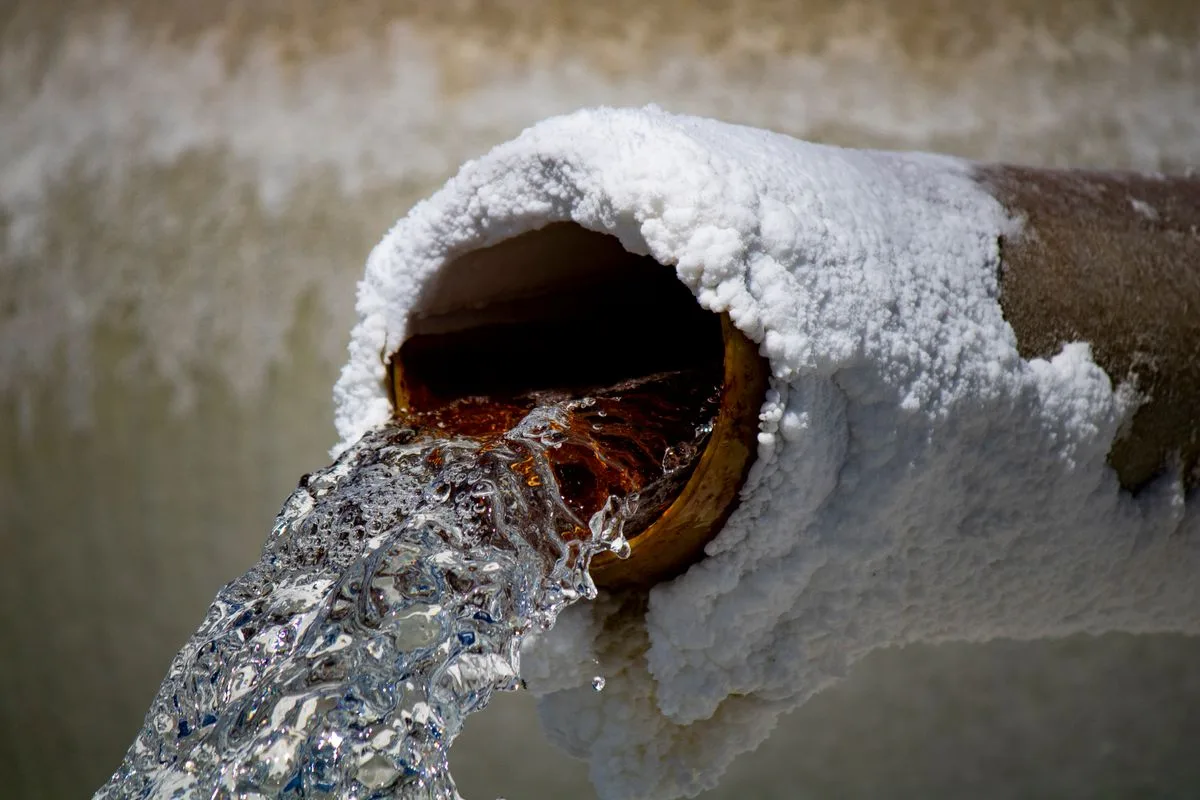
Texas pipes aren't built for hard freezes — and when one splits, it can flood a home in minutes. Here's why it happens, how professional extraction stops the damage, and what to do first.
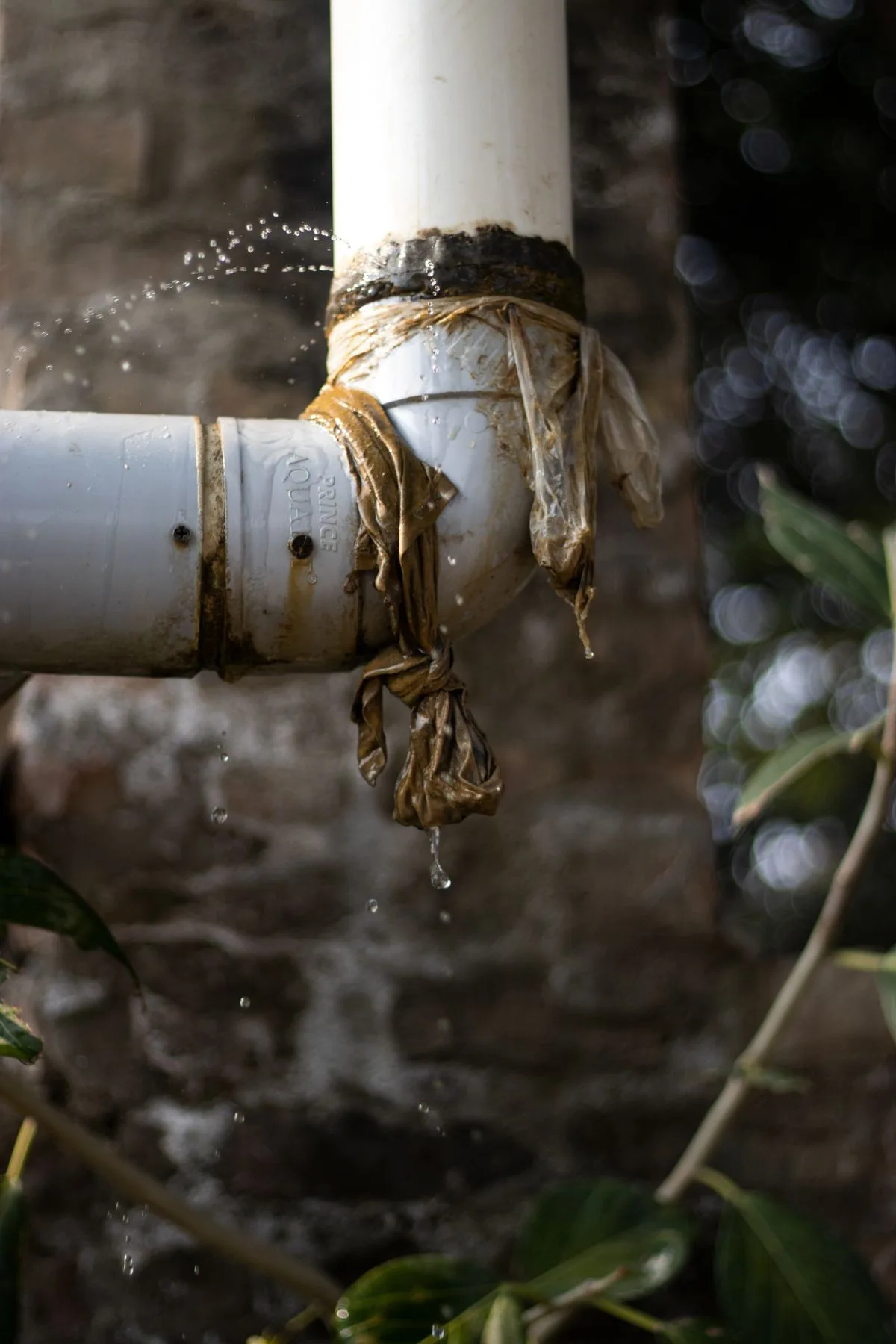
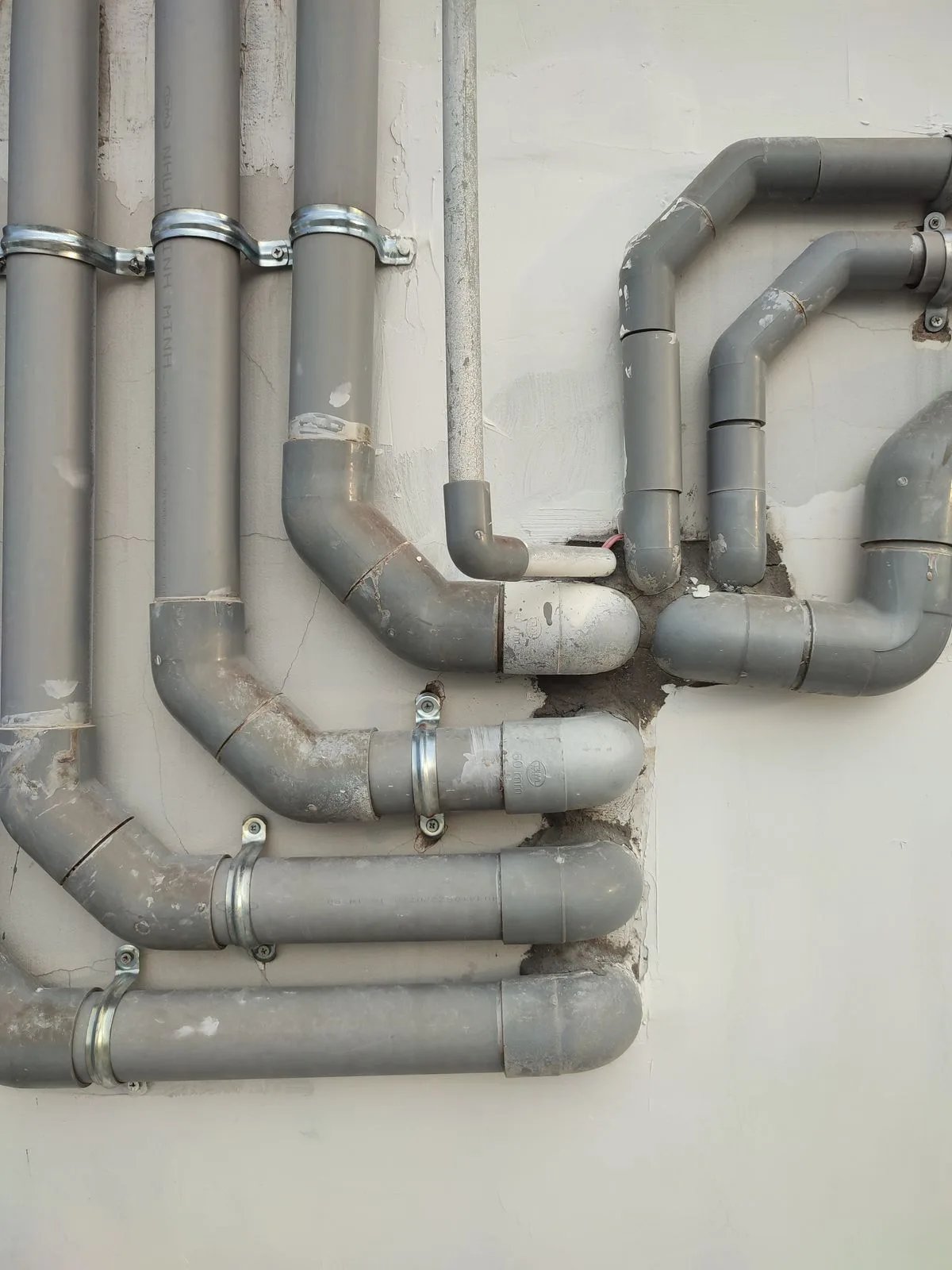
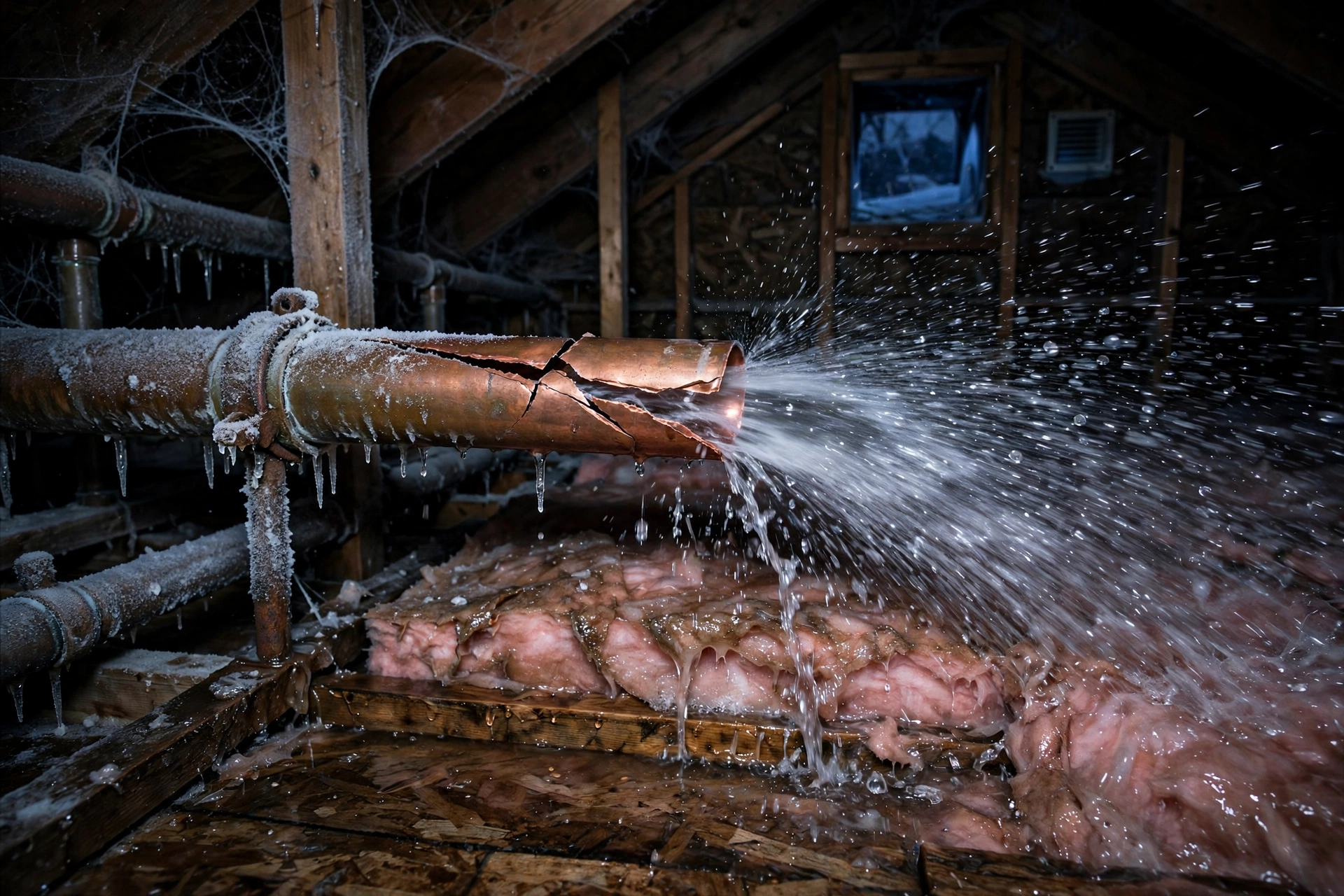
Texas homes are engineered for heat, not cold. Supply lines run through attics — where water heaters sit in countless Texas homes — along exterior walls, and through uninsulated garages and crawlspaces. When a hard freeze arrives, temperatures in those spaces can drop well below freezing while the rest of the house stays warm. Water expands as it freezes, and that expansion creates enormous pressure inside the pipe. The pipe doesn't always split where the ice forms — pressure builds between the ice blockage and a closed faucet, and the pipe fails at its weakest point: a joint, an elbow, or a corroded section.
The February 2021 freeze taught Texas this lesson brutally. Millions of pipes burst statewide when temperatures stayed below freezing for days and power outages killed furnaces. Homes that had never seen a plumbing failure in decades flooded from the attic down. And the damage pattern was distinctly Texan: burst lines in attics collapsed ceilings onto living rooms, exterior-wall pipes in slab-on-grade homes flooded across tile and wood floors, and outdoor hose bibbs connected to interior lines soaked wall cavities.
Here's what makes a burst pipe different from every other water emergency: the water doesn't stop until you stop it. A storm passes; a burst supply line flows at full pressure indefinitely. A typical residential supply line can discharge hundreds of gallons per hour — filling rooms, wicking up drywall, and pooling inside wall cavities the entire time the valve stays open. That's why the first move is always the main shutoff, and the second is a call to a crew that can extract what already escaped.
Not all plumbing is equally exposed. These are the six places Texas pipes fail most — and what each failure looks like inside your home:

The classic Texas failure point. Supply lines routed through unconditioned attics and along exterior walls are the first to freeze in a hard freeze. When power goes out and heat stops, attic temperatures track the outdoors — and the burst is usually discovered as a spreading ceiling stain rooms away from the break.

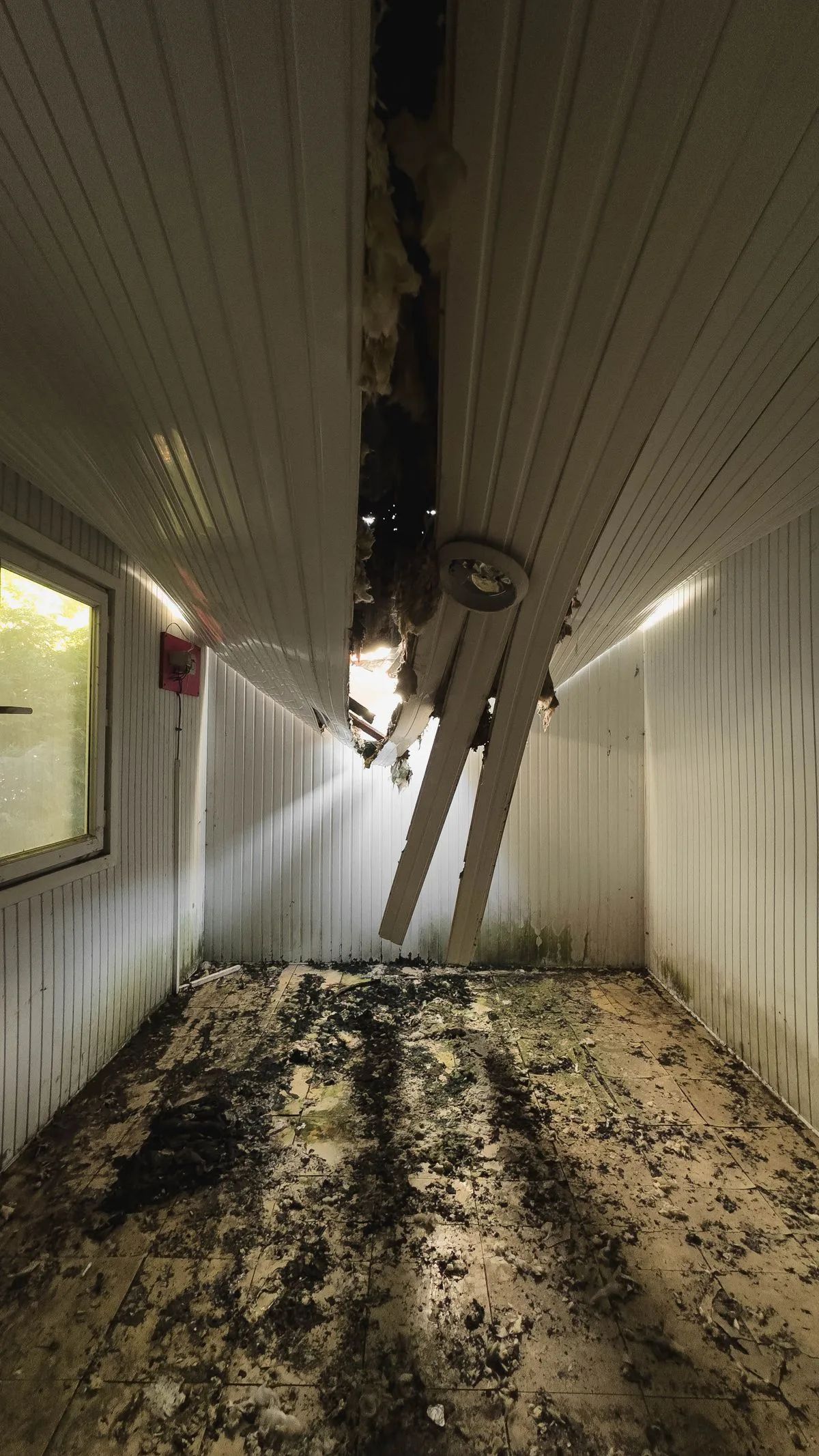
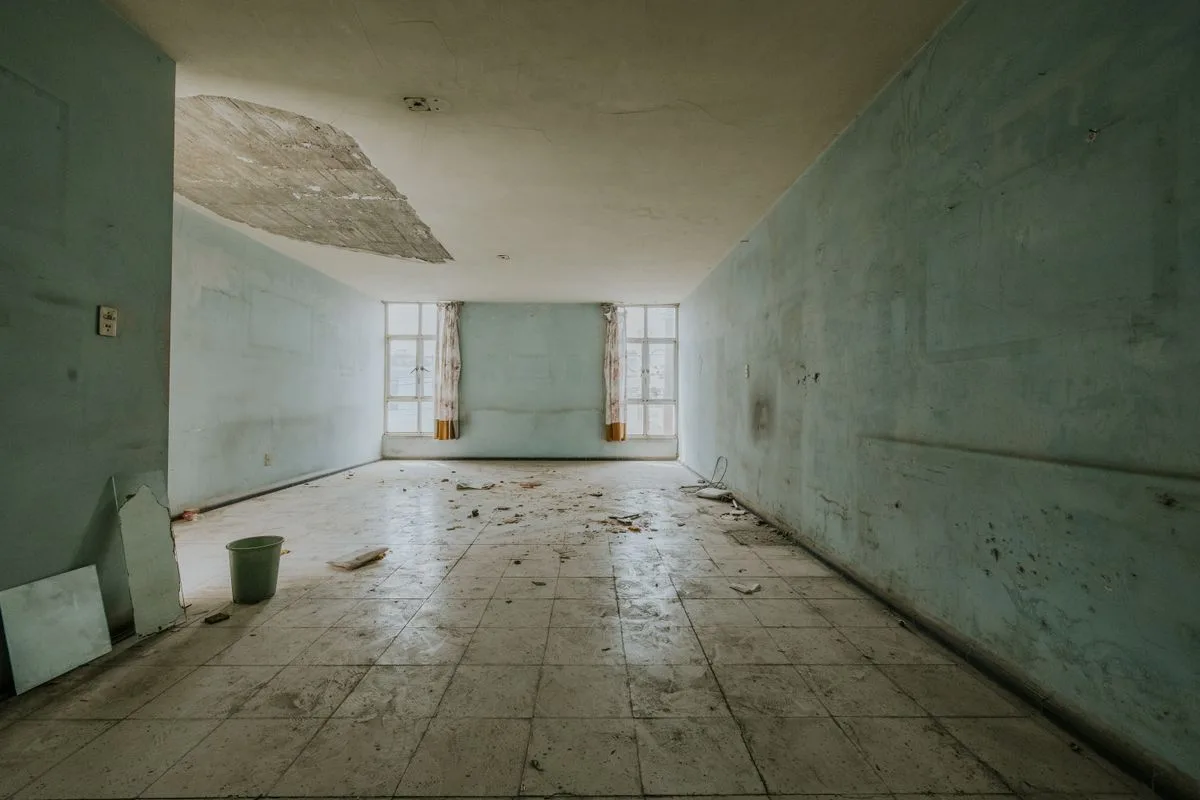
An attic burst floods downward. Water saturates insulation and pools on the drywall ceiling below until the weight tears it open — dumping water, insulation, and debris into the room in a single collapse. If your ceiling is bowing or bulging during a freeze, get out from under it and call.

A burst line at floor level — a washing machine supply, a water heater connection, a slab-fed line — sends water racing across the lowest surfaces. Wood flooring cups and buckles, carpet padding acts like a sponge, and tile grout channels water into the subfloor. Extraction from floors and subfloor is the first and biggest job.

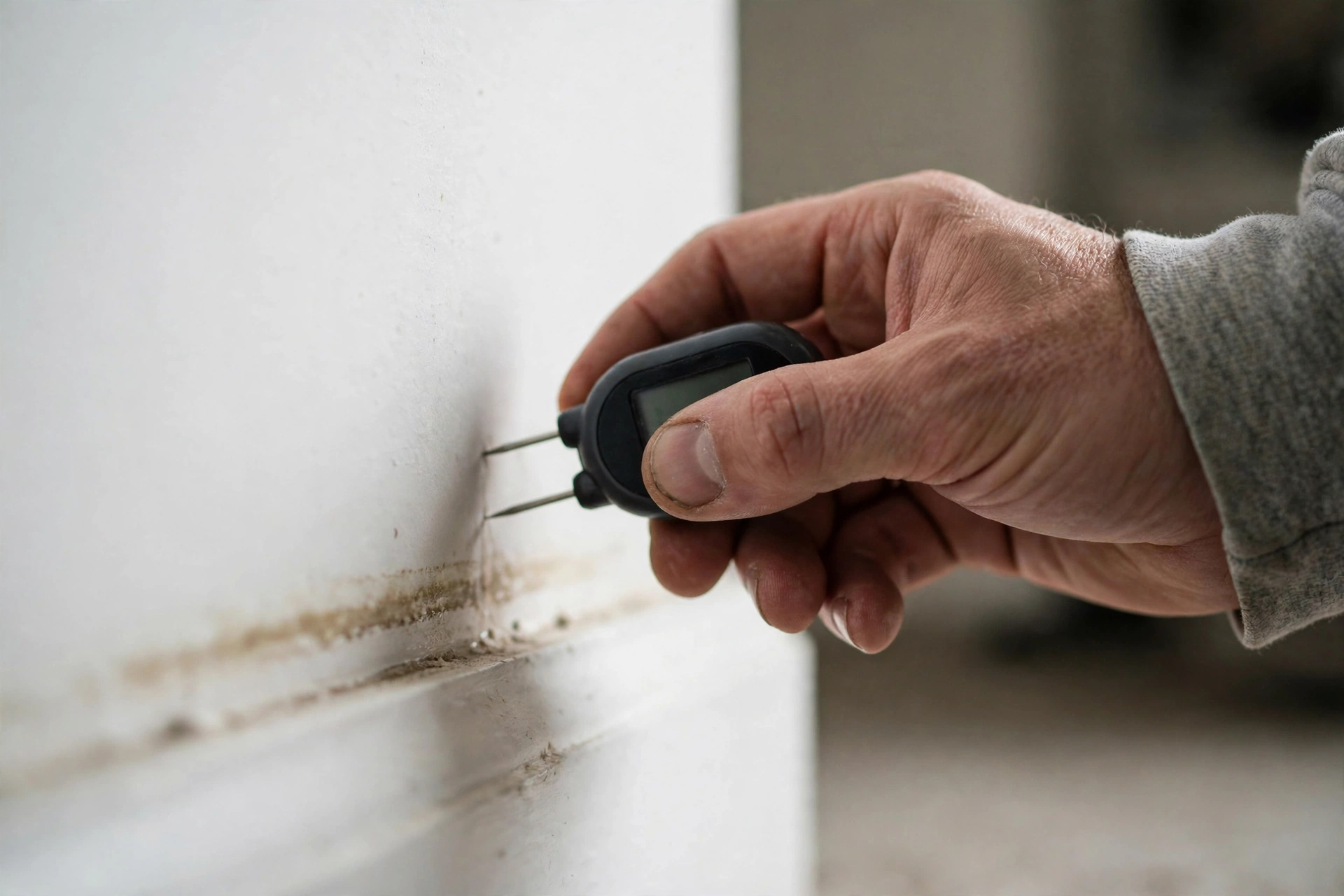
The water you see is a fraction of the water present. Pressurized bursts inject water into wall bases, behind baseboards, and into framing cavities — places that stay wet for weeks without professional drying. Moisture meters and infrared cameras reveal the true footprint that eyes miss.

Texas slab-on-grade homes carry pressurized lines beneath concrete. Pinhole leaks push water upward through flooring for weeks before anyone notices — warm spots on tile, mysterious dampness, rising humidity. These need extraction and drying just like a sudden burst, plus a plan to find the line.

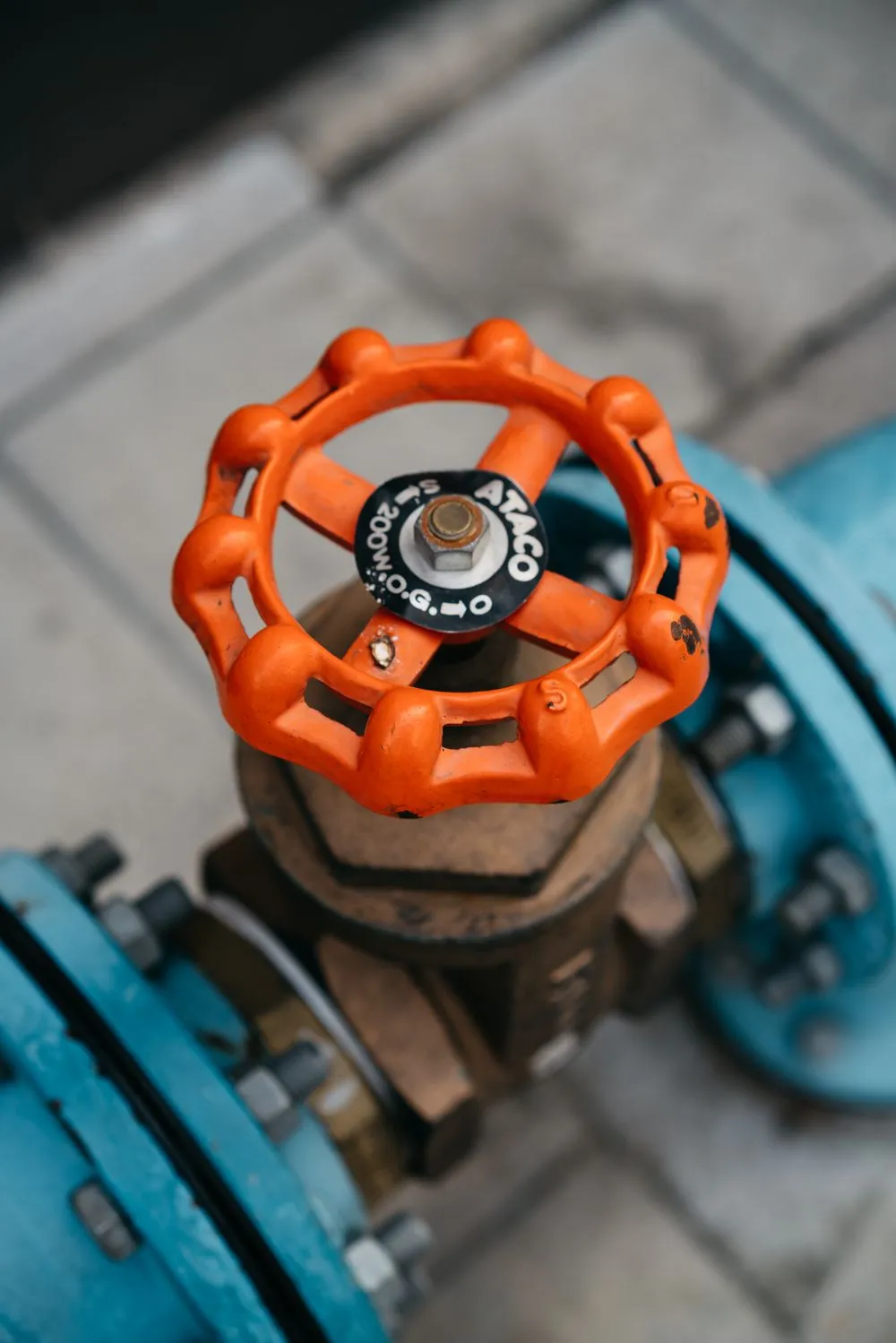
The single most important piece of plumbing knowledge in a Texas home. Find yours today — near the street meter, in the garage, or in a utility closet. In a burst emergency, turning this valve stops the flood at its source. Every minute it's open lets more gallons escape.
A burst pipe is a race against flowing water. Unlike a storm that passes, this emergency continues until you shut the valve. Follow this sequence:
Here's exactly what a professional crew does when they arrive at a burst-pipe flood — from the first shutoff check to the final moisture reading.
Technicians first confirm the water source has stopped — checking the main valve and draining residual line pressure. They assess electrical hazards, especially where water has reached outlets, fixtures, or the panel. If the pipe is still flowing, stopping it comes before everything else.
The crew inspects every affected area — including the rooms below and beside the obvious flooding — and classifies the water. Fresh burst-pipe water starts as Category 1 (clean), which affects what can be saved and what must go. This assessment sets the entire plan.
Truck-mounted extractors and submersible pumps remove the bulk water from floors, carpets, and low points. Weighted extraction tools press water from carpet and padding. In an attic burst, this includes the pooled water sitting on collapsed or intact ceilings.
Penetrating and non-penetrating moisture meters plus infrared cameras map exactly where the pressurized burst drove water — behind baseboards, inside wall cavities, under flooring, into subfloor and framing. This map, not guesses, drives the drying plan.
Saturated carpet padding, swollen particle board, and waterlogged insulation are removed. Collapsed ceiling drywall comes out; compromised wall sections are cut to the flood line so drying equipment can reach the cavities behind them.
Industrial air movers create high-velocity airflow across wet surfaces while commercial dehumidifiers pull moisture from the air. In Texas humidity — and especially in warm attics — balancing airflow with dehumidification is critical so moisture doesn't just migrate into more materials.
Technicians return with moisture meters to verify every material has reached its dry standard before equipment is removed. Drying ends when the meters say so — not when surfaces feel dry. This verification is the difference between a fixed home and a future mold problem.
Affected areas are treated with antimicrobial products to discourage mold and bacteria growth, and deodorizers address musty smells. The property is left dry, documented, and ready for the repair phase.
A burst pipe can dump hundreds of gallons before the valve closes. Here's the professional equipment that removes it — and why household tools can't substitute:

Professional crews don't guess what's wet — they measure it. Moisture meters and infrared imaging find the water hiding inside walls and under floors.
That measurement is what separates a dried structure from one that only feels dry on the surface.
| Equipment | What It Does | Why DIY Falls Short |
|---|---|---|
| Truck-mounted extractors | Pull hundreds of gallons per hour from carpet, pad, and hard surfaces with high-powered vacuum | Consumer wet-vacs hold a few gallons and lack the lift for deep padding and subfloor |
| Submersible pumps | Move large volumes of standing water quickly — essential when rooms are inches deep | Mops and buckets can't keep pace with a burst line's output |
| Weighted extraction tools | Use body weight plus vacuum to squeeze water from carpet and cushion in a single pass | No consumer equivalent exists |
| Industrial air movers | Generate focused high-velocity airflow that evaporates moisture from surfaces, cavities, and framing | Household fans move a fraction of the air and can't be directed into wall bases |
| Commercial dehumidifiers | Remove large volumes of moisture per hour from the air, preventing re-absorption into materials | Home dehumidifiers are sized for comfort, not structural drying |
| Moisture meters & infrared cameras | Detect the hidden water a burst drives into walls, ceilings, and subfloors | Without them, you're guessing — and guesses miss the moisture that causes mold |
Burst-pipe water starts as Category 1 — clean water from a pressurized supply line. That sounds reassuring, but it's temporary. Clean water degrades as it sits: within roughly 48 hours of contacting building materials, dust, and debris, it becomes Category 2 (gray water), carrying enough contamination that porous materials like carpet pad and insulation generally must be removed rather than dried. This is the industry's core argument for speed — the same flood that could be dried in place on day one may require demolition by day three.
The freeze adds a second wrinkle. Burst pipes in winter often flood homes that are also without heat, and slow drying in a cold house stretches the timeline — while the moment the heat returns, warmer air accelerates any mold that started. Crews handle this by prioritizing complete extraction and then drying aggressively to verified standards, with antimicrobial treatment as the standard finish.

Texas homes aren't built for hard freezes — pipes run through uninsulated attics and exterior walls, exactly where Arctic air hits first.
When water inside a pipe freezes, it expands and splits the pipe wall. The flood often starts only when the ice thaws and full pressure returns.
Understanding why pipes burst helps you see why prevention and fast response matter. The physics is the same everywhere — but Texas construction makes the state uniquely vulnerable.
Most people assume the ice splits the pipe where it forms. Usually it doesn't. When water freezes inside a pipe, the expanding ice block becomes a plug — and the still-liquid water trapped between that plug and a closed faucet has nowhere to go. Pressure builds relentlessly in that trapped section until the pipe fails at its weakest point: a corroded joint, a thin elbow, or an aged connection. That's why bursts appear in odd places, far from the frozen section.
Material matters. Older copper lines corrode and thin over decades, creating predictable weak points. PEX tubing — common in newer Texas builds — can expand slightly and resist splitting better, but its brass fittings and connections are still vulnerable. And high water pressure, common in Texas municipal systems, raises the baseline stress on every joint.
Northern homes bury supply lines deep and route plumbing through conditioned walls. Texas homes do neither. Slab-on-grade construction — the norm across the state — leaves lines running through the slab or up through walls with minimal freeze protection. Attic-mounted water heaters, standard in Texas subdivisions, put hot and cold lines in the coldest space in the house. Exterior hose bibbs connect directly to interior supply lines. Garage and laundry plumbing often sits in uninsulated walls.
Add the Texas freeze pattern: temperatures that swing from 70°F to the teens in a day, homeowners who've never insulated a pipe in their lives, and power outages that kill furnaces right when they're needed most. The result is predictable — and it's why the state's burst-pipe losses cluster in freeze events rather than spreading evenly through the year.
When a hard freeze is forecast, the measures that work are simple and well-established: insulate exposed pipes and outdoor spigots; keep cabinet doors open under sinks on exterior walls so warm air reaches the plumbing; let faucets drip slightly during deep cold — moving water freezes far less readily; keep the thermostat steady rather than dropping it at night; and never leave a home completely unheated during a freeze warning. Most importantly: know where your main shutoff valve is before the emergency. Label it. Show your family. The households that recover fastest from the February 2021 freeze were the ones that shut their water off within minutes of discovering the burst.

With a burst pipe, the clock is the damage. Closing your main valve is the single action that stops the flood at its source.
Then work the checklist below — power safety first, then move what you can out of the water's path.
Freeze risk and plumbing construction vary across Texas. Our city guides cover the specific risks, neighborhoods, and response details for each community we serve:
West Texas freezes hit hard on the South Plains — attic lines and exterior-wall pipes burst across Lubbock every cold snap. See Lubbock emergency extraction →
Panhandle winters are the coldest in Texas, and freeze-thaw cycles crack supply lines across the High Plains. See Amarillo emergency extraction →
North Texas ice storms freeze attic plumbing across DFW's northern suburbs — burst pipes are Denton's winter signature. See Denton emergency extraction →
East Texas ice events catch piney-woods homes with exposed plumbing and crawlspace lines. See Tyler emergency extraction →
Central Texas freezes burst pipes in slab-on-grade subdivisions — and thaw-day discoveries are common. See Killeen emergency extraction →
Texas homes are built for heat, not cold — supply lines run through unconditioned attics, along exterior walls, and under slabs with minimal freeze protection. A single hard freeze, especially combined with a power outage, is all it takes. The February 2021 freeze burst millions of Texas pipes in homes that had never failed before.
A typical residential supply line can discharge hundreds of gallons per hour at full pressure — and unlike a storm, it doesn't stop until the main valve is closed. A burst discovered hours later can flood multiple rooms, fill wall cavities, and collapse ceilings. Shutting the main valve is always the first move.
Common locations: near the street water meter (in a ground box at the property line), in the garage where the line enters, or in a utility closet. Some homes have an additional shutoff at the water heater. Find yours now, before an emergency — label it and show your household. In a burst emergency, this valve is what stops the flood.
Yes. Corrosion thins older copper and galvanized lines until pressure wins; high municipal water pressure stresses every joint; water hammer — the shock wave from sudden valve closures — fatigues connections over time; and slab movement in Texas clay soils can crack buried lines. Freezes cause the dramatic waves of failures, but bursts happen year-round.
Fresh burst-pipe water is Category 1 (clean) — it came from a pressurized supply line. But it degrades within roughly 48 hours as it contacts building materials, becoming Category 2. Keep everyone clear regardless, never let children or pets play in it, and never touch floodwater near electrical equipment. The crew's assessment confirms the category on arrival.
Usually yes — most Texas homeowners policies cover sudden, accidental water damage, and a burst pipe qualifies. What's typically excluded: gradual leaks, long-term seepage, maintenance failures, and damage from unheated vacant homes in some policies. Document everything with photos, keep receipts, and review your policy's specifics.
Insulate exposed pipes and outdoor spigots; open cabinet doors under sinks on exterior walls; let faucets drip during deep cold; keep the thermostat steady instead of dropping it at night; and never leave a home unheated during a freeze warning. Most important: know your main shutoff location so you can stop a burst in minutes if prevention fails.
Shut the main valve, then connect with a verified Texas pro for emergency extraction, structural drying, and sanitizing.
📞 Call (866) 316-5715