Water Damage Categories 1, 2 & 3 Explained for Texas Homes
Not all water damage is the same. The source of the water decides how it is cleaned up, what must be removed, and whether it is safe for you to handle. Here is what Category 1, 2, and 3 water mean in a Texas home.
Direct answer: Water damage is classified into three categories by the source of the water. Category 1 is clean water from a sanitary source, such as a broken supply line. Category 2 is gray water that contains some contamination, such as discharge from a washing machine or dishwasher. Category 3 is black water that is grossly contaminated, such as sewage backup or floodwater that has flowed across the ground. The category decides the cleanup approach: Category 1 is the least hazardous and the easiest to dry, while Category 3 always requires professional extraction, sanitizing, and removal of porous materials. In Texas, where Gulf storms, slab-on-grade homes, and long hot summers are common, knowing the category also helps you judge urgency, because heat and humidity speed up microbial growth in wet materials.
What the Water Damage Categories Mean
Restoration professionals classify water damage by where the water came from, not by how much water there is or how wet the room looks. That distinction matters because two floods that look identical can carry very different hazards. A living room soaked by a burst supply pipe and a living room soaked by floodwater that entered through the front door may both have wet carpet and wet drywall, but the second one has also brought in soil, debris, chemicals from roads and yards, and possibly sewage. Treating them the same way would leave contamination behind in one home and waste effort in the other.
The three-category system comes from the restoration industry's standard for water damage restoration. Category 1 water originates from a sanitary source and does not pose a substantial risk from ingestion, skin contact, or inhalation at the time of the event. Category 2 water contains significant contamination and has the potential to cause discomfort or sickness if contacted or consumed. Category 3 water is grossly contaminated and can contain pathogenic agents, and it is considered harmful by nature. Professionals use these definitions to decide on protective equipment, on whether porous materials can be dried in place or must be removed, and on how thoroughly affected surfaces must be cleaned and treated.
It is important to understand that a category describes the water, not the whole job. A Category 1 leak that soaks drywall and insulation for days can still cause serious structural damage and mold growth, even though the water itself started out clean. Conversely, a small Category 3 incident confined to a bathroom floor is still treated as a contamination job, not a simple mopping task, because of what the water contains. The category is the starting point for every decision that follows, from what the crew wears to which materials stay and which ones go.
Category 1 — Clean Water
Water from a sanitary source: a broken supply line, a leaking faucet connection, a water heater supply failure, or rainwater that has not contacted the ground. Lowest hazard at the time of the event, but it can degrade into a higher category over time if left standing.
Category 2 — Gray Water
Water with significant contamination: washing machine or dishwasher discharge, toilet overflow that contains urine but no feces, sump pump failure water, or water that has passed through building materials. Can cause discomfort or sickness on contact.
Category 3 — Black Water
Water that is grossly contaminated: sewage backup, toilet overflow containing feces, floodwater from rivers, bayous, or storm surge, and any water that has flowed across contaminated ground. Always a professional job; porous materials in contact with it are removed, not dried.
Category 1: Clean Water — Sources, Risks, and What It Looks Like in Texas
Category 1 water comes from a source that is meant to supply clean water to the home. The most common Texas examples are a burst or leaking supply pipe, a failed supply hose to a refrigerator ice maker, a water heater supply line failure, and a broken faucet or toilet fill valve. Water that falls as rain and enters through a roof leak, before it has run across soil or debris, is also generally treated as Category 1 at first, although a roof leak that soaks insulation and ceiling materials can change character as it picks up contaminants on its way down.
Texas gives Category 1 leaks some distinctive shapes. In the Panhandle and North Texas, winter freezes split pipes in attics and exterior walls, and the resulting leak can run for hours before anyone notices, soaking attic insulation and ceiling drywall from above. In Central and South Texas, slab-on-grade construction means that a leak in a hot-water line under the slab can push water up through flooring and along baseboards, far from the actual break. Hard water and aging supply lines in older subdivisions also produce slow, hidden supply leaks inside wall cavities that soak framing for weeks before a stain appears. In each case the water starts clean, which is why early extraction and drying can often save flooring, trim, and drywall that would have to be discarded after a contaminated flood.
The risks of Category 1 water are lower than the other categories, but they are not zero. Clean water still damages everything it touches: drywall swells and loses strength, wood flooring cups and buckles, carpet padding saturates, and insulation collapses and loses its insulating value. More importantly, clean water does not stay clean. Once it sits in contact with building materials, dust, and household surfaces, it picks up microorganisms, and in Texas heat that process runs fast. A Category 1 leak that is dried within a day or two is a straightforward drying job; the same leak left wet through a hot Texas weekend can support microbial growth and start to behave like a higher-category problem. That time sensitivity is the main reason professionals treat even clean-water leaks as urgent.
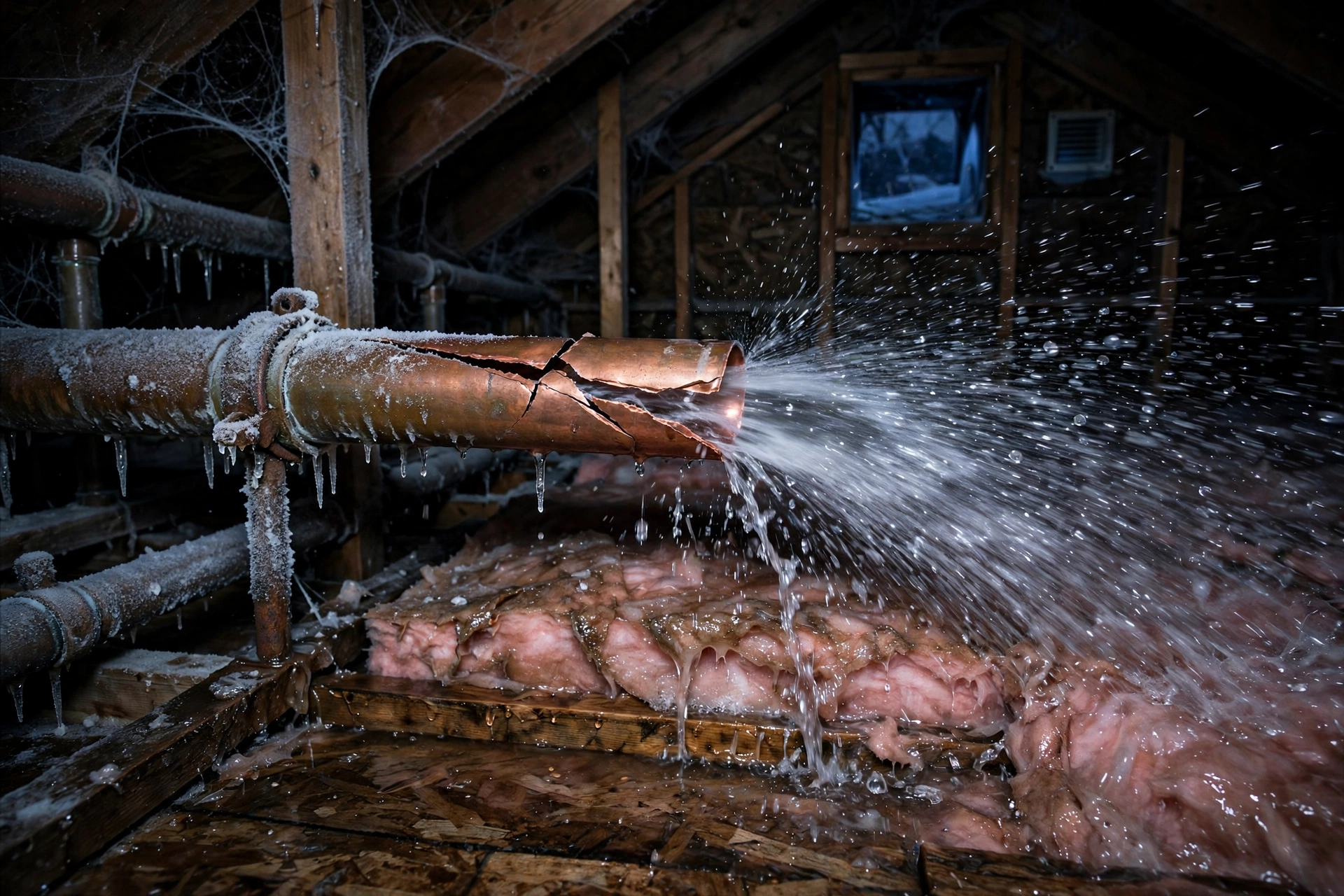
A burst supply pipe is the classic Category 1 event: the water starts clean, but it spreads fast and soaks everything in its path.
Stopping the supply at the main valve, then extracting and drying quickly, is what keeps a Category 1 leak from becoming a much larger problem. See our burst pipe extraction guide for the full sequence.
Gray water
Category 2: Gray Water — Sources, Risks, and Why It Needs More Than Mopping
Gray water sits between clean and black water. It is not sewage, but it is not clean either — and treating it like clean water is one of the most common homeowner mistakes.
Category 2 water contains significant contamination. The textbook sources are discharge from a washing machine or dishwasher, overflow from a toilet bowl that contains urine but no feces, and water from a failed sump pump. Water that starts as Category 1 but has passed through contaminated materials — for example, clean supply water that has flowed through a dirty wall cavity, across a soiled floor, or through ceiling insulation — is also reclassified as Category 2, because it has picked up contaminants on its journey. Seepage from a hydrostatic source, such as groundwater entering through a foundation crack after heavy rain, is commonly treated as Category 2 as well, since groundwater carries soil organisms and dissolved contaminants.
In Texas homes, appliance leaks are the leading gray-water story. Washing machines sit in laundry rooms, garages, and second-floor closets across the state, and a failed drain hose or pump can discharge gallons of detergent-laden water across tile, under baseboards, and into the room below. Dishwashers leak slowly around door seals and supply connections, soaking kitchen cabinet bases and subflooring before anyone notices. Texas slab homes add a twist: because there is no basement or crawlspace, gray water spreads laterally under flooring and along the slab, reaching rooms that look untouched while the material beneath them is saturated. Air conditioner condensate overflow, common in long Texas summers when drain lines clog with algae, can also produce gray water that soaks ceilings and walls, especially when the air handler sits in a hot attic.
The health risk of gray water is real but often underestimated. Detergents, fabric softeners, food residues, and biological matter from laundry and dishwater can cause skin and eye irritation and gastrointestinal discomfort if ingested or contacted for long periods. Children, older adults, and people with existing health concerns are more vulnerable, and the general advice is to keep people and pets out of gray-water areas until they are properly cleaned. Gray water also supports microbial growth more readily than clean water, because it already carries organic matter that microbes feed on — which is why Texas heat matters again. A gray-water spill left damp in a warm home can develop odor and microbial growth quickly, and materials that might have been saved after a clean-water event often must be removed after a gray-water one, particularly carpet padding, which acts as a sponge for contaminated water.
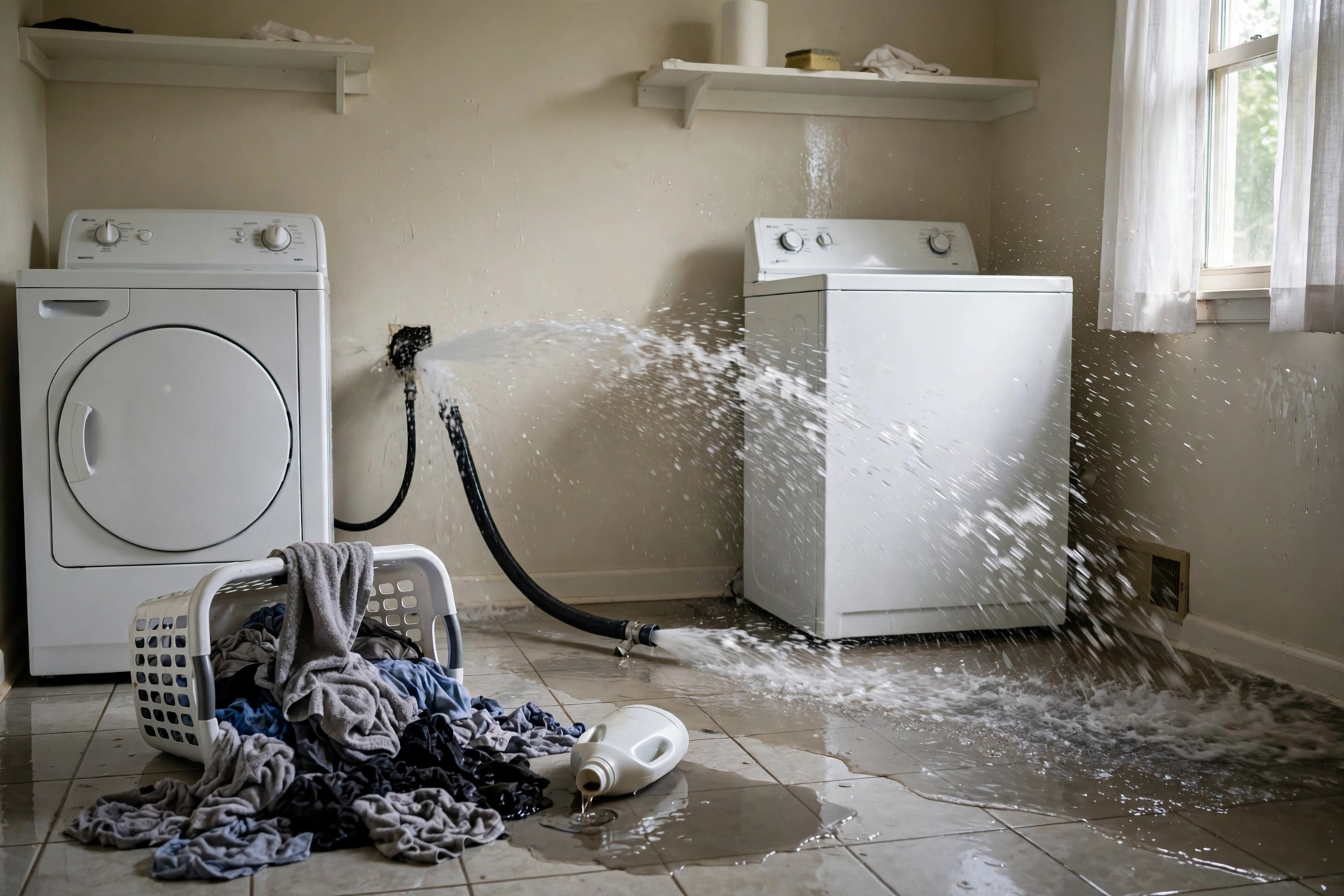
A washing machine discharge is a textbook Category 2 event: the water carries detergent, lint, and soil from the laundry.
It may look like clean water on tile, but it should be extracted and the area cleaned and dried by professionals rather than mopped and left. See our appliance leak extraction guide for what to do first.
Black water
Category 3: Black Water — Sources, Risks, and Why It Is Always a Professional Job
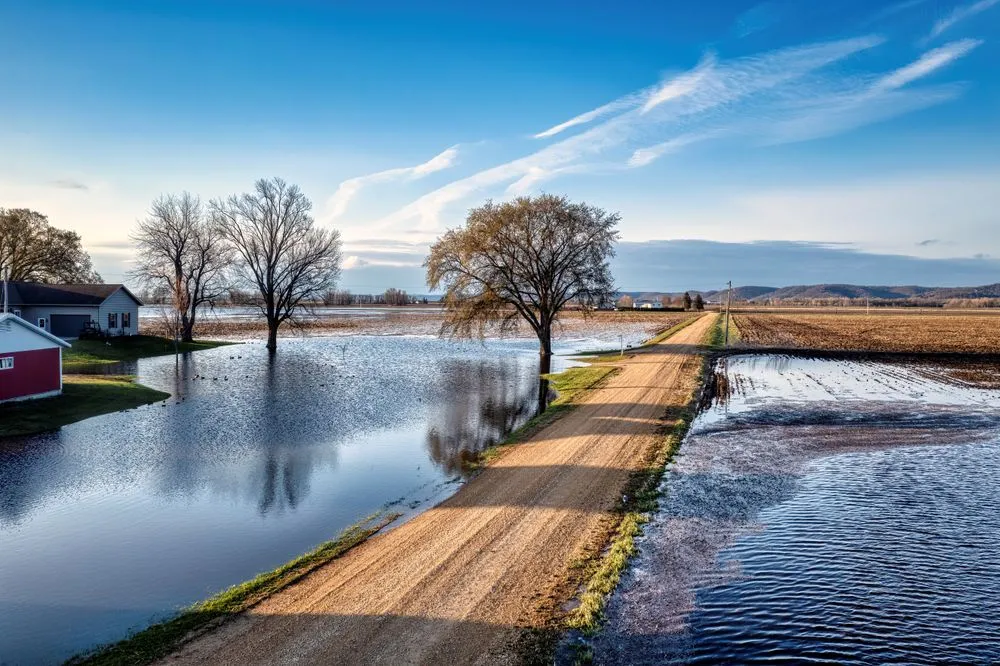
Category 3 water is grossly contaminated. It can contain pathogenic, toxigenic, or other harmful agents, and it is treated as a health hazard from the moment it enters the home. The defining sources are sewage backup and any water that originates outside the building and flows across the ground before entering. That second group is the one Texas homeowners meet most often: floodwater from a river, bayou, or creek; storm surge along the Gulf Coast; street runoff during a flash flood; and rainwater that has pooled on soil, roads, and yards and then entered the home. Toilet overflow that contains feces is also Category 3, as is any water carrying sewage, even if it has been diluted by rainwater.
Texas geography makes Category 3 events a recurring statewide risk, not a coastal one. Along the Gulf Coast, hurricanes and tropical storms push surge and rainfall flooding into homes that may sit only a few feet above sea level. In Central Texas, the Hill Country's steep terrain and thin soils turn heavy rain into flash floods along creeks and low-water crossings, and water that crosses roads and septic fields on its way to a home is contaminated by definition. In East Texas, slow-moving storms and saturated Piney Woods soils produce standing floodwater that lingers for days, soaking slab foundations and wicking deep into walls. In West Texas, sudden downpours on hard, dry ground run off fast and carry soil, oil, and debris into low-lying homes and garages. And in cities across the state, aging sewer systems can back up during heavy rain, sending sewage into ground-floor bathrooms and laundry rooms — a Category 3 event that has nothing to do with a river at all.
The risks of black water are the most serious of the three categories. Sewage and floodwater can carry bacteria, viruses, parasites, and chemical contaminants from roads, yards, agricultural land, and industrial areas. Contact can cause gastrointestinal illness, skin infections, and respiratory irritation, and the risk is higher for children, older adults, and anyone with a weakened immune system or open cuts. Beyond the immediate health risk, black water leaves contamination in porous materials that cannot be washed out: carpet, carpet padding, drywall, insulation, and upholstered items that have contacted Category 3 water are removed rather than cleaned, because no surface treatment can reliably decontaminate material that has soaked through. That removal rule is the single biggest difference between a Category 3 job and the other two, and it is why black-water cleanup is never a do-it-yourself task, even when the affected area looks small.
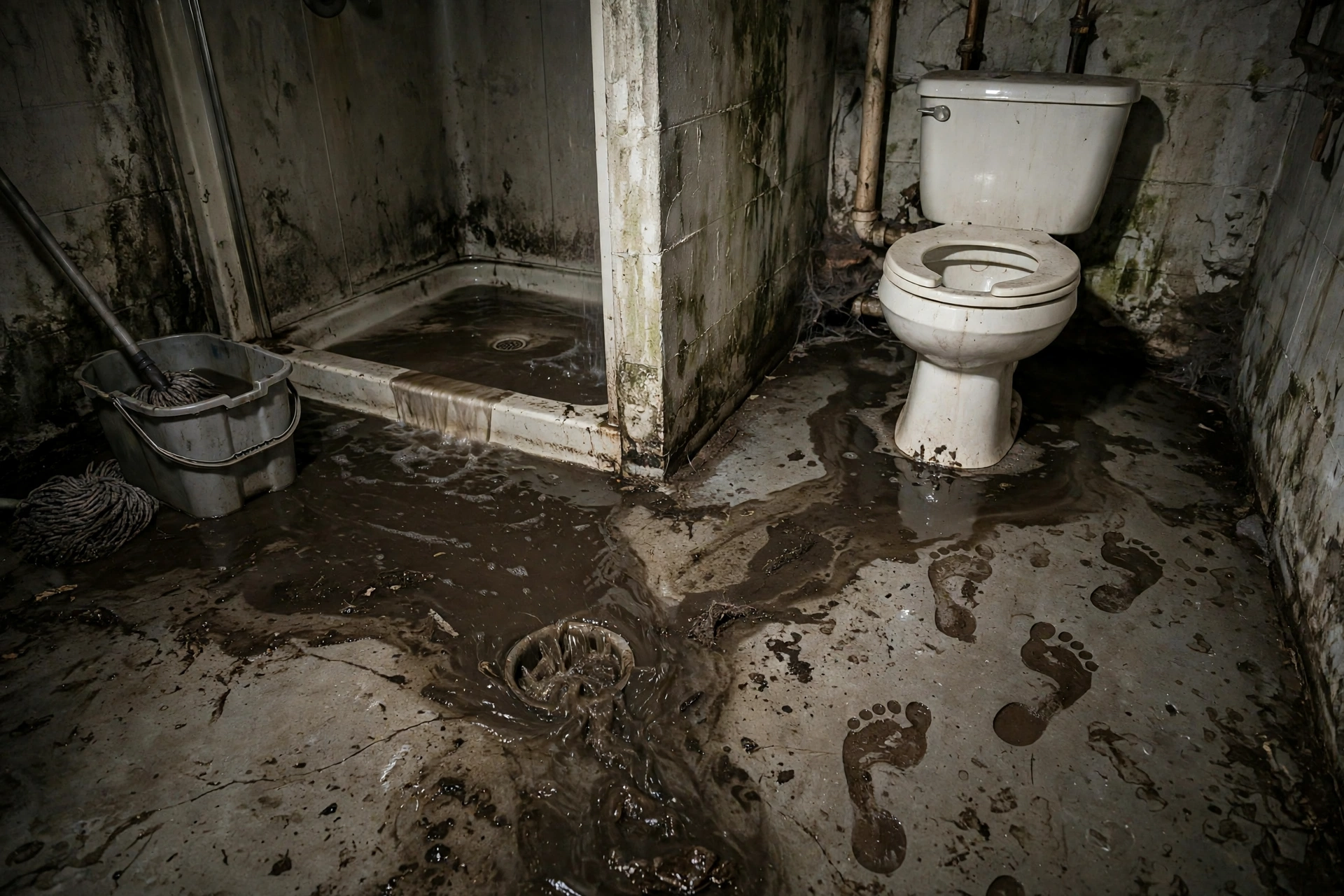
Sewage backup is the clearest Category 3 example: the water is grossly contaminated and everything porous it touches must go.
Stay out of the water, keep children and pets away, and call a professional crew with proper protective equipment. See our sewage backup extraction guide for the full safety sequence.
Time changes everything
How a Water Category Can Escalate Over Time
One of the least understood facts about water damage is that the category is not fixed. Water that starts as Category 1 can become Category 2, and Category 2 water can become Category 3, as time passes and conditions change. Restoration professionals describe this as category degradation, and it is driven by two forces: the water picks up contaminants from the materials and environment it contacts, and microorganisms in the water multiply as it sits, especially in warm conditions.
The timeline is not a strict clock, but the direction is consistent. Clean supply water that soaks drywall, wood, and dust for a day or two begins to carry the organic matter and microbes from those materials. Left longer, especially in a warm Texas home where the air conditioner is off or the home is vacant, that water supports bacterial growth and odor, and professionals will treat it as Category 2 even though the source was clean. Gray water degrades faster, because it already contains organic matter: a washing machine spill left wet through a hot weekend can develop the microbial load and odor associated with Category 3, and a crew arriving days later will treat it with Category 3 precautions and removal rules, regardless of what it was on day one.
Texas conditions accelerate every stage of this process. Summer indoor temperatures in a home without power after a Gulf storm can stay high around the clock, and humidity keeps wet materials from drying on their own. Slab-on-grade homes trap water under flooring and inside wall bases, where it stays warm, dark, and undisturbed — ideal conditions for microbial growth. Attics, where many Texas water heaters and air handlers sit, can be far hotter than the living space below, so a slow attic leak degrades faster than the same leak in a cool basement would. The practical lesson is that time is not neutral after water damage: every day of delay does not just add drying time, it can change the category, the cleanup method, and which materials can be saved.
This is also why professionals ask when the water event happened, not just where the water is. The answer shapes the whole plan. A burst pipe discovered within hours is handled as a Category 1 drying job with a good chance of saving most materials. The same pipe discovered after a week away, with standing water, odor, and discolored walls, is handled as a higher-category job with removal of porous materials and thorough cleaning of the structure. Homeowners sometimes hear this as bad news, but it is actually protective: treating degraded water as if it were still clean would leave contamination and microbial growth inside walls and under floors, where it would cause odor and mold problems long after the visible water was gone.
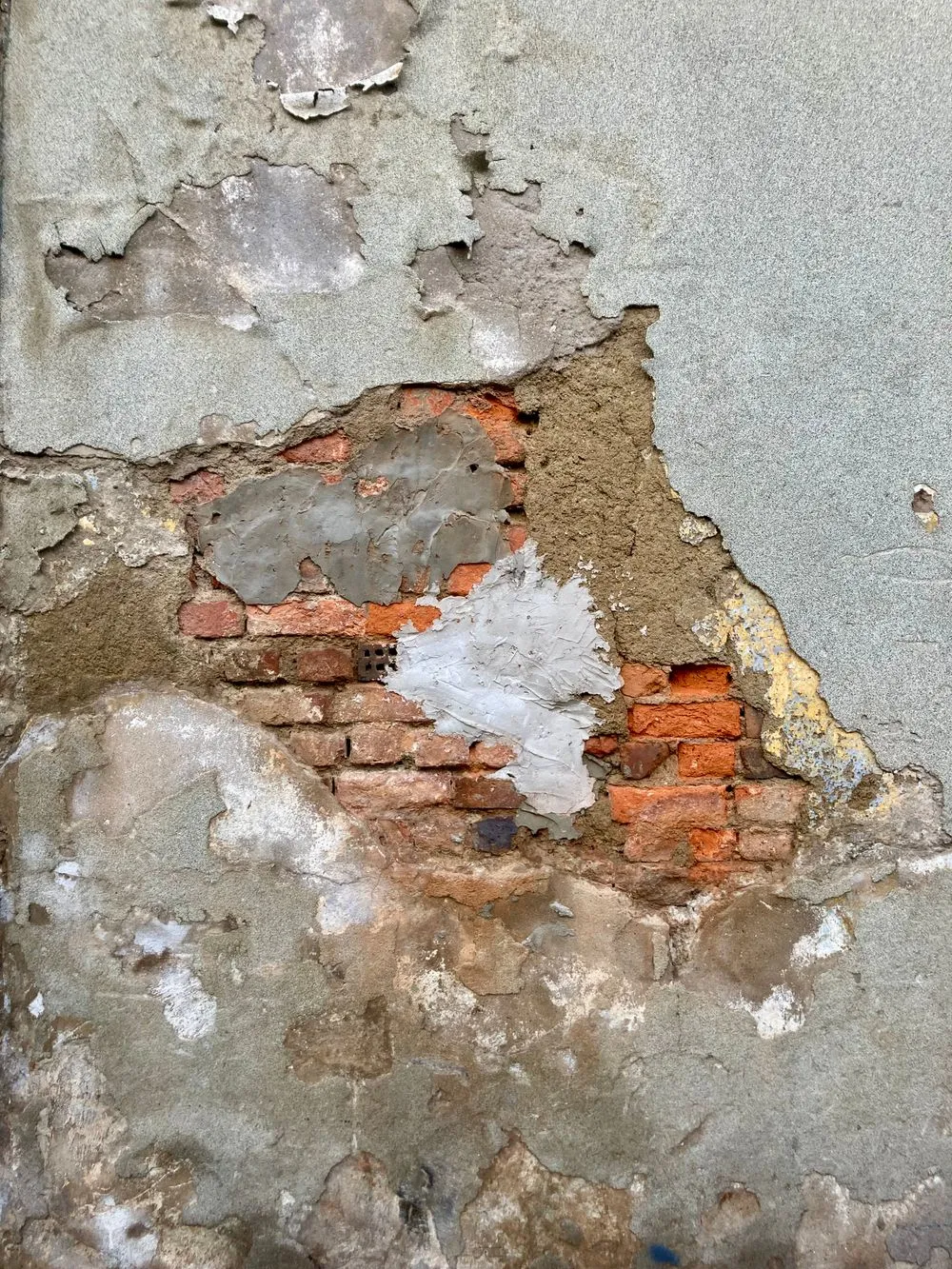
Prolonged wetness damages the wall itself — and the longer materials stay wet, the more likely the water's category has degraded.
Peeling, staining, and softening are signs that water has been present for a while. A professional assessment with moisture readings, covered in our moisture mapping guide, shows how far it has traveled inside the structure.
Assessment
How Professionals Assess the Category in Your Home
A professional assessment starts with the source, not the puddle. The crew's first questions are where the water came from, how long it has been there, and what it has flowed across or through on its way to where it sits now. A supply-line break with a clear shutoff point and a short timeline points to Category 1. A washing machine drain failure points to Category 2. Any sewage involvement, any floodwater that entered from outside, or any water of unknown origin that has sat for days points to Category 3 until proven otherwise. When the source is genuinely unknown — for example, water appearing on a slab floor with no visible leak — professionals treat it cautiously and investigate the plumbing, the roof, and the drainage around the foundation before assigning a category.
Next comes the moisture map. Using penetrating and non-penetrating moisture meters and infrared cameras, technicians trace how far the water traveled inside walls, under flooring, and into framing and subfloor. This matters for category decisions because water changes as it travels: clean water that has run through a soiled wall cavity or across a contaminated floor is no longer clean water, and the map shows exactly which areas were affected by which water. In a Texas slab home, the map often reveals water that ran beneath tile far beyond the flooded room. In an attic leak, it can show soaked insulation two rooms away from the ceiling stain. The map also decides which walls are opened for drying, where equipment is placed, and when drying is finished.
The crew also inspects the materials themselves. Porous materials — drywall, carpet padding, insulation, particle board — absorb water and whatever it carries, and their fate depends on the category: after Category 1 they can often be dried in place if caught early, after Category 2 they are frequently removed, and after Category 3 they are removed as a rule. Non-porous materials — sealed tile, metal, glass, solid wood that has not soaked through — can usually be cleaned and dried in all three categories, provided the cleaning matches the contamination level. Finally, the crew documents everything: the source, the category assigned, the moisture readings, and the materials removed or dried. That documentation matters for your own records and for any future questions about what was done and why.
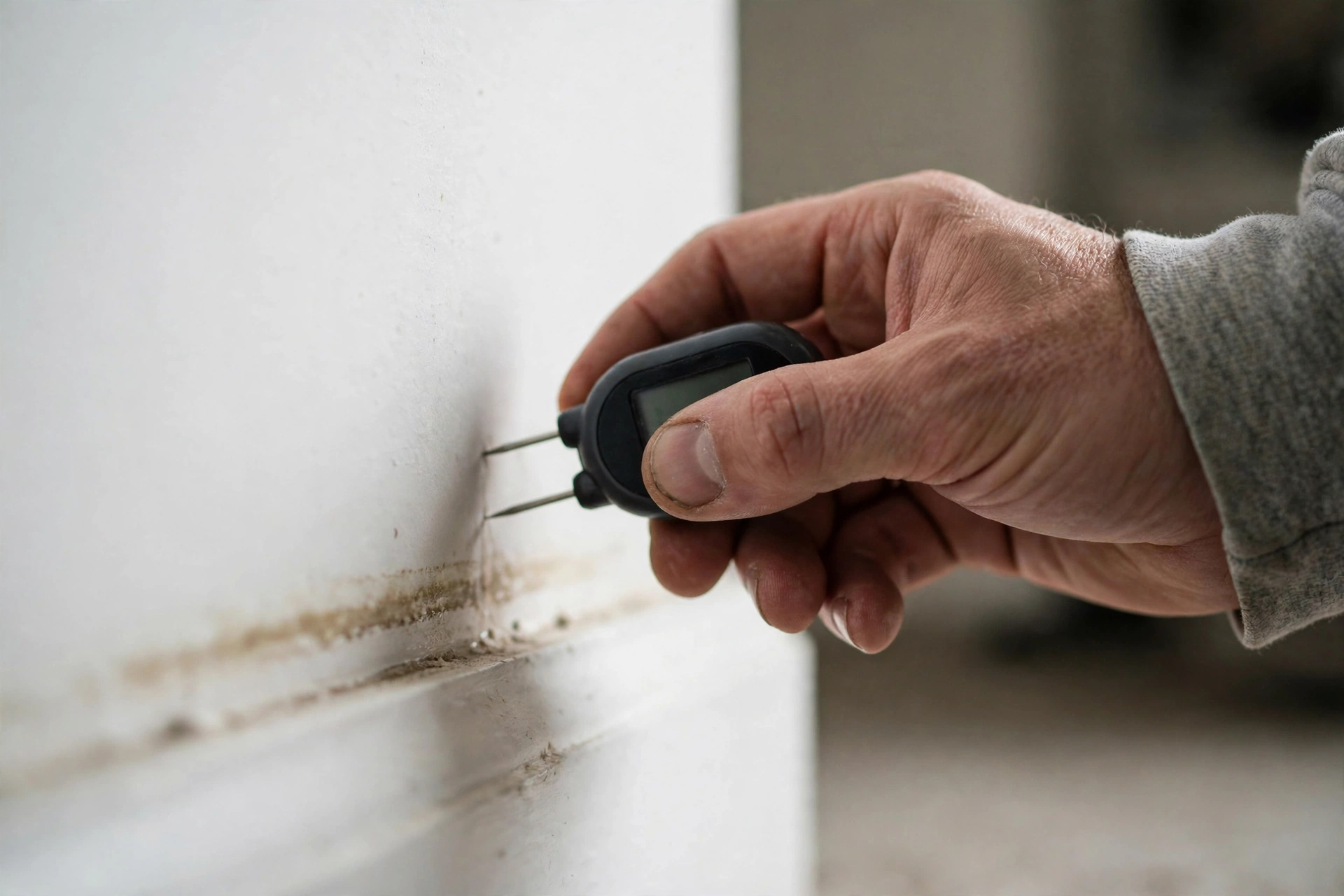
Professionals do not guess what is wet or what category the water is — they measure it.
Moisture meters and infrared scans reveal water inside walls and under floors, and they show whether clean water has traveled through contaminated material on its way. That measurement decides the cleanup plan.
Cleanup differences
Cleanup and Drying Differences by Category
Cleanup differs by category in three main ways: protective equipment, material removal, and cleaning intensity. For Category 1, crews still use gloves and eye protection, but the emphasis is on fast extraction and drying: remove standing water, get air moving, and dry the structure to verified moisture standards. Much of the home's material can be saved if drying starts early, because the water itself carried little contamination. The main risk to manage is time — drying must be complete before microbial growth takes hold, which is why equipment stays in place until meters confirm dryness, not just until surfaces feel dry.
Category 2 cleanup adds cleaning and selective removal to the drying job. Carpet padding that absorbed gray water is typically removed, because padding holds contaminated water and cannot be reliably cleaned in place. Drywall that wicked gray water above the baseboard line may be cut out to the height of the water's reach, so that the cavity behind it can be dried and cleaned. Affected hard surfaces are washed with detergent solutions and treated with an antimicrobial product as part of the process, and the crew wears more complete protective gear, including respirators when the area is large or the water has sat for a while. The drying equipment is the same — air movers and dehumidifiers — but the job takes longer, because cleaning and removal steps come before and alongside drying.
Category 3 cleanup is a different kind of job. The crew works in full protective equipment, contains the affected area to prevent contamination from spreading to clean rooms, and removes all porous materials that contacted the water: carpet and padding, drywall to above the flood line, insulation, and any upholstered or paper items that soaked through. Hard surfaces that remain are cleaned and treated thoroughly, and the structure is dried to verified standards before any rebuilding begins. In flood cases, that sequence also includes removing silt and debris carried in by the water, because silt left inside a wall cavity holds moisture and contamination long after the water itself is gone. Flood and storm cleanup follows this same Category 3 approach, which is why our flood and storm extraction guide and our emergency extraction guide both emphasize professional handling from the first step.
Structural drying itself also varies with the category in one important respect: verification. In all three categories, drying ends when moisture meters show every material has reached its dry standard. In Category 2 and 3 jobs, that verification is paired with cleaning verification — surfaces must be visibly clean and treated, not merely dry, because dry contamination is still contamination. Homeowners sometimes ask why a Category 3 room cannot simply be dried and repainted; the answer is that paint over a contaminated, uncleaned surface seals the problem in rather than solving it, and odor and microbial issues return as soon as humidity rises again. Proper order — extract, remove what cannot be saved, clean and treat, dry to verified standards — is what makes the result last.
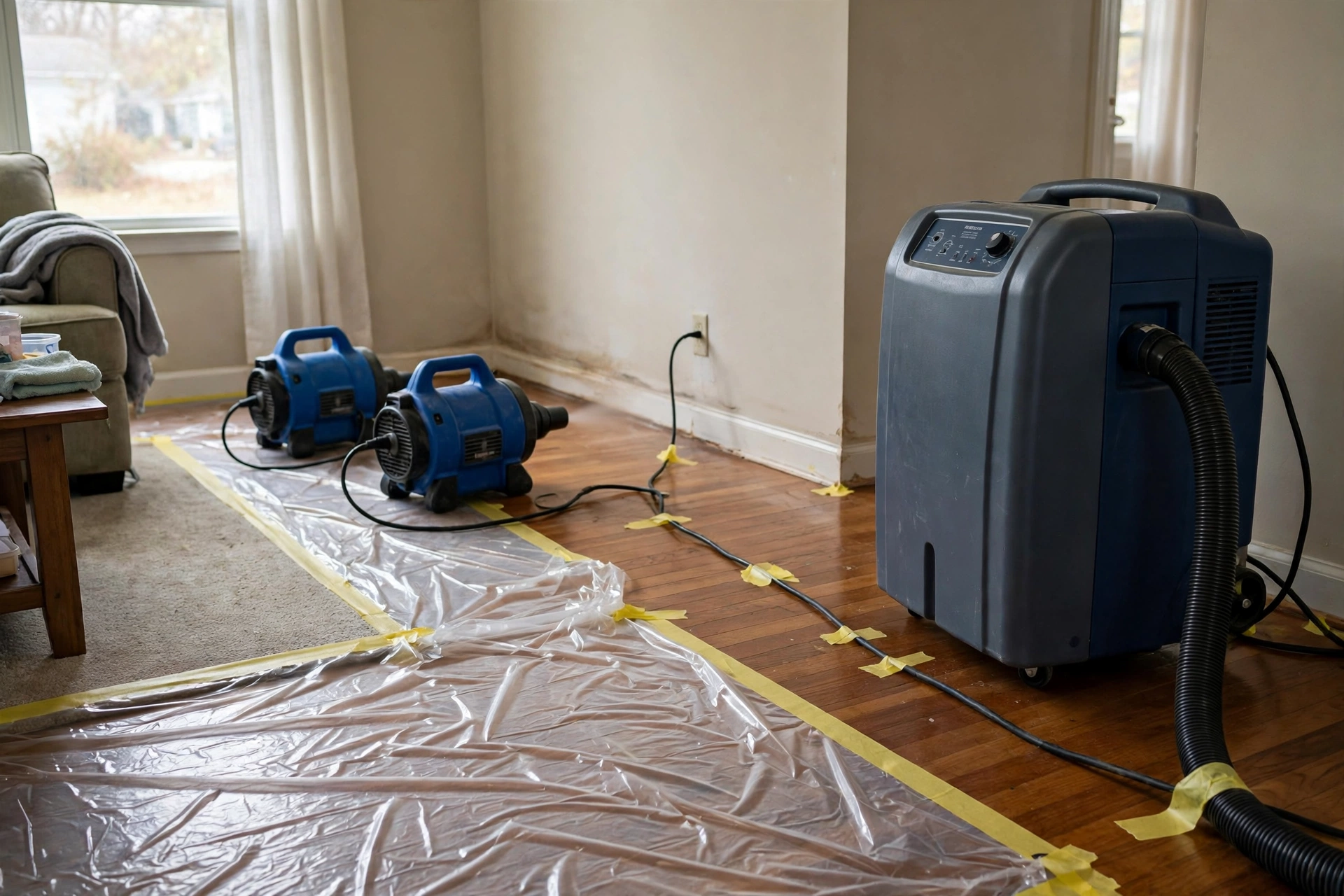
Structural drying pairs high-velocity airflow with commercial dehumidification, in every category — but the cleaning and removal steps around it change with the water.
What Homeowners Should and Should Not Do, by Category
Your first actions after water damage depend heavily on the category. The same step that is sensible for clean water can be unsafe for black water.
Category 1 — clean water
Do stop the source if you safely can — shut the main valve for a burst pipe or turn off the appliance supply.
Do stay clear of electricity. If water has reached outlets or the breaker panel, stay out of the water and do not touch electrical equipment.
Do move valuables to dry ground and lift furniture legs onto foil or wood blocks to prevent stain wicking.
Do ventilate and circulate air once the source is stopped — open interior doors, run fans, and keep the air conditioner running to remove humidity.
Do document everything with photos and video before you move or clean anything.
Do not assume it will dry on its own. Water inside walls and under flooring in a Texas slab home needs professional drying equipment and moisture readings, even when the surface looks dry.
Category 2 — gray water
Do keep children and pets out of the affected area until it has been professionally cleaned and dried.
Do wear gloves and eye protection if you must move belongings out of the water's path, and wash your hands and any contacted skin thoroughly afterward.
Do stop the source if you safely can — for example, by turning off the washing machine supply valves.
Do not mop gray water around and call it cleaned. Spreading contaminated water over a larger area makes the cleanup harder, and padding that absorbed it usually needs removal.
Do not use a household vacuum on gray water unless it is designed for wet pickup, and do not run the home's heating and cooling system if ducts may be wet.
Do not wait days to arrange professional help. Gray water degrades toward Category 3 as it sits, especially in Texas heat.
Category 3 — black water: stay out and call professionals
For Category 3 water, the homeowner's job is to stay out, keep everyone else out, and call a professional crew. Do not wade through sewage or floodwater, do not attempt to mop or vacuum it, and do not handle porous items that have soaked in it. If floodwater has entered the home, avoid contact with it entirely — it may carry sewage, chemicals, sharp debris, and submerged hazards, and it may also be electrically charged if it has reached wiring or outlets. Turn off power to affected areas only if you can do so safely from a dry location; if the breaker panel itself is wet or you must stand in water to reach it, leave it alone and wait for professionals. Keep children and pets away from the area, wash thoroughly if any accidental contact occurs, and do not discard contaminated materials until they have been documented, in case records are needed later. For anything involving sewage or floodwater, call (866) 316-5715 for a professional assessment rather than starting cleanup yourself.
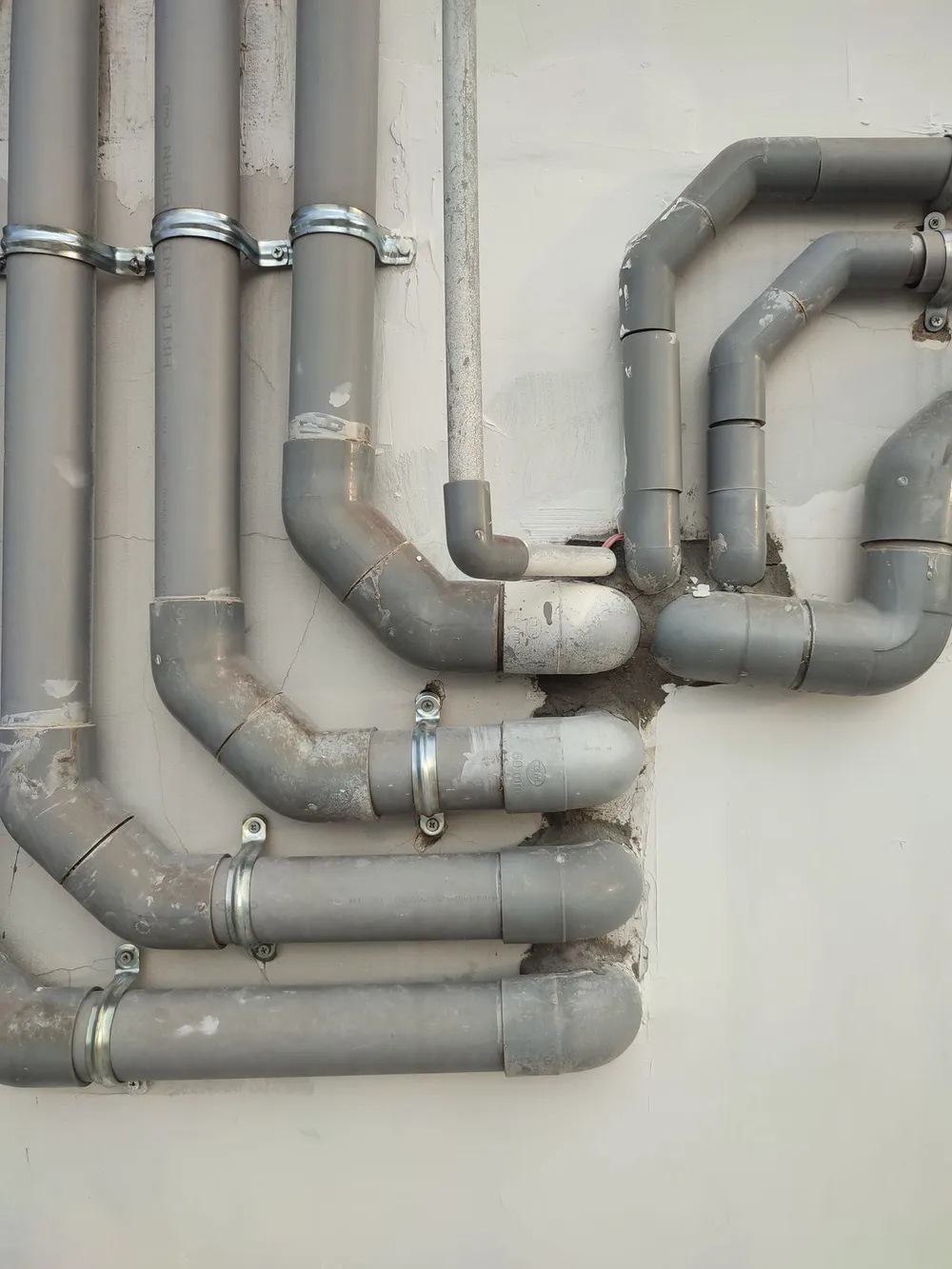
Knowing where your main shutoff is — and which pipes serve which fixtures — is the fastest way to limit any category of leak.
Shutting off the supply early keeps a Category 1 leak from soaking the home for hours, and it is the first step professionals ask about when you call. If you cannot find the shutoff safely, call (866) 316-5715 for guidance.
Where we serve
Water Damage Categories Across Texas — Local Pages
The category mix varies by region: Gulf storms bring black-water flooding to the coast, freezes burst clean-water supply pipes in the Panhandle, and appliance leaks happen everywhere. Our city guides cover the local conditions for each community we serve:
Texas storms do not respect category boundaries — one storm can bring clean roof leaks, gray appliance flooding from power surges, and black floodwater in the same night.
That is why the source of the water, not just the amount, decides the response in every Texas city we serve.
Lubbock
South Plains freezes split attic supply pipes in winter, and summer storms bring flash flooding to low-lying streets — both clean-water and black-water events in the same city. See Lubbock emergency extraction →
Amarillo
High Plains freeze-thaw cycles burst pipes, and the thaw-day flood that follows can leave wall cavities wet just as indoor heat returns. See Amarillo emergency extraction →
Denton
North Texas slab subdivisions and humid summers mean water under flooring dries slowly, and gray-water appliance leaks spread far beneath tile before they are found. See Denton emergency extraction →
Tyler
East Texas humidity is among the highest in the state, and slow-moving storms leave standing floodwater that soaks slab foundations for days. See Tyler emergency extraction →
Killeen
Central Texas slab-on-grade homes and humid summers trap gray water under flooring after appliance and pipe leaks, and heavy rain can back up older sewer lines. See Killeen emergency extraction →
FAQ
Water Damage Categories FAQs
What is the difference between Category 1, 2, and 3 water damage?
The difference is the source of the water. Category 1 is clean water from a sanitary source, such as a broken supply line. Category 2 is gray water with significant contamination, such as washing machine or dishwasher discharge. Category 3 is black water that is grossly contaminated, such as sewage backup or floodwater that has flowed across the ground. The category decides how the water is cleaned up and which materials must be removed.
Can Category 1 clean water become Category 2 or 3 over time?
Yes. Water that starts clean picks up contaminants from building materials, dust, and household surfaces as it sits, and microorganisms multiply in it, especially in warm Texas conditions. Clean water left standing for days can degrade into Category 2, and gray water left standing can degrade toward Category 3. That is why fast extraction and drying matter even when the water started out clean.
Is floodwater always Category 3 black water?
Yes, in practice. Any water that originates outside the building and flows across the ground before entering — including river and bayou flooding, storm surge, and street runoff — is treated as Category 3, because it carries soil, debris, chemicals, and possibly sewage. It should never be handled as clean water, even if it looks clear.
Can I clean up gray water from a washing machine leak myself?
Small gray-water spills on hard, non-porous surfaces can be cleaned by a homeowner wearing gloves and eye protection, but carpet padding that absorbed gray water usually needs removal, and water that traveled inside walls or under flooring needs professional drying. Keep children and pets out of the area, and call (866) 316-5715 for a professional assessment if the spill spread beyond a small hard-surface area or sat for more than a day.
What should I do if sewage backs up into my home?
Stay out of the water, keep children and pets away, and do not try to mop or vacuum it yourself. Sewage is Category 3 black water and carries harmful agents that require professional extraction, sanitizing, and removal of porous materials. Avoid touching electrical equipment near the water, and call (866) 316-5715 for a professional assessment.
Why must porous materials be removed after Category 3 water damage?
Porous materials such as carpet, carpet padding, drywall, and insulation absorb contaminated water all the way through, and no surface cleaning can reliably decontaminate them. Leaving them in place traps contamination and moisture inside walls and floors, which causes odor and microbial growth later. Professionals remove porous materials that contacted Category 3 water and then clean, treat, and dry the remaining structure to verified standards.
How do professionals decide which category the water in my home is?
They start with the source: where the water came from, how long it has been there, and what it flowed across or through. Then they map moisture with meters and infrared cameras to see how far the water traveled inside walls and under floors, since water changes category as it picks up contaminants along the way. When the source is unknown or the water has sat for days, they treat it cautiously at the higher category until the evidence shows otherwise.
Not Sure Which Category Your Water Damage Is? Call Our 24/7 Dispatch
Connect with a verified Texas pro for a professional assessment, extraction, and structural drying.