Texas homes are built for heat, not hard freezes — and that is exactly why a cold snap here bursts so many pipes. Here is how to protect your plumbing before winter, what to do during a freeze, and what to do the moment a pipe lets go.
Direct answer: The most effective burst pipe prevention for a Texas home is done before winter: insulate pipes in attics and exterior walls, disconnect hoses and cover outdoor faucets, seal drafts around pipe penetrations, and find your main water shutoff valve before you need it in a hurry. During a freeze, keep the heat on, open cabinet doors under sinks on exterior walls, and let vulnerable faucets drip. If a pipe bursts, shut off the water first, stay clear of any water near electricity, and call (866) 316-5715 for professional water extraction and drying.
Why Texas Homes Are So Vulnerable to Frozen Pipes
Texas homes are designed around a long, hot summer and a short, mild winter, and their plumbing reflects that. In colder states, water lines are routinely buried deep below the frost line and run through heated interior spaces. In much of Texas, that is not how houses were built. Pipes run through unheated attics, along exterior walls, through garages, and under concrete slabs — places that stay warm enough in a normal Texas winter but drop below freezing fast when a cold front stalls over the state for several days. A home that has gone twenty mild winters without a problem can still burst a pipe in the one winter when temperatures stay below freezing for three or four days in a row, because the danger is not a single cold night. It is sustained cold soaking into unprotected spaces that were never built to handle it.
Slab-on-grade construction, the standard across most of Texas, shapes the risk in a specific way. With no basement and no crawlspace, supply lines often run through the slab itself or through the attic above it. A slab leak from a frozen and cracked line can be hard to spot: water may surface far from the break, wick up through flooring, or pool along baseboards while the actual break stays hidden. Attic plumbing is the other great Texas vulnerability. Water heaters, air handlers, and supply lines sit in attics that are ventilated to the outdoors by design, which means attic temperatures track outdoor temperatures closely. On a freezing night, an attic can be nearly as cold as the yard outside it, and a pipe running through that space has almost no protection unless someone insulated it deliberately. Many Texas homeowners have never looked at their attic plumbing at all, which is why the first sign of trouble is often a ceiling stain or water dripping through a light fixture.
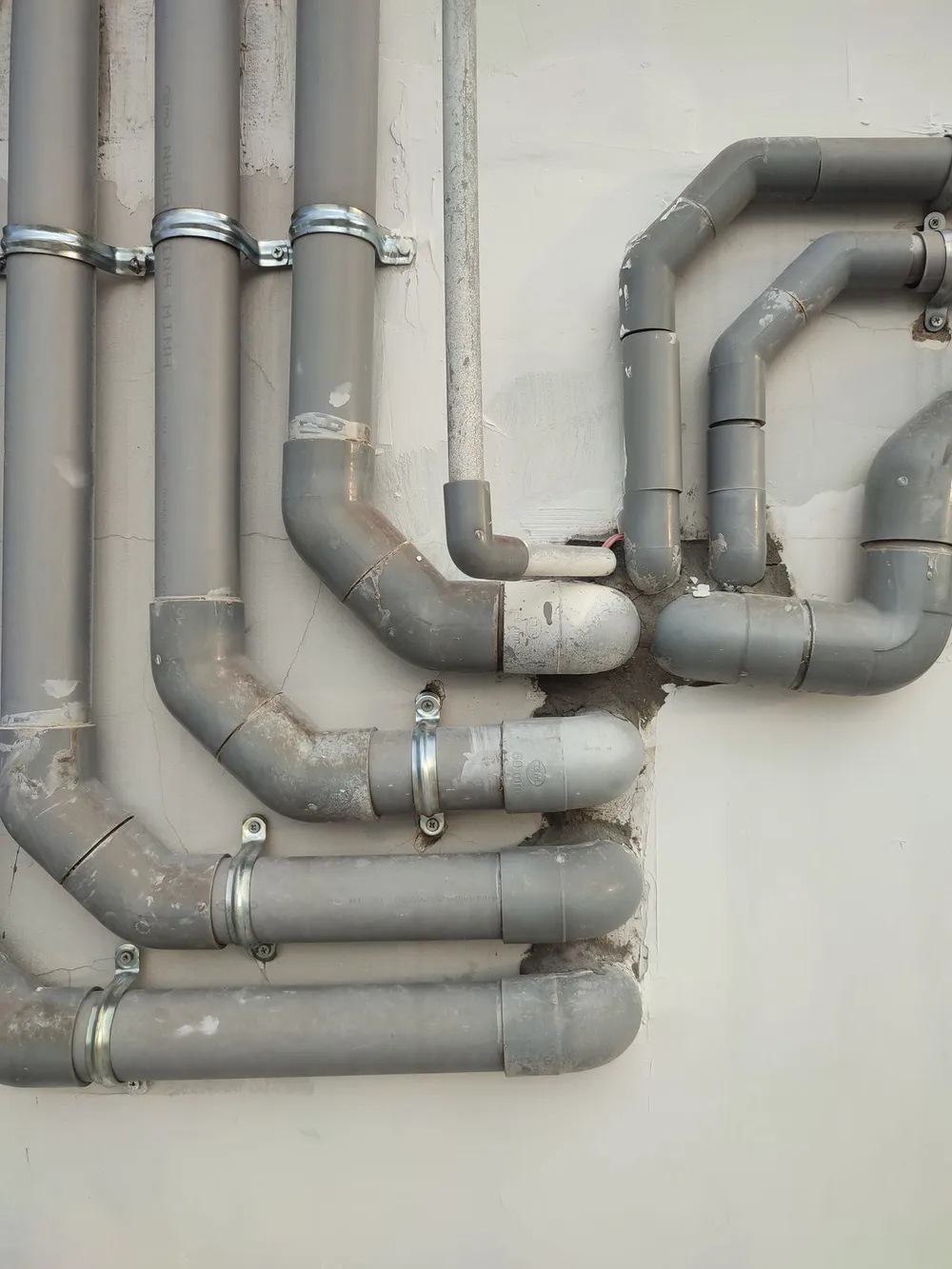
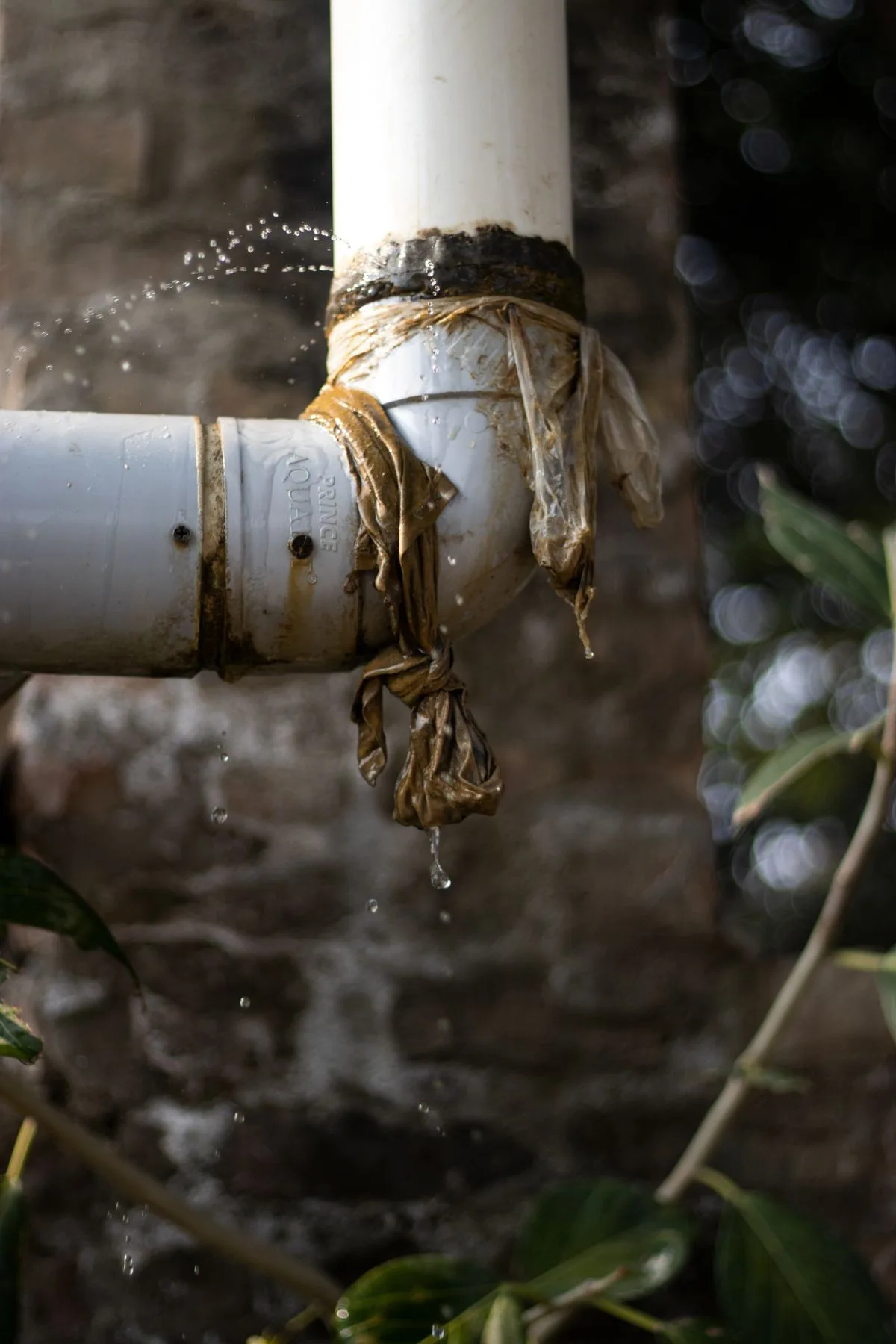
Pipes on exterior walls and in unheated spaces are the first to freeze. A walk around your home before winter shows you exactly where those runs are.
Look for supply lines on outside walls, in the garage, in the attic, and near hose bibbs. Every run you find is a run worth insulating before the first hard freeze.
Exterior walls deserve their own warning. A kitchen or bathroom sink on an outside wall puts its supply lines inside a wall cavity that is only a few inches from outdoor air, separated by insulation that may be thin, settled, or missing around the pipes themselves. When the wind blows against that wall during a freeze, the cavity cools quickly, and the pipe inside it can freeze even while the room on the other side feels comfortable. The same applies to hose bibbs and outdoor faucets: the short pipe section feeding an outdoor faucet runs through the exterior wall, and if a garden hose stays connected, water trapped in the faucet and hose cannot drain, so it freezes, expands, and can split the pipe inside the wall — a break you may not notice until the thaw, when water starts running inside the wall cavity.
The February 2021 freeze taught Texas homeowners these lessons at a painful scale, and its general lessons still apply without needing to relive the details. Homes lost heat when power went out, and without heat, interior temperatures fell until pipes in attics and exterior walls froze in large numbers. When temperatures rose again, thousands of breaks thawed at once and flooded homes that had sat cold and unoccupied for days. The pattern to take from that event is straightforward: a burst pipe is rarely a single-night accident. It is usually the end of a chain — sustained cold, uninsulated pipes, a home that lost heat or sat empty, and a break that went unnoticed until the thaw. Every step of prevention in this guide is aimed at breaking that chain at the earliest possible point, while the work is still simple and the house is still dry.
How a Pipe Freezes — and Why the Burst Happens During the Thaw
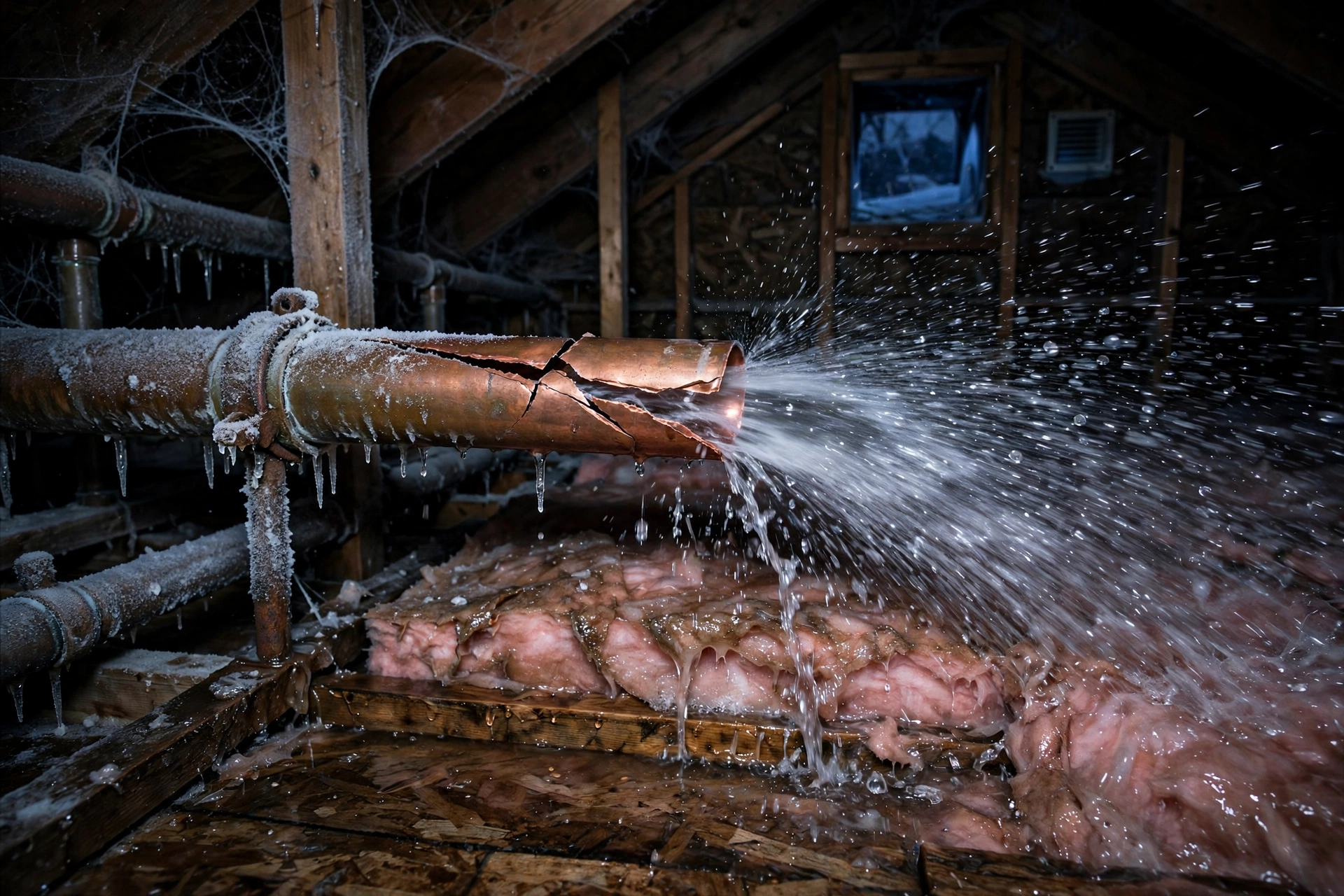
Understanding the mechanics makes the prevention steps make sense. When water inside a pipe freezes, it expands by roughly nine percent. The ice itself does not usually split the pipe at the exact spot where it formed. Instead, the ice plug blocks the pipe, and water trapped between the ice and a closed faucet has nowhere to go as more ice forms. Pressure builds in that trapped section until the pipe wall gives way — often at a joint, an elbow, or a weak section some distance from the ice itself. Copper, PEX, and CPVC all fail under enough pressure, though they fail differently: copper splits lengthwise, plastic can crack at fittings, and older galvanized lines may already be weakened by corrosion before the freeze ever arrives.
A frozen pipe often shows no outward sign until the thaw. Ice blocks the line, pressure builds behind it, and the break reveals itself when water starts flowing again.
That is why the morning after a freeze — not the coldest night itself — is when many Texas homeowners discover the damage.
That timing matters for how you respond. During the coldest night, a frozen pipe may simply deliver no water or only a trickle, and a homeowner may assume the problem will pass. The real flood often starts hours later, when the ice melts and full water pressure returns to a pipe that is now split open. This is why checking every faucet after a freeze matters: turn each one on briefly and watch for reduced flow, odd sputtering, or water appearing where it should not be. It is also why knowing your shutoff valve location before winter is the single most valuable piece of preparation in this guide — the difference between a small cleanup and a flooded house is often measured in the minutes between discovering a burst and stopping the water.
Pipe material and age change the odds but do not remove them. PEX tubing tolerates some expansion and is more forgiving than rigid pipe, which is one reason newer Texas homes with PEX fared better in past freezes than older homes with copper or galvanized lines. But PEX fittings can still fail, and no common residential pipe material is rated to survive a hard, sustained freeze unprotected. Age adds risk in a different way: older pipes may have thinner walls from corrosion, previous repairs, or decades of mineral buildup, and older homes are more likely to have uninsulated attic runs and unprotected hose bibbs from an era when Texas freezes felt like a rare inconvenience. If you do not know what kind of pipes your home has or where they run, a pre-winter walk-through with a plumber is a sensible step — not because every old pipe will burst, but because knowing the layout turns a winter emergency into a manageable plan.
Before winter
Before-Winter Checklist for Texas Homeowners
The best time to prevent a burst pipe is a mild autumn weekend, not the evening before a freeze warning. Work through this checklist once each fall, and repeat the outdoor steps whenever a hard freeze is forecast:
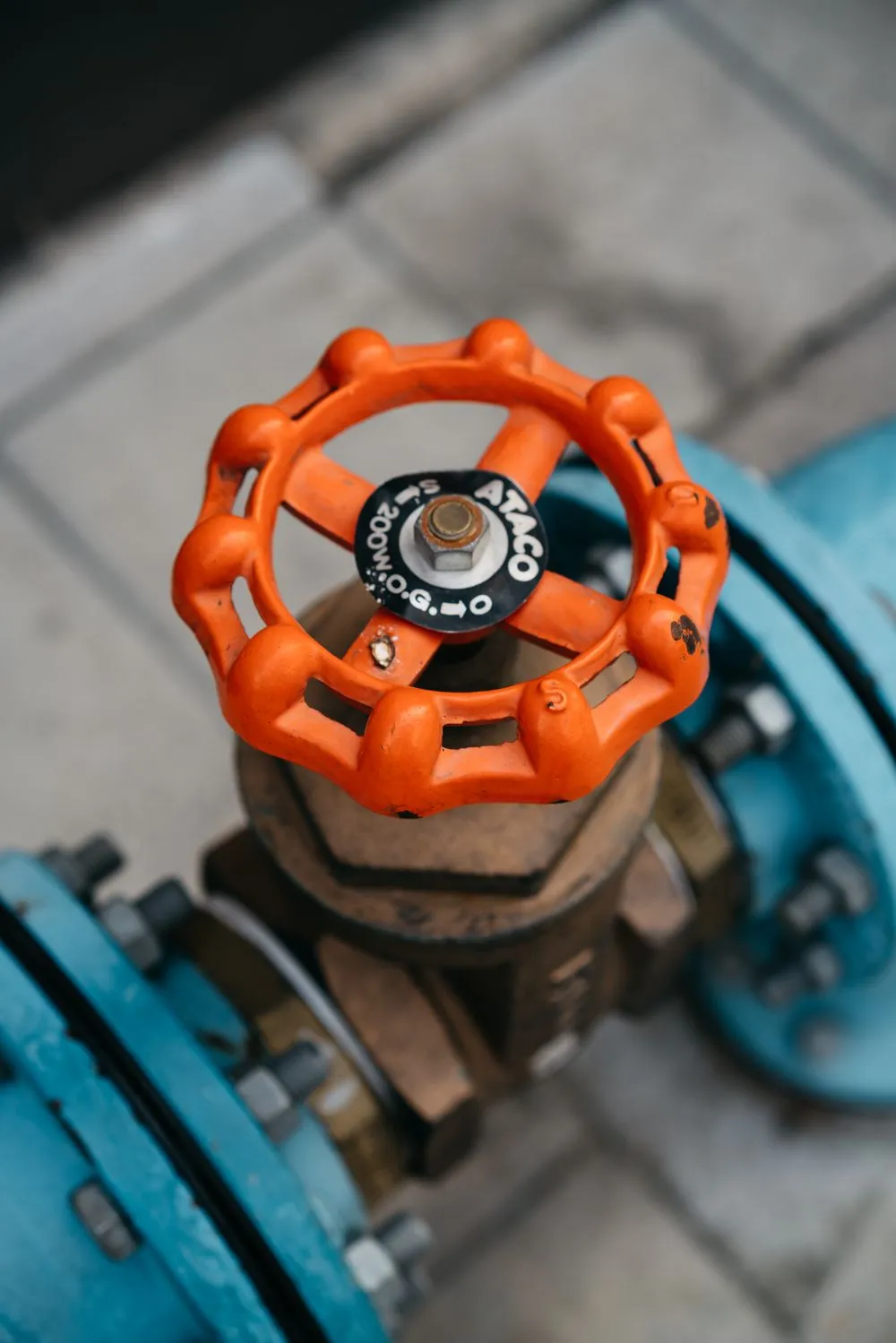
Find your main shutoff valve before winter, and make sure every adult in the household knows where it is and how to turn it. In a burst, this valve is the difference between a puddle and a flood.
Test it once a year: a valve that has not moved in years can seize, and discovering that during an emergency wastes the minutes that matter most.
Insulate the vulnerable runs
Insulate attic and garage pipes with foam pipe sleeves, paying special attention to runs near attic vents, gable ends, and garage doors where cold air enters first.
Insulate pipes on exterior walls, especially kitchen and bathroom supply lines, and seal gaps where pipes pass through walls, floors, and sill plates so cold air cannot blow directly onto them.
Insulate the water heater lines in the attic or garage, and check that attic insulation has not been pushed aside or compressed around pipe runs during other work.
Do not leave gaps at elbows and fittings. Joints and bends freeze as readily as straight runs, and a sleeve that stops short of a fitting leaves the weakest point exposed.
Protect the outside of the house
Disconnect every garden hose before the first freeze, drain it, and store it. A connected hose traps water in the faucet and the pipe behind it, which is one of the most common causes of a burst in an exterior wall.
Cover outdoor faucets with insulated faucet covers, and if your home has frost-free sillcocks, still disconnect hoses so the valve can drain as designed.
Shut off and drain irrigation and pool supply lines that run outdoors or through unheated spaces, following the shutoff and drain procedure for your system.
Seal foundation vents and gaps near pipe entries with caulk or foam, while keeping the ventilation your home needs in warmer months in mind — covers used only during a freeze are a practical middle ground.
Know your shutoff, and prepare the inside of the house
Locate your main water shutoff valve now. In Texas homes it is commonly near the water meter at the street, in the garage, in a utility closet, or where the main line enters the house. Every adult in the household should know where it is and should have turned it at least once, because a valve that has seized from years of sitting still is a nasty surprise during a flood. Keep a shutoff wrench or meter key nearby if your valve is at the street meter, and label the indoor valve clearly so a guest, a housesitter, or a family member can find it without hunting. While you are at it, label the individual fixture shutoffs under sinks and behind toilets — stopping the water at one fixture is faster than shutting down the whole house when only one line has failed.
Inside the house, a few habits before winter pay off all season. Keep the thermostat at a steady temperature through cold snaps rather than dropping it sharply at night, and never turn the heat fully off in a home that will sit empty during a freeze. Open cabinet doors under sinks on exterior walls during freezes so warm room air reaches those pipes. Keep garage doors closed during cold weather, since a garage full of cold air chills every pipe running through it and through the wall it shares with the house. If your home has a room that is always colder than the rest — a converted patio, a room over the garage, a bathroom at the far end of the house — check its pipes first, because that room is where a freeze will strike earliest. Finally, keep the number for professional help somewhere visible: if a pipe bursts at two in the morning, you do not want to be searching for a phone number while water runs across the floor. Our dispatch line is (866) 316-5715.
During a freeze
During a Freeze: Drips, Cabinet Doors, Thermostat, and Hose Bibbs
When a hard freeze is forecast, a handful of simple actions during the coldest nights sharply reduce the chance of a burst. None of them require tools, and all of them work best when started before temperatures fall, not after pipes have already gone quiet:
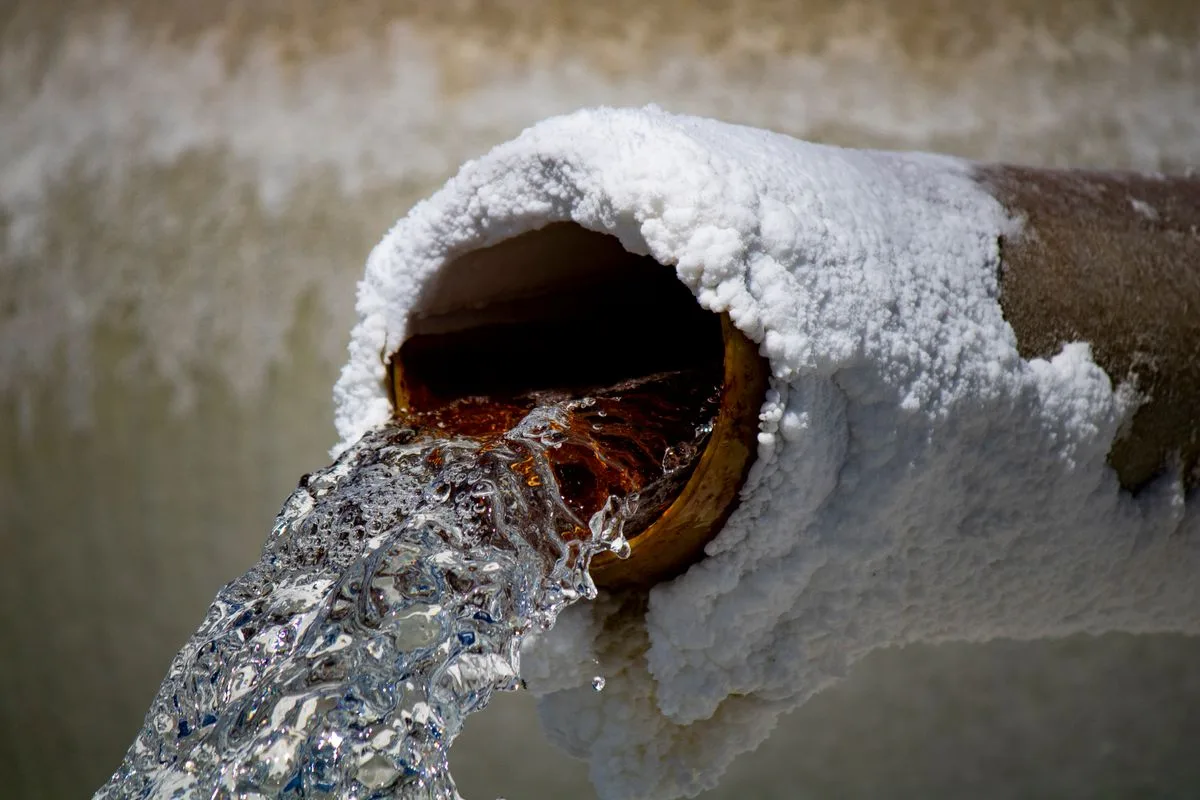
A joint that starts weeping during a freeze is an early warning. Do not ignore a small leak in cold weather — it can mean ice is already forming in the line.
Keep the heat on, keep water moving through vulnerable lines, and check faucets, joints, and exterior walls through the coldest nights.
Let vulnerable faucets drip
A slow drip from a faucet served by an exposed or exterior-wall line keeps water moving through that pipe, which makes freezing less likely, and it relieves pressure if ice does begin to form. Drip the faucets farthest from where water enters the house as well as any faucet on an exterior wall, using a thin, steady stream rather than an occasional drop. The drip is a freeze-night measure, not a permanent habit: start it when the forecast calls for sustained below-freezing temperatures, and stop it once temperatures recover. If a faucet that normally drips stops entirely during a freeze, treat that as a warning sign that the line may be frozen, and read the frozen-pipe steps in the next section before forcing anything.
Open cabinets, hold the heat, close the gaps
Open cabinet and vanity doors under sinks on exterior walls so heated room air can reach the pipes behind them. Keep the thermostat steady day and night during the freeze — the small amount of heating saved by a nighttime setback is not worth a burst pipe — and keep the temperature consistent in every room, including rooms you rarely use. Close the garage door, keep interior doors open so warm air circulates to colder rooms, and re-check that hoses are disconnected and faucet covers are in place. If your home has a pool equipment pad or an outdoor kitchen with its own supply lines, protect those runs too: outdoor living spaces are easy to forget precisely because they are outside the daily routine.
Watch for the warning signs while it is still cold
During a multi-day freeze, check your plumbing at least once a day. Run each faucet briefly and note any loss of pressure, sputtering, or discolored water. Look at ceilings below attic plumbing for new stains, check walls behind exterior-wall sinks for dampness or cold spots, and walk the garage and any room over the garage for puddles. If a faucet produces nothing at all, the line feeding it may be frozen: leave that faucet open slightly, keep the heat on, and warm the area gently with room air or towels soaked in warm water — never an open flame or a high-heat device near a pipe, and never force a frozen valve. If you cannot locate the frozen section, or if water appears anywhere it should not be, shut off the main valve and call (866) 316-5715 for professional help rather than waiting for the thaw to reveal a break on its own terms.
Power outages change the calculus completely, and Texas homeowners learned this the hard way. Without heat, indoor temperatures fall steadily, and pipes that would have survived a normal freeze night can freeze within a day or two. If your power goes out during a freeze, conserve the heat you have: keep doors closed, avoid opening exterior doors, and consider shutting off the main water valve and draining the system if the outage is expected to last and temperatures will stay below freezing — a step worth discussing with a plumber before winter if your home is prone to outages. Do not use unvented heaters or open flames indoors to protect pipes. When power returns, do not assume the plumbing survived: check every faucet, every ceiling below attic runs, and every exterior wall before resuming normal use, because a break that thawed while you were checking the breaker panel can flood a room in minutes.
Empty homes
Vacation Homes and Empty Houses Need Extra Protection
An empty house is the most dangerous freeze scenario of all. Nobody hears the drip, nobody notices the stain, and a burst that would be a minor cleanup in an occupied home can run for days before anyone opens the front door:
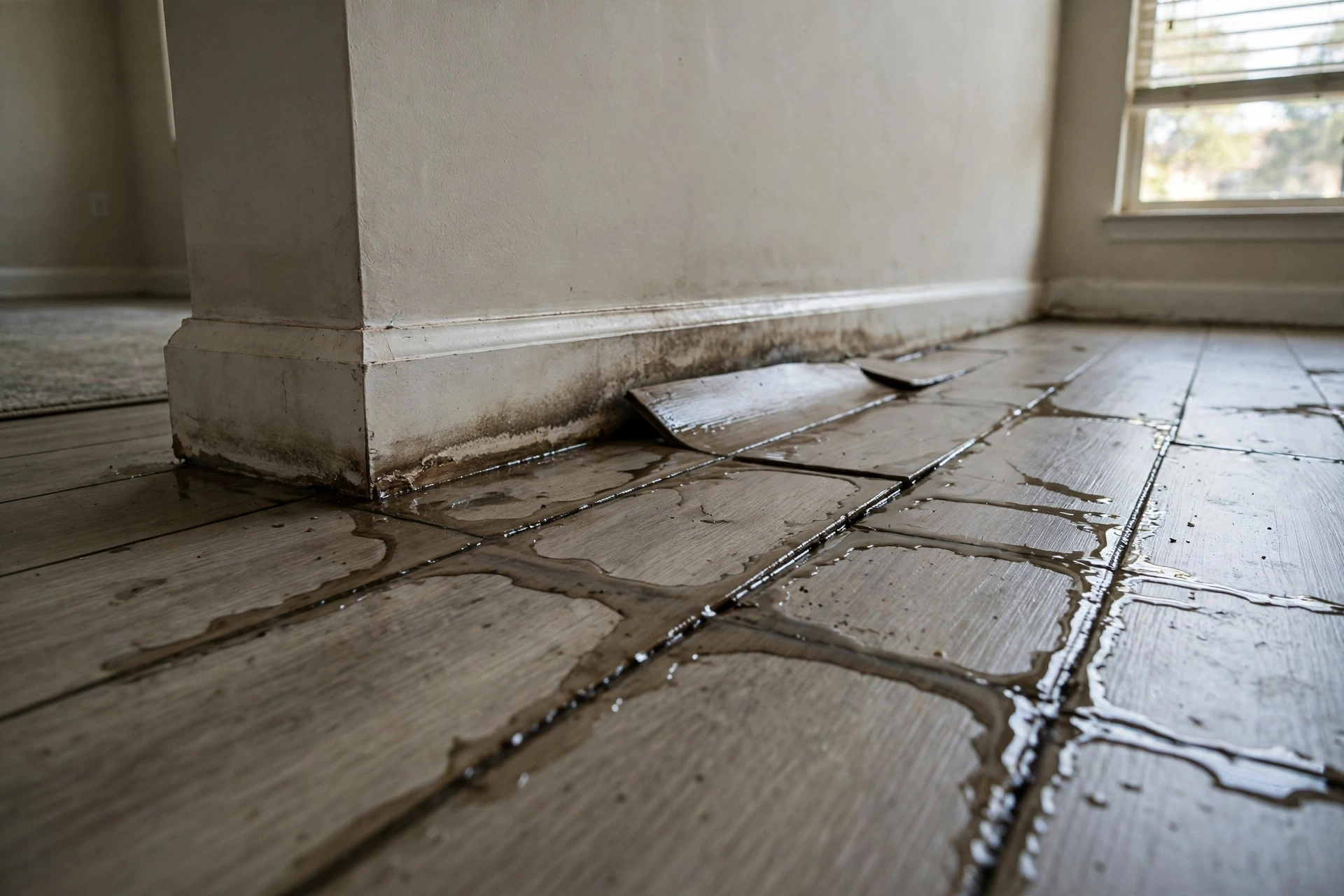
This is what a homeowner returns to when a burst runs unnoticed: water across the floor, warped planks, and staining climbing the baseboards.
In an empty house, days of running water do far more damage than the burst itself. Prevention and a daily check-in are the whole game.
If you leave a Texas home empty during winter, never turn the heat fully off. Keep the thermostat at a steady temperature that protects the plumbing, open cabinet doors under sinks on exterior walls before you leave, and disconnect hoses and cover outdoor faucets as part of your departure routine. For longer absences, consider shutting off the main water valve and draining the lines — this single step removes the water that would otherwise flood the house if a pipe fails while you are away. If shutting off is not practical, arrange for someone to check the house daily during any freeze: a neighbor, a family member, or a property manager who will run the faucets, look at ceilings below attic plumbing, and confirm the heat is running. A daily check turns a potential multi-day flood into a same-day discovery.
Seasonal and second homes around Texas lakes, Hill Country retreats, and Gulf Coast properties carry the same risk with an extra twist: they are often older, lightly insulated, and visited irregularly, and their owners may live hours away when a freeze hits. For these homes, a pre-winter plumbing check is especially worthwhile — insulating attic runs, protecting hose bibbs, and confirming the shutoff location — because the owner will not be present to catch the early signs. Smart water sensors and automatic shutoff devices are also worth considering for a home that sits empty: a sensor near the water heater, under sinks, and near the washing machine can alert an owner by phone when water appears, and an automatic shutoff can stop the flow before the owner can drive over. No device replaces insulation and a shutoff plan, but for an empty house, early warning is the next best thing to being home.
Rentals and homes between tenants deserve the same attention. A vacant rental during a freeze is functionally identical to a vacant vacation home, and landlords should treat freeze preparation as part of turning a property over: heat left on, hoses disconnected, faucet covers in place, and a local contact who can check the property during cold weather. Tenants, for their part, should know where the shutoff valve is from the day they move in, not the day a pipe bursts. A short note left in the utility area — valve location, the number to call, and the first three steps if water appears — helps any occupant act fast, whether they have lived there for years or moved in last week.
Emergency steps
The Moment a Pipe Bursts: Shutoff, Electricity Safety, and Documentation
Prevention fails sometimes, and then speed matters more than anything else. If a pipe bursts in your home, work through these steps in order — water first, electricity second, everything else after:
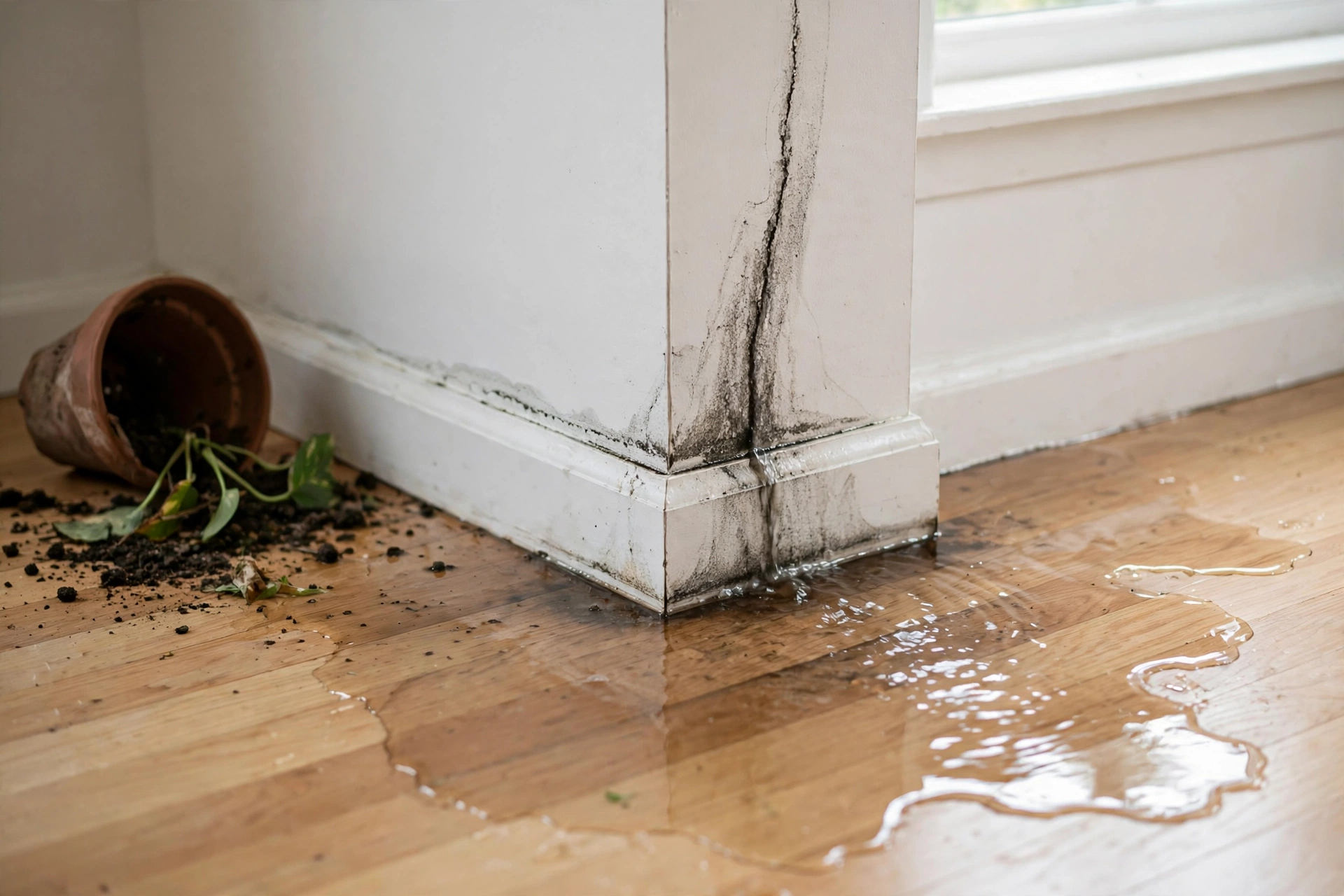
Water spreads across hard floors fast and soaks into baseboards, drywall, and subfloor within minutes. The first job is always to stop the flow.
Shut off the main valve, then move valuables, then document — in that order. Cleanup can wait; the water cannot.
Step 1: Shut off the water
Go straight to the main shutoff valve and turn it off. If the burst is at a single fixture and that fixture has its own shutoff, closing it may be enough, but when in doubt, shut off the whole house — a few minutes without water is a small inconvenience next to a flooded room. If you cannot find the valve or it will not turn, shut off the water at the street meter if you can do so safely, and call (866) 316-5715 for help. Do not spend time hunting for the break while water is still running: stopping the flow first limits the damage to what has already escaped, and every minute of running water adds soaked flooring, swollen baseboards, and water inside wall cavities.
Step 2: Stay clear of water near electricity
Safety note: if water has reached outlets, light fixtures, appliances, or the breaker panel, do not step into the water and do not touch electrical equipment. If you can reach the breaker panel safely from a dry area, switch off power to the affected rooms. If the panel itself is wet or you must stand in water to reach it, leave it alone and call for professional help — water and electricity together are a genuine danger, not a minor hazard.
Also watch for ceilings that are bulging or sagging from water above them. A waterlogged ceiling can hold a surprising weight and can collapse without warning, so keep people out from under a bulging ceiling and do not poke it to drain it yourself. Move furniture and belongings out of the water's path where you can do so safely, lift furniture legs onto blocks or foil to prevent stain wicking, and roll up rugs that are still dry. Avoid using a household vacuum on standing water, and avoid walking through water that may have passed through insulation, wall cavities, or any area where wiring runs.
Step 3: Document, then call for extraction and drying
Before you move or clean anything beyond the immediate safety steps, photograph and video the damage: the burst location if visible, water lines on walls, affected rooms, flooring, and belongings. This record matters for insurance and for the drying crew's assessment of how far water traveled. Then call (866) 316-5715 to arrange professional water extraction and structural drying. Our guide to burst pipe water extraction in Texas explains what that response involves, and our first 24 hours after water damage guide covers the timeline in detail. Do not wait for everything to dry on its own: water inside walls, under flooring, and in insulation will not dry with household fans, and in Texas conditions, damp materials left for a day or two can begin growing mold — see our guide to mold after water damage for why that window matters.
After the burst
After the Water Stops: Extraction, Drying, and Hidden Moisture
Stopping the water is only the first half of recovery. The second half — getting the structure genuinely dry — is what decides whether a burst becomes a one-week story or a months-long mold and repair problem:
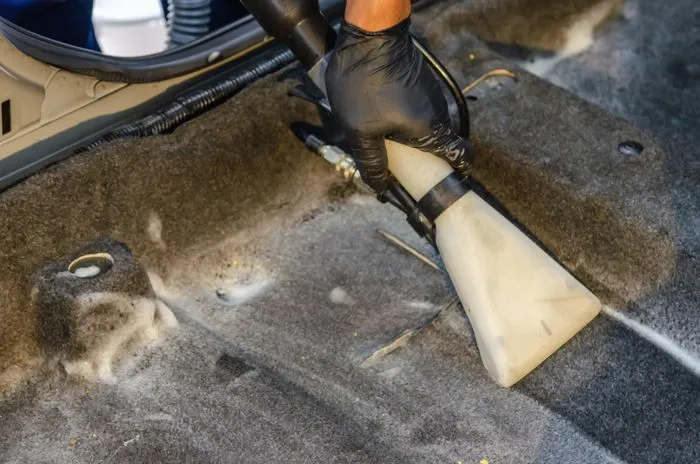
Professional extraction removes water from carpet, padding, and low spots that mopping cannot reach. What stays behind is what causes the next problem.
Extraction is followed by measured structural drying — not guesswork, and not a fixed number of days with a fan running.
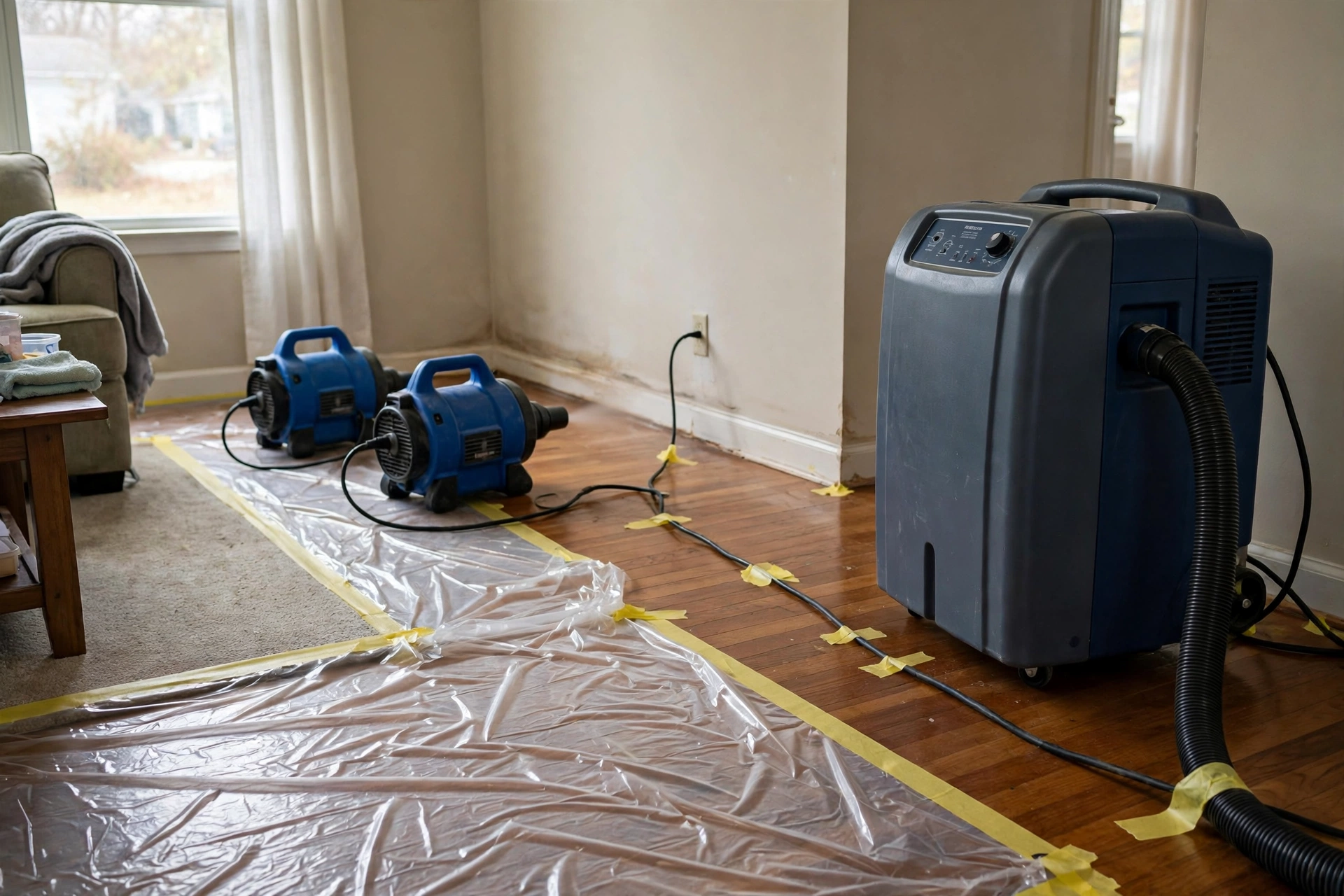
Professional crews extract standing water first, including water trapped in carpet padding and low areas of the floor, then remove materials that cannot be dried — saturated padding, swollen particle board, waterlogged insulation — rather than leaving them in place to feed mold. The structure is then dried with industrial air movers and commercial dehumidifiers, balanced so moisture evaporating from surfaces is captured from the air instead of settling into dry materials elsewhere in the house. Structural drying and dehumidification explains that process in full, and moisture mapping and assessment explains how meters and infrared cameras find water hidden inside walls and under floors.
That hidden-moisture check is the step homeowners most often skip, and it is the step that matters most after a burst pipe. A floor can feel dry while the padding beneath it is soaked; a wall can look dry while the cavity behind it is wet. If a burst ran for hours — overnight, while you were at work, or over a weekend away — assume water traveled farther than the visible puddle suggests. Drying ends when meters show every material has reached its dry standard, not when surfaces feel dry to the touch. A crew that documents final moisture readings gives you a verifiable record that the home was dried, which also supports any insurance claim for the event. If your home has had a burst pipe, our emergency water extraction page describes how to connect with a verified Texas professional for that response.
Across Texas
Texas Regional Differences: Panhandle Cold vs Gulf Coast Rarity
Texas is large enough that "winter" means very different things in different regions, and burst pipe prevention should match the local pattern rather than a single statewide script:
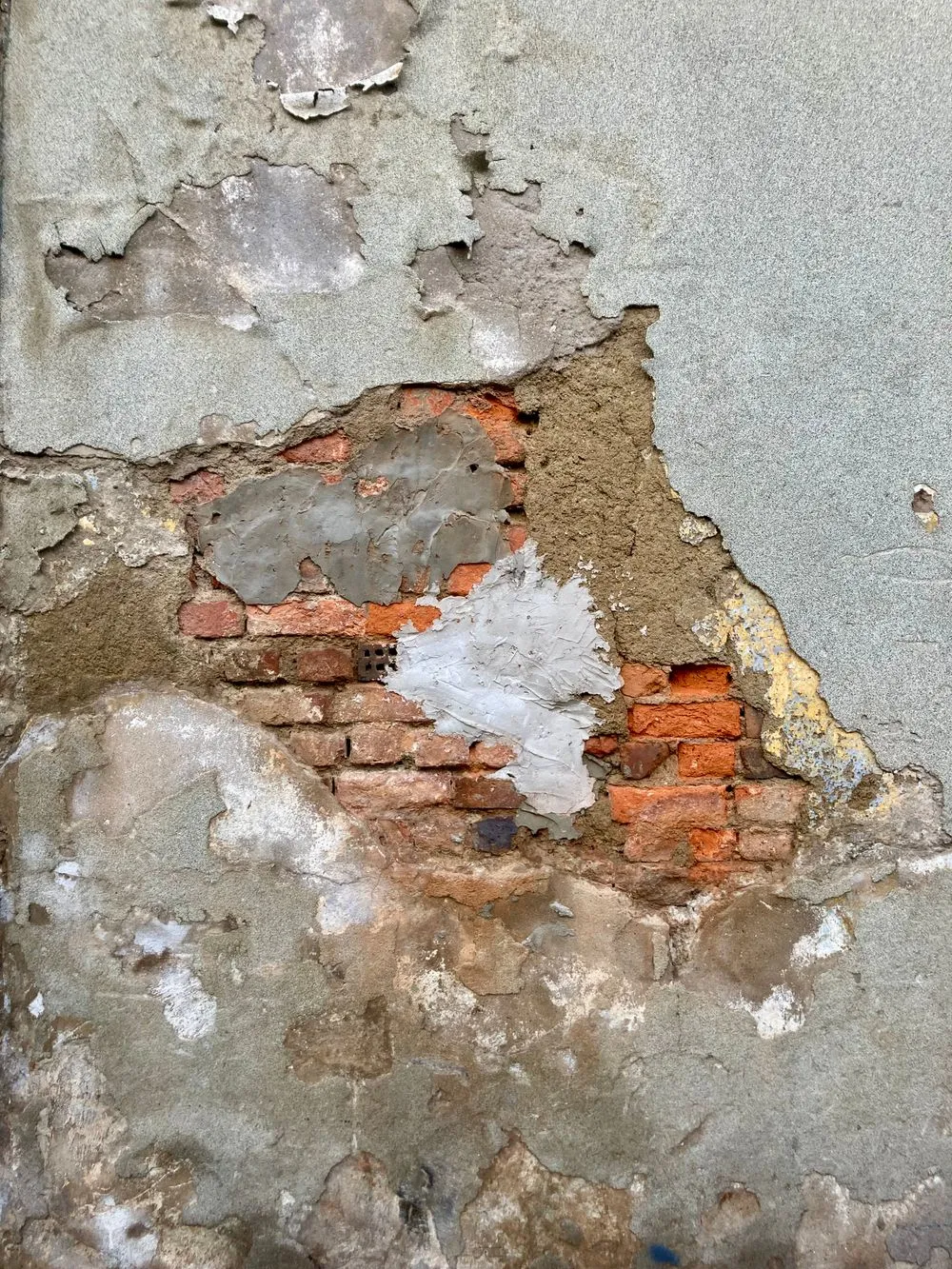
Older homes and exposed exterior walls show the wear of repeated weather exposure. In every region, the pipes closest to the outside air fail first.
Regional differences change how often freezes arrive — not whether unprotected pipes can burst when one does.
Panhandle and High Plains
Amarillo and the surrounding High Plains see the state's coldest and most frequent freezes, with long stretches below freezing and sharp overnight drops. Here, insulation is not a once-a-season precaution but a permanent part of the house: attic runs, garage lines, and exterior-wall pipes should be insulated year-round, and freeze-night habits such as dripping faucets and steady heat are routine winter practice rather than emergency measures.
North Texas
Denton and the Dallas-Fort Worth area sit in the transition zone: freezes arrive most winters, sometimes for several days, and the housing stock mixes newer insulated subdivisions with older homes whose attic plumbing was never protected. North Texas homeowners should pay special attention to attic runs above garages and to hose bibbs, which are a frequent burst point in this region's freeze-thaw cycles.
Central Texas
Killeen, Austin, and the Hill Country get fewer freezes than the north, but they still get them, and the region's rapid growth means many homes were built during mild-winter stretches when freeze protection felt optional. The danger here is complacency: a home that has never frozen can still burst in a multi-day cold snap, and Central Texas slab homes with attic water heaters are a particular watch point.
East Texas
Tyler and the Piney Woods combine humidity with winter cold, and shaded lots and tree cover keep homes cooler and damper through a freeze. East Texas homeowners should watch pipes in unheated outbuildings, rooms over garages, and exterior-wall bathrooms, and remember that damp insulation and shaded exterior walls lose heat faster than dry, sun-exposed ones.
Gulf Coast
Houston and the Gulf Coast freeze rarely, and that rarity is itself the risk. Homes here are built with almost no freeze protection: pipes in attics, on exterior walls, and around outdoor kitchens are routinely uninsulated, and homeowners may not know where their shutoff valve is because they have never needed it. When a rare Gulf freeze arrives, it can cause outsized damage precisely because nothing was prepared. Gulf Coast homeowners should treat every freeze warning as a real event — disconnect hoses, cover faucets, and find the shutoff before the cold arrives.
West Texas
Lubbock and the South Plains see regular winter cold with wide day-night temperature swings, and wind chill against exterior walls can freeze pipes even when daytime highs recover. West Texas homes should protect pipes on wind-facing walls first, keep garage doors closed through cold snaps, and check attic runs after windy freezes, since wind-driven cold air enters attic vents more aggressively than still cold air.
The lesson across all six regions is the same, even though the frequency differs: a burst pipe does not require a record-breaking winter. It requires a few days of below-freezing temperatures reaching an unprotected pipe, and every region in Texas gets those days sometimes. The Gulf Coast homeowner who prepares once a year is doing the same work as the Panhandle homeowner who prepares every autumn — the difference is only how often the preparation gets tested.
Where we serve
Burst Pipe Prevention Across Texas — Local Pages
Freeze risk, housing types, and plumbing layouts vary by community. Our city guides cover the local conditions and response details for each community we serve:
If prevention comes too late and a pipe bursts, professional drying is the step that keeps a flood from becoming a lasting problem.
Air movers and commercial dehumidifiers dry the structure itself — walls, subfloor, and framing — not just the surfaces you can see.
Lubbock
South Plains cold and wind-driven freezes put attic runs and wind-facing exterior walls at risk in Lubbock homes. See Lubbock emergency extraction →
Amarillo
High Plains freeze-thaw cycles are the state's harshest, and Amarillo homes need year-round pipe insulation, not just freeze-night habits. See Amarillo emergency extraction →
Denton
North Texas slab subdivisions and attic plumbing above garages make Denton a classic freeze-burst market each winter. See Denton emergency extraction →
Tyler
East Texas humidity and shaded lots keep Tyler homes cooler through freezes, with exterior-wall bathrooms a frequent burst point. See Tyler emergency extraction →
Killeen
Central Texas slab-on-grade homes with attic water heaters need freeze preparation even in winters that start out mild. See Killeen emergency extraction →
FAQ
Burst Pipe Prevention FAQs
At what temperature can pipes burst in a Texas home?
Pipes can freeze when temperatures stay below freezing for an extended period, and the risk rises sharply during multi-day freezes rather than a single cold night. Uninsulated pipes in attics, garages, and exterior walls are the most vulnerable, and wind against an exterior wall can freeze a pipe even when the air temperature is only just below freezing. There is no single safe temperature threshold — sustained cold reaching an unprotected pipe is what matters.
Should I let faucets drip during a Texas freeze?
Yes, during a hard freeze, let faucets served by exposed or exterior-wall lines drip with a thin, steady stream. Moving water is less likely to freeze, and the drip relieves pressure if ice does begin to form. Drip the faucets farthest from where water enters the house as well as any faucet on an exterior wall, and stop dripping once temperatures recover.
Why do Texas homes burst pipes more often than homes in colder states?
Texas homes are built for heat, not sustained cold. Pipes run through ventilated attics, along exterior walls, through garages, and under concrete slabs — places that stay warm in a normal Texas winter but drop below freezing fast during a multi-day cold snap. Homes in colder states typically have deeper burial, heated interior pipe runs, and insulation designed for winter, while many Texas homes have little or no freeze protection at all.
What should I do first if a pipe bursts?
Shut off the main water valve first, before hunting for the break. Then stay clear of any water near outlets, fixtures, or the breaker panel, and switch off power to affected rooms only if you can do so from a dry area. Photograph the damage, move valuables out of the water's path, and call (866) 316-5715 for professional water extraction and drying.
Should I disconnect garden hoses before a freeze?
Yes, always disconnect garden hoses before the first freeze and cover outdoor faucets with insulated covers. A connected hose traps water in the faucet and the pipe behind it, which can freeze, expand, and split the pipe inside the exterior wall — a break you may not notice until the thaw, when water starts running inside the wall cavity.
How do I find my main water shutoff valve?
In Texas homes the main shutoff is commonly near the water meter at the street, in the garage, in a utility closet, or where the main line enters the house. Find it before winter, test it once a year so it does not seize, and make sure every adult in the household knows where it is. Keep a shutoff wrench or meter key nearby if your valve is at the street meter, and label the indoor valve clearly.
What happens if a pipe bursts while I am away from home?
A burst in an empty house can run for days, flooding floors, soaking walls, and damaging belongings before anyone notices. Before leaving a home empty in winter, keep the heat on at a steady temperature, disconnect hoses, and arrange for someone to check the house daily during any freeze. For longer absences, shutting off the main water valve and draining the lines removes the water that would otherwise flood the house.
Pipe Burst in Your Texas Home? Call Our 24/7 Dispatch
Connect with a verified Texas pro for emergency water extraction, structural drying, and moisture mapping.