There is no single answer, and any page that gives you one number is guessing. Drying time depends on what got wet, how deeply the water soaked in, what kind of water it was, and how humid the Texas air is while drying runs. Here is how professionals think about the timeline — and how they know when a home is actually dry.
Direct answer: A small, clean-water spill caught quickly on a hard surface may dry in a day or two, while a soaked structure — wet drywall, saturated subfloor, water under flooring — typically takes several days of professional drying, and in some cases longer. The honest answer for any specific home depends on the materials involved, how long the water sat before extraction, and the indoor humidity during drying. Drying is finished when moisture meters show each material has reached its dry standard, not when a surface feels dry or when a set number of days has passed.
Why "A Few Days" Is Not a Fixed Answer
When homeowners ask how long drying will take, they usually want a date they can plan around: when the fans come out, when the flooring goes back down, when life returns to normal. It is an understandable question, and it is also one that cannot be answered honestly without looking at the home. Two houses with the same burst pipe can dry on very different schedules. In one, the water ran across sealed tile and was extracted within the hour; in the other, it soaked into carpet padding, wicked up the drywall, and sat overnight before anyone noticed. The first home may be dry in a couple of days. The second may need most of a week or more of monitored drying, even with the same equipment in both houses.
The reason is that drying is not one process but a chain of them. Water has to be removed from the surface, then drawn out of the materials it soaked into, then carried out of the air so it does not settle back into dry materials. Each step has its own pace, and the slowest step sets the pace for the whole job. A floor that looks dry on top can still hold water in the padding beneath it. A wall that feels dry to the hand can still be damp inside the cavity. The visible part of the job often finishes first, which is exactly why judging dryness by eye or touch is unreliable — and why professional drying is measured with instruments rather than estimated by appearance.
Time also works differently at different stages of a water event. The first hours matter most, because water migrates the whole time it sits. In the first minutes it spreads across floors and into low spots. Over the following hours it wicks upward into drywall, seeps under baseboards, soaks into carpet padding and subfloor, and finds its way behind cabinets and under appliances. The longer that migration goes on before extraction, the larger the wet area becomes and the longer drying takes. This is why the guidance in our first 24 hours guide stresses stopping the source and getting water out fast: every hour of standing water is not just an hour of damage, it is an hour in which the drying job grows.
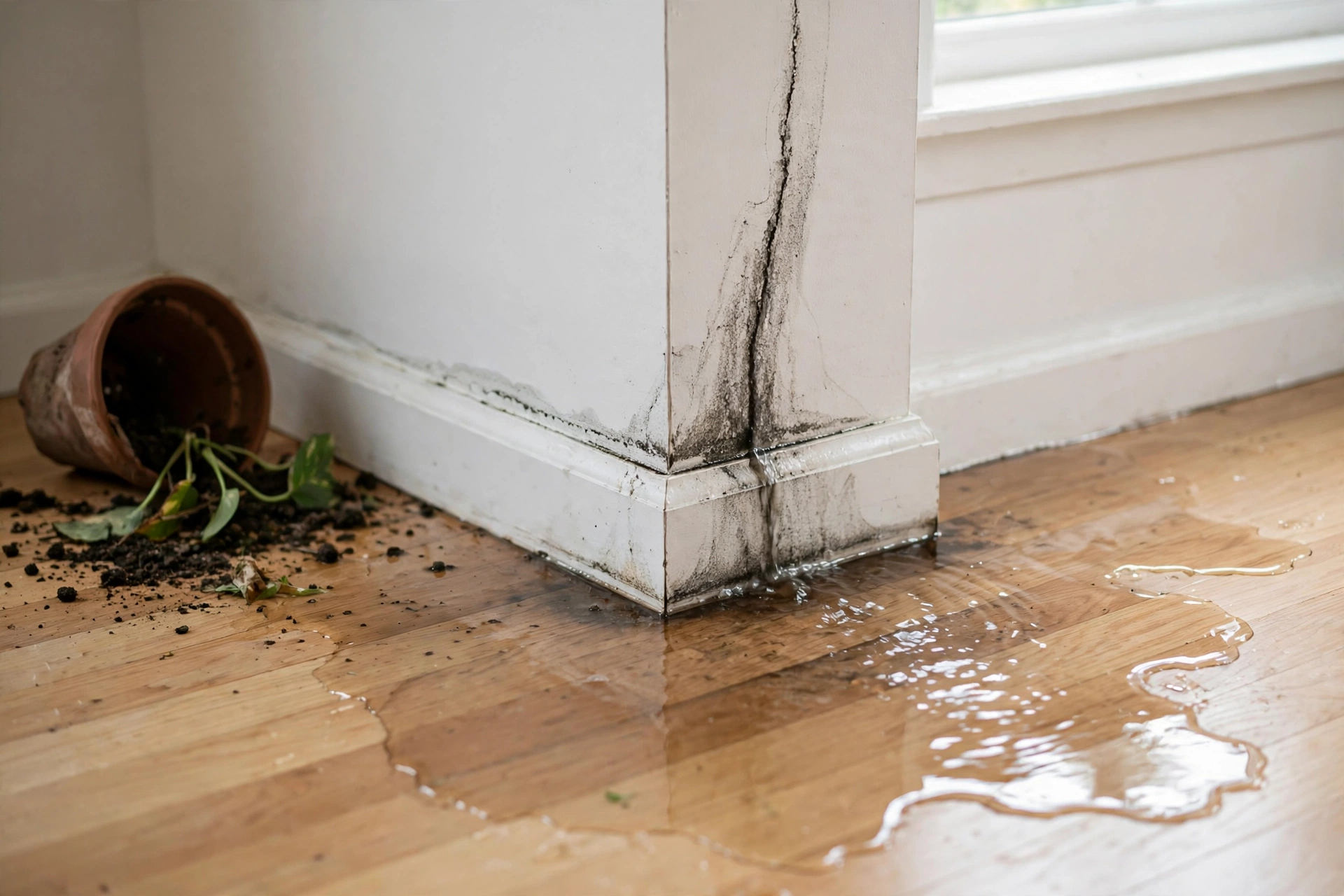
Standing water does not stay where it started. It spreads across floors, seeps under baseboards, and soaks into whatever it touches — and the longer it sits, the larger the drying job becomes.
That spread is why the first hours after a leak matter so much to the final timeline, and why a fast start often shortens drying by days rather than hours.
It also helps to separate two questions that are often confused: how long until the home is dry enough to live in comfortably, and how long until the structure is fully dry. A room can feel livable — fans running, surfaces dry, no visible water — while the structure inside the walls and under the floor is still drying. Rebuilding too early, laying new flooring over a damp subfloor or closing up a wall that still reads wet, traps that remaining moisture inside, where it can warp materials and feed musty odors later. The drying timeline that matters is the second one: the time until every affected material reaches its dry standard. Everything else is a milestone along the way, not the finish line.
The process
The Four Phases of Drying
Professional drying follows a sequence, and the phases overlap rather than running one after another. Understanding the sequence explains why the timeline stretches or shrinks — and why skipping a phase backfires:
Phase 1: Extraction
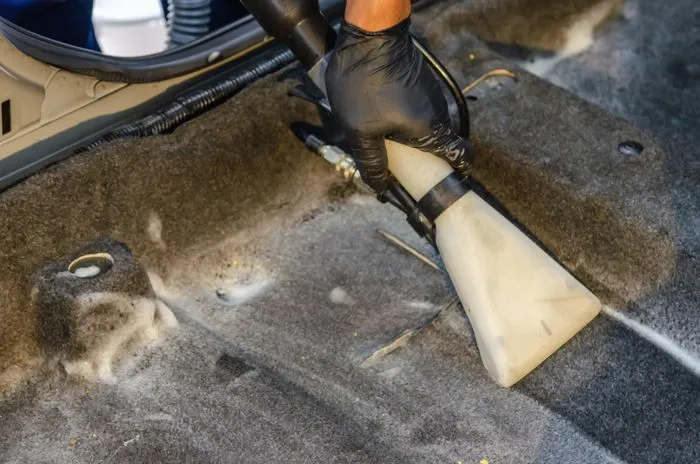
Standing water is removed with pumps and professional vacuums, including water trapped in carpet and low spots. Extraction is the fastest phase in clock time but the most important for the timeline: water removed now never has to evaporate later. A thorough extraction can shorten the whole job noticeably, while a partial one leaves water behind that the later phases must deal with slowly.
Phase 2: Removal of What Cannot Be Dried
Some materials hold water in ways that drying cannot reverse. Saturated carpet padding, swollen particle board, and waterlogged insulation are typically removed rather than dried, because keeping them in place prolongs the job and keeps moisture against the structure. Removal is a judgment call made material by material, based on saturation and contamination, not a blanket rule.
Phase 3: Evaporation and Dehumidification
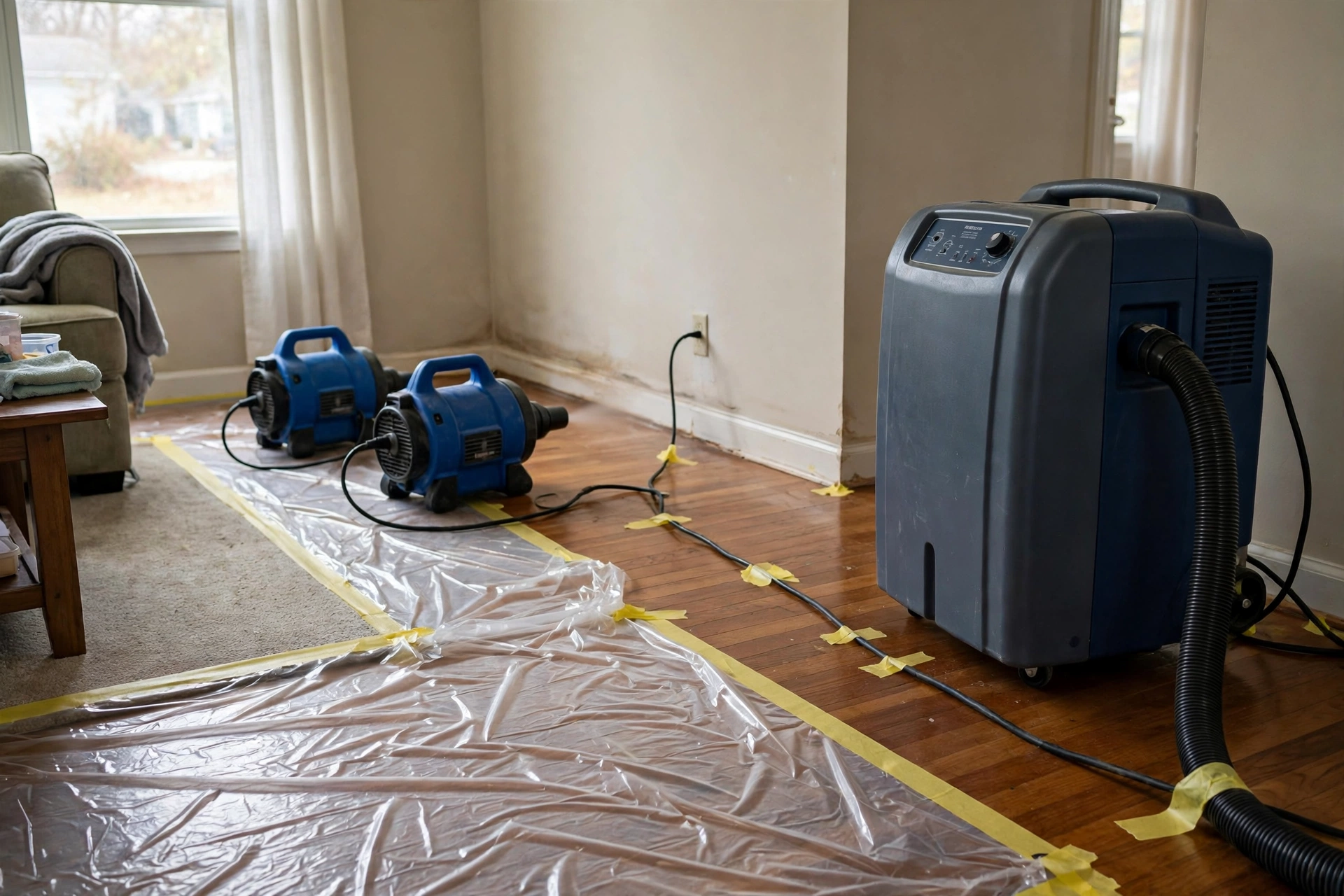
Air movers push dry, fast-moving air across wet surfaces so moisture evaporates, while commercial dehumidifiers pull that moisture out of the air before it can settle into dry materials. This is usually the longest phase, and it is the one most affected by Texas humidity: when the air is already wet, evaporation slows and dehumidifiers work harder. The two types of equipment must stay balanced — airflow without dehumidification just moves moisture around the house.
Phase 4: Verification
Drying ends when moisture meters and, where useful, infrared cameras show that every affected material has reached its dry standard — the moisture level of a comparable unaffected material in the same home. Verification is not a single reading at the end; crews take readings through the job to track progress and to catch areas that are drying slower than the rest. A job is not finished because the equipment has run for a set number of days; it is finished because the readings say so.
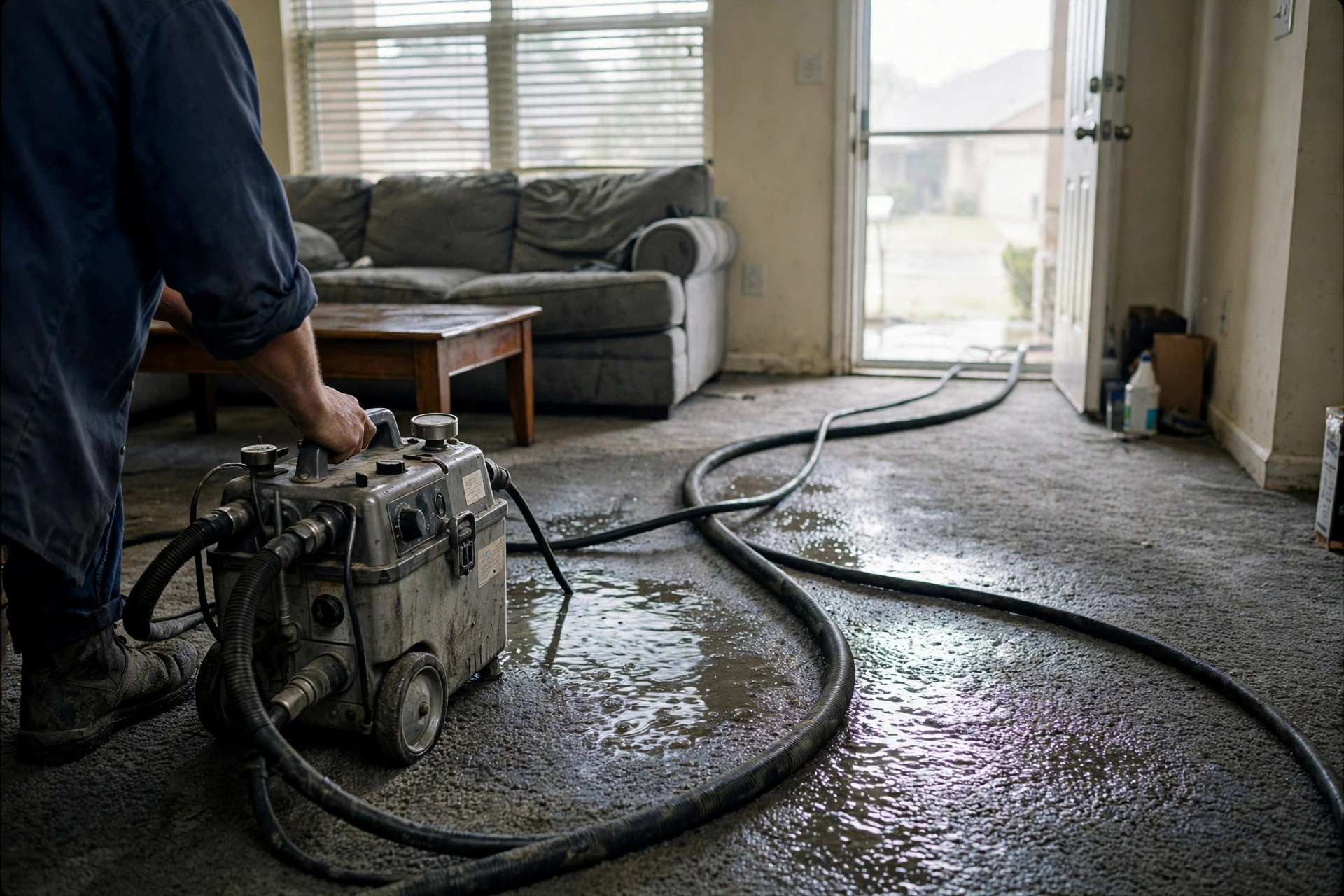
Extraction comes first for a reason: every gallon removed by machine is a gallon that does not have to evaporate out of your floors and walls.
That is why a thorough extraction at the start is the single biggest lever on the total drying time — and why our emergency water extraction page treats extraction as a job of its own, not a quick first step.
The overlap between phases matters for expectations. Extraction may be done in hours, removal in the same visit, and then evaporation and dehumidification run for days while readings are taken daily or every other day. Homeowners sometimes worry when equipment stays in place after the visible water is gone; that is normal, and it is the phase doing the real work. Pulling equipment early because the room looks dry is one of the most common ways a drying job fails — the surface was ready, but the structure was not.
What sets the timeline
What Decides How Long Your Home Takes to Dry
Six factors, taken together, explain almost all of the variation in drying times between one home and another:
Material type and saturation depth
Sealed, non-porous surfaces such as tile and sealed concrete dry fastest, because water sits on them rather than soaking in. Drying here is mostly a surface job.
Hardwood floors dry more slowly, because water seeps between boards and into the wood itself. Cupping — boards curling at the edges — is a sign of moisture still inside the wood, not a finished state.
Drywall and plaster absorb water and wick it upward from the floor line, so a wall may be wet well above the visible water line. Drying a wall cavity takes longer than drying the wall surface.
Carpet and padding behave as a pair: carpet may dry on top while the padding beneath stays soaked, which is why padding is often removed rather than dried in place.
Insulation and subfloor dry slowest of all common materials. Wet insulation inside a wall or ceiling cavity has almost no airflow, and a soaked subfloor under flooring can take the longest of any part of the job.
Water category and how long it sat
Clean water from a supply line or appliance hose is the simplest drying job, because the water itself adds no contamination that forces extra removal steps.
Gray water from a washing machine or dishwasher overflow, or water that has passed through building materials, may require removal of materials that clean water would allow to stay.
Contaminated water from a sewage backup or a flood that carried soil and debris indoors changes the job entirely: affected porous materials are typically removed rather than dried, and sanitizing becomes part of the sequence. See our sewage backup extraction and flood and storm extraction pages for how those jobs differ.
Time before extraction multiplies every other factor. Water that sat for a day has migrated further and soaked deeper than water extracted within the hour, even from the same source.
Hidden water is the quiet timeline-killer: water behind baseboards, inside wall cavities, under tile, or beneath a slab floor adds days that no surface inspection would predict. This is what moisture mapping exists to find before the timeline is estimated.
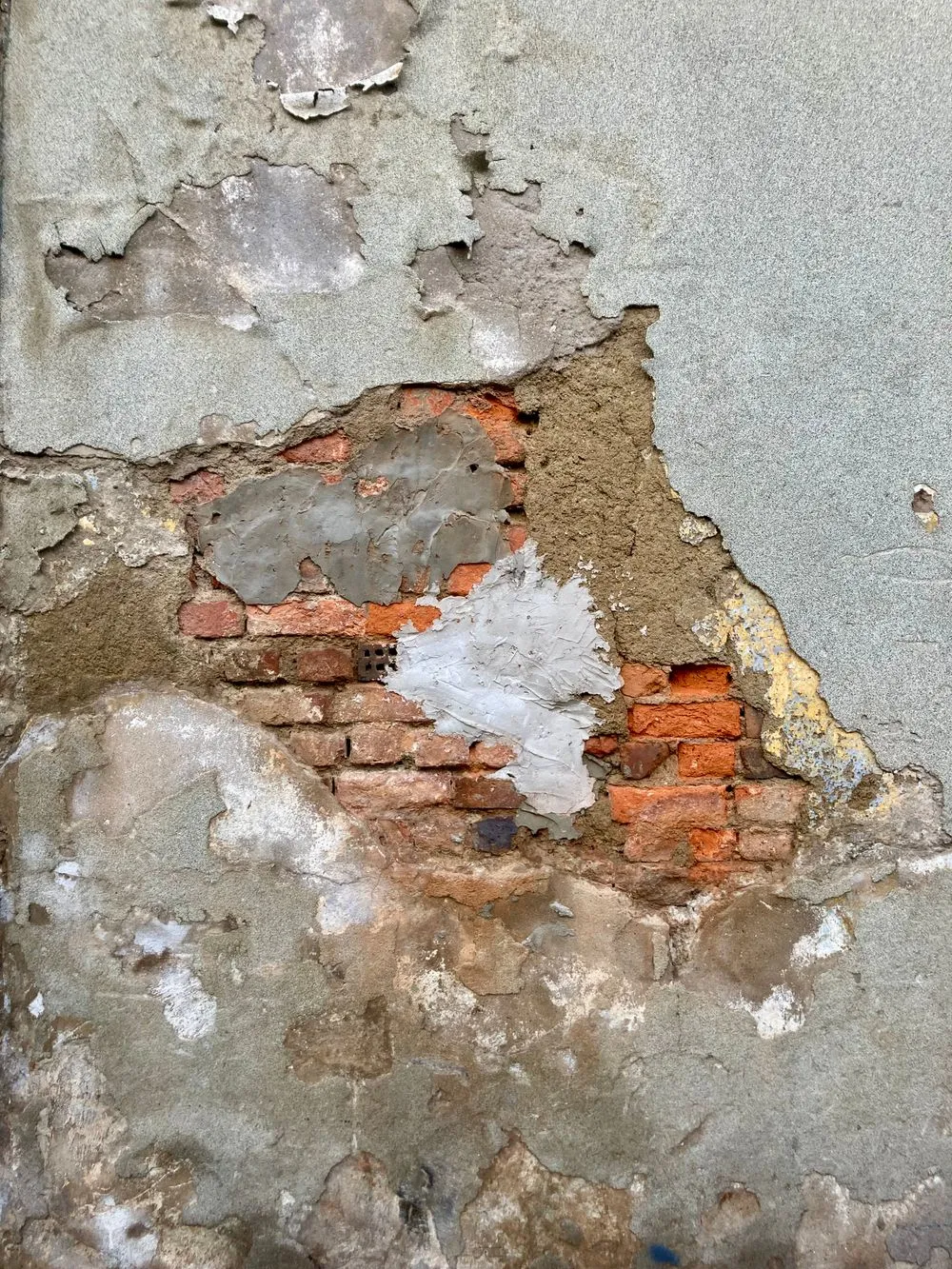
Walls tell the timeline. A surface that looks merely stained can hide deeply soaked material behind it, and soaked masonry and plaster give up their moisture far more slowly than a surface layer.
That gap between visible damage and actual saturation is why material-by-material readings, not a calendar, decide when drying is done.
Two structural factors deserve special mention in Texas. The first is slab-on-grade construction, which most Texas homes use. With no basement or crawlspace to ventilate, water that gets under flooring or into the bottom of a wall has very little airflow to carry it away, and water trapped beneath tile or laminate on a slab can only leave through the top surface. Drying a slab floor assembly is therefore slower than drying the same flooring over a ventilated subfloor, and it is one of the main reasons Texas drying timelines run longer than homeowners expect. The second is the sheer size of the wet area: a single-room leak and a whole-house flood are not the same job scaled up, because a larger wet area raises indoor humidity for the whole house, which slows evaporation everywhere at once. Equipment capacity has to match the size of the job, not just the size of one room.
Season plays a role too, though not always the one people assume. Summer in Texas brings heat that speeds evaporation, but it also brings humidity that slows it, and the two effects partly cancel out. Winter brings drier air in much of the state, which helps evaporation, but also brings freeze-related pipe bursts — see our burst pipe extraction page — where the water event itself is larger and the home may be cold, which slows evaporation until the heating system restores normal indoor temperatures. There is no season in Texas in which drying is automatically fast; there are only conditions that help or hinder, and a drying plan has to account for the ones in play on the day.
Texas conditions
Texas Climate: Why Drying Here Is Different
Texas is not one climate, and drying timelines vary across the state for reasons that have nothing to do with the leak itself:
In humid Texas conditions, extraction and dehumidification have to work as a pair. Airflow alone cannot finish a job when the air it moves is already carrying moisture.
That balance — moving air across wet surfaces while pulling moisture out of that air — is what our structural drying and dehumidification page describes in detail.
Gulf Coast and East Texas humidity
Along the Gulf Coast and across East Texas, outdoor humidity stays high for much of the year, and summer air entering a home carries moisture with it. Opening windows to "air the house out" during drying can actually slow the job here, because humid outdoor air replaces the drier indoor air the dehumidifiers have worked to create. In these regions, drying works best as a closed system: doors and windows shut, air conditioning running, and commercial dehumidifiers doing the moisture removal. A home in this climate that is dried with the windows open may take noticeably longer than the same home dried closed — and may never reach its dry standard while humid air keeps flowing in.
West and Central Texas: drier air, different traps
West Texas air feels drier, and that does help evaporation — but a flooded room creates its own humid microclimate regardless of the weather outside, as evaporating water raises indoor humidity fast. Air conditioning that cycles off at night or in an unoccupied home lets that moisture settle back into walls and flooring. Central Texas adds slab-on-grade subdivisions and humid summers to the mix, so water under flooring dries slowly even when the outdoor air feels dry. And across the state, a storm that knocks out power stops the air conditioner from dehumidifying at exactly the moment the home is wettest — a pattern seen after Gulf hurricanes and major storms, when homes that sat closed and powerless for days needed longer drying than the same damage would have needed with power on.
Drying timelines across Texas — local pages
Local climate, housing types, and typical water sources vary by community, and so do drying timelines. Our city guides cover the local conditions for each community we serve:
Lubbock
West Texas summer heat speeds evaporation, but attic leaks and slab floors still slow the full structural dry. See Lubbock emergency extraction →
Amarillo
High Plains freeze-thaw bursts can flood wall cavities in winter, when cold indoor air slows evaporation until heating is restored. See Amarillo emergency extraction →
Denton
North Texas slab subdivisions and humid summers mean water under flooring is the long pole in the drying timeline here. See Denton emergency extraction →
Tyler
East Texas humidity is among the highest in the state, so closed-system drying with dehumidification matters more here than almost anywhere in Texas. See Tyler emergency extraction →
Killeen
Central Texas slab-on-grade homes and humid summers trap moisture under flooring and inside wall bases after pipe and appliance leaks. See Killeen emergency extraction →
Verification
How Professionals Know When Drying Is Finished
The most important idea in this guide is also the simplest: dryness is measured, not guessed. Here is what that measurement actually involves:
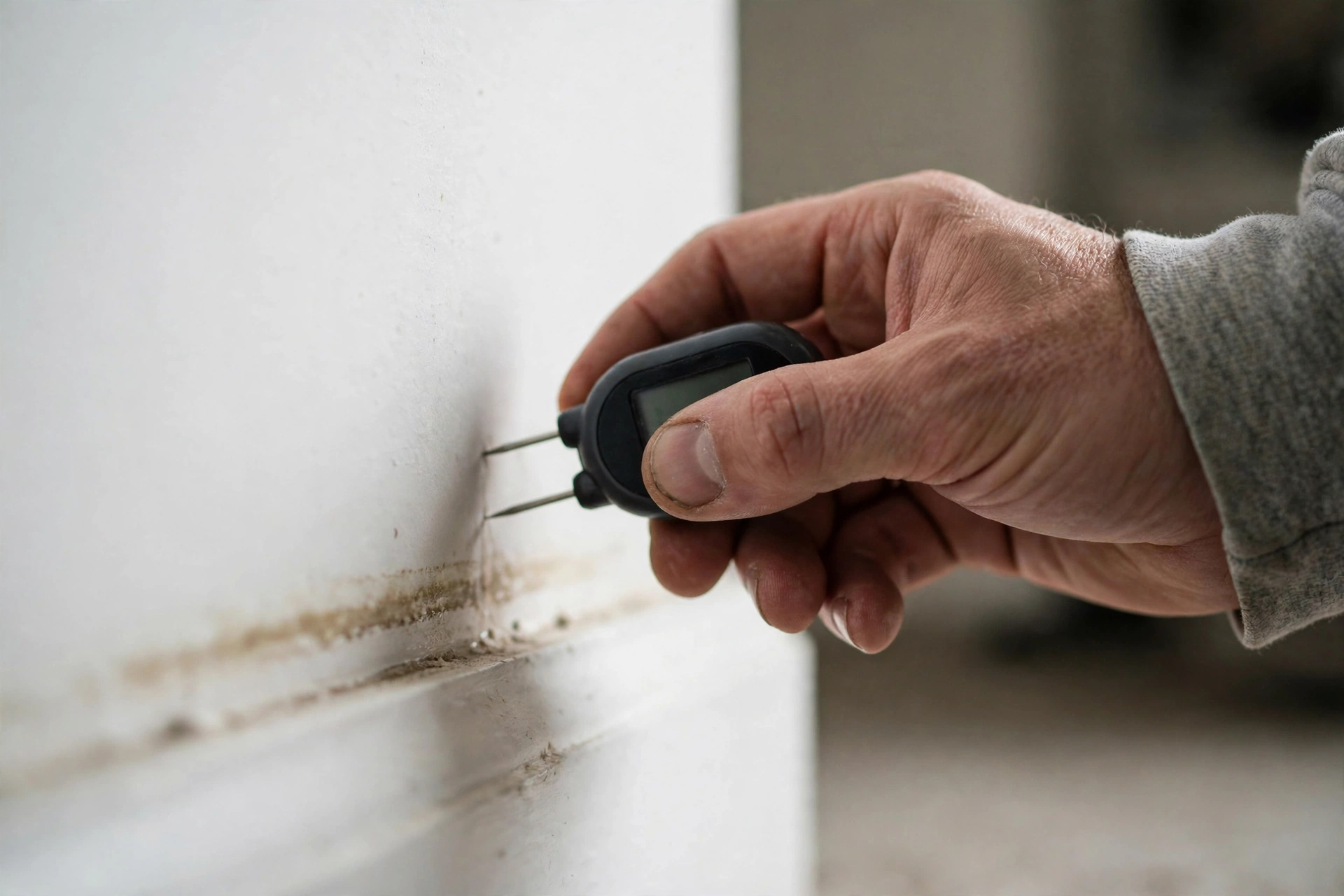
A pin meter reads moisture inside the material, not on it. That distinction is the whole point of verification — and the reason surface feel is never the standard.
Readings are compared against unaffected materials in the same home, so the target is this house's normal, not a generic number.
The core concept is the dry standard: the moisture level of the same material in an unaffected part of the same home. A crew establishes this by taking readings in dry rooms first, then compares readings in affected areas against that baseline as drying progresses. This matters because normal moisture levels vary by material, by season, and by house — a reading that is normal for a bathroom wall in a humid Gulf Coast home might be high for a bedroom wall in a dry West Texas home. The dry standard is local to the house, which is why a generic "dry in three days" promise from any source should be treated with skepticism: no one can know your home's dry standard without measuring it.
Two kinds of instruments do most of the work. Pin meters push small probes into a material and read moisture at depth — inside drywall, into wood framing, through flooring layers. Non-penetrating meters scan a surface without holes and are useful for mapping a wide area quickly, such as tracing how far water traveled under tile. Infrared cameras add a third view: they show temperature differences that often reveal wet areas behind surfaces, which the crew then confirms with a meter. Used together, these tools produce a moisture map of the home, and that map is updated through the job. Areas that lag behind the rest get more airflow, or a wall section is opened for drying, or a piece of equipment is repositioned. Without the map, a crew is guessing which areas need attention — and guessing is how a wet wall cavity gets missed.
Homeowners should expect readings to be taken more than once. A single reading at the start and a single reading at the end would miss the story in between: which materials are drying fast, which are stuck, and whether the overall trend is heading toward the dry standard or flattening out early. A flattening trend — readings that stop improving while still above the dry standard — is a signal, not a failure: it usually means something is blocking drying, such as a closed wall cavity, a layer of flooring trapping moisture, or indoor humidity that has crept back up. The response is to change the setup, not to declare the job done. When readings finally show every affected material at its dry standard, and stay there on a repeat check, the job is finished — and a crew that documents those final readings gives you a record you can keep for your own reference and for any future questions about the home.
Rule of thumb: if a wall or floor feels dry but you have never seen a meter reading for it, treat it as unverified, not dry. Call (866) 316-5715 for a professional assessment with proper moisture readings before rebuilding over it or closing it up.
While drying runs
What Slows Drying Down — and What Homeowners Can Do Meanwhile
Several common, well-meaning actions slow drying or undo progress. Knowing them helps you help the job instead of hindering it:
What slows drying down
Turning equipment off at night. Drying equipment is noisy, and the temptation to switch it off for quiet is real — but every hour off lets moisture redistribute into dry materials, and the job has to recover that lost ground the next day.
Opening windows in humid weather. In Gulf and East Texas humidity, open windows feed moist outdoor air into a home that dehumidifiers are working to dry. Keep the home closed during professional drying unless the crew advises otherwise.
Moving or repositioning equipment. Air movers are placed to create airflow patterns across specific wet surfaces. Moving one to a more convenient spot can leave a wet area with no airflow at all.
Closing doors to drying rooms. Air needs to circulate between rooms for dehumidifiers to work on the whole wet area. A closed door can isolate a wet room from the equipment drying it.
Rebuilding too early. Laying new flooring, repainting, or closing up a wall before readings reach the dry standard traps remaining moisture inside, where it can warp materials and feed lingering odors.
Skipping the source repair. Drying a wall while the pipe behind it still leaks, or the roof flashing above it still fails, is drying a moving target. The source must be fixed for drying to hold.
What homeowners can usefully do
Keep the home closed and the air conditioner running during professional drying, unless the system itself was flooded or the crew advises otherwise.
Keep interior doors open so air circulates freely between the drying area and the rest of the home.
Move belongings out of the drying area and off wet floors, and lift furniture legs onto blocks or foil to prevent stain wicking while the floor dries.
Document everything with photos and video: the water as found, the equipment in place, and the readings if the crew shares them. This record is useful for insurance and for your own reference.
Report changes promptly — new odors, new stains, a room that feels damper than before, or equipment that stops running. A drying crew would rather hear about a change early than discover it at the next scheduled reading.
Plan rebuilding around readings, not dates. Ask for the final moisture readings before scheduling flooring, drywall, or paint work, and keep that documentation with your home records.
Drying equipment earns its keep by running steadily. The hum of air movers and a dehumidifier for several days is not a sign the job is dragging — it is the job itself.
Patience during this phase is what separates a home that is truly dry from one that only looked dry when the equipment left.
The Risk of Stopping Early
Stopping drying early is the single most consequential shortcut a homeowner can take, and it is tempting precisely because it looks harmless at the time. The surfaces are dry, the room smells normal, the equipment is loud and in the way. But moisture left inside walls, under flooring, or in subfloor does not simply disappear once the equipment leaves. It redistributes slowly into surrounding materials, and over weeks it can warp hardwood, buckle laminate, loosen tile grout, and leave a musty odor that appears long after the water event is forgotten. In Texas humidity, that trapped moisture also keeps conditions favorable for mold growth out of sight — which is why our mold after water damage guide treats complete, verified drying as the first line of prevention. None of this is a reason to panic about a drying job in progress. It is a reason to let the job finish on the evidence of meter readings rather than on the evidence of a dry-looking surface.
There is also a practical, forward-looking reason to insist on verified dryness: documentation. Final moisture readings, drying logs, and a moisture map are a record that the home was dried properly, and that record is useful if you later sell the home, file an insurance claim, or need to show that a subsequent problem is new rather than a continuation of the old one. A job that ends with paperwork you can keep is a job you can stand behind. A job that ends because someone decided it looked done leaves you with nothing to show for it. When the crew says the readings have reached the dry standard, ask to see them, keep a copy, and only then schedule the rebuilding. That short pause is the most valuable safeguard in the whole restoration process.
FAQ
How Long Water Damage Takes to Dry FAQs
How long does water damage usually take to dry?
It depends on what got wet and how deeply. A small, clean-water spill on a hard surface that is extracted quickly may dry in a day or two, while a soaked structure with wet drywall, saturated subfloor, or water under flooring typically takes several days of professional drying, and in some cases longer. The reliable answer for a specific home comes from moisture readings, not from a calendar: drying is finished when each affected material reaches its dry standard.
Why does my floor feel dry but the wall still reads wet?
Because surfaces dry before the structure inside them does. A floor surface can feel dry while the padding beneath the carpet is still soaked, and a wall can feel dry to the touch while the inside of the cavity is still damp. Water wicks into drywall, seeps under baseboards, and soaks into subfloor, where household airflow cannot reach it. Pin meters read moisture at depth, which is why they can show a wall as wet long after it feels dry on the outside.
Does Texas humidity make drying take longer?
Yes, especially along the Gulf Coast and in East Texas, where outdoor humidity stays high for much of the year. Evaporation slows when the air is already carrying moisture, so drying in humid conditions depends heavily on commercial dehumidifiers and on keeping the home closed while they run. Opening windows on a humid day can slow the job by letting moist outdoor air back in. Drier West Texas air helps evaporation, but a flooded room still creates its own humid microclimate indoors, so professional dehumidification matters there too.
How long does drying take for different materials?
Sealed tile and sealed concrete dry fastest, since water sits on the surface rather than soaking in. Hardwood takes longer, because water seeps between boards and into the wood itself. Drywall and plaster dry more slowly still, because they wick water upward and hold it inside wall cavities. Carpet padding and insulation are often the slowest, and saturated padding or waterlogged insulation is typically removed rather than dried. A soaked subfloor under flooring can take the longest of any part of a job, particularly on a slab-on-grade Texas home with no airflow beneath it.
Can I speed up drying with household fans or open windows?
Household fans and open windows can help a small, surface-level spill, but they cannot dry a structure, and in humid Texas weather open windows may slow professional drying by admitting moist outdoor air. Household fans also cannot push air into closed wall cavities or under flooring, which is where the slowest moisture lives. If professional equipment is already in place, leave it running, keep the home closed, and keep interior doors open so air circulates — those three habits help a drying job more than extra household fans do.
What happens if drying equipment is removed too early?
Moisture left inside walls, under flooring, or in subfloor does not disappear once the equipment leaves. Over weeks it can warp hardwood, buckle laminate, loosen tile grout, and leave a musty odor that appears long after the water event. In Texas humidity, trapped moisture also keeps conditions favorable for mold growth out of sight. That is why equipment should stay until moisture readings show every affected material has reached its dry standard, even if the room already looks and feels dry.
How do professionals know when drying is finished?
They measure it. Crews first take readings in unaffected areas of the same home to establish a dry standard, then track readings in affected areas with pin meters, non-penetrating meters, and sometimes infrared cameras. Drying is finished when every affected material reads at its dry standard and stays there on a repeat check — not after a fixed number of days. Ask for the final readings and keep a copy with your home records. For a professional assessment with proper moisture readings, call (866) 316-5715.
Wondering If Your Home Is Really Dry? Call Our 24/7 Dispatch
Connect with a verified Texas pro for a professional assessment, structural drying, and moisture mapping.